Copenhagen Day Four: Roskilde and the Vikingeskibsmuseet

Are you sitting comfortably? Then I’ll begin.

A long time ago, at a Medieval Textiles conference in London in 2011, I was held spellbound by Anna Nørgård talking about spinning and weaving sails for the reconstructed Viking Age ships at Roskilde. I took copious notes – I still have them on file – and clearly remember purposefully forging through the crowd to handle the samples of yarn and sailcloth, as it came off the loom and after waterproofing with fat from whatever animals had died recently. I promised myself that one day I would go to the Roskilde Vikingeskibsmuseet and see the woollen sails on the ships. 

The timing of this entire holiday was determined about 6 months ago by the availability of evening cruises on the fjord (in reality a large brackish waterbody, no cliffs. This is Denmark, not Norway) in vessels built at the Skibsmuseet, plus A Birthday date. 
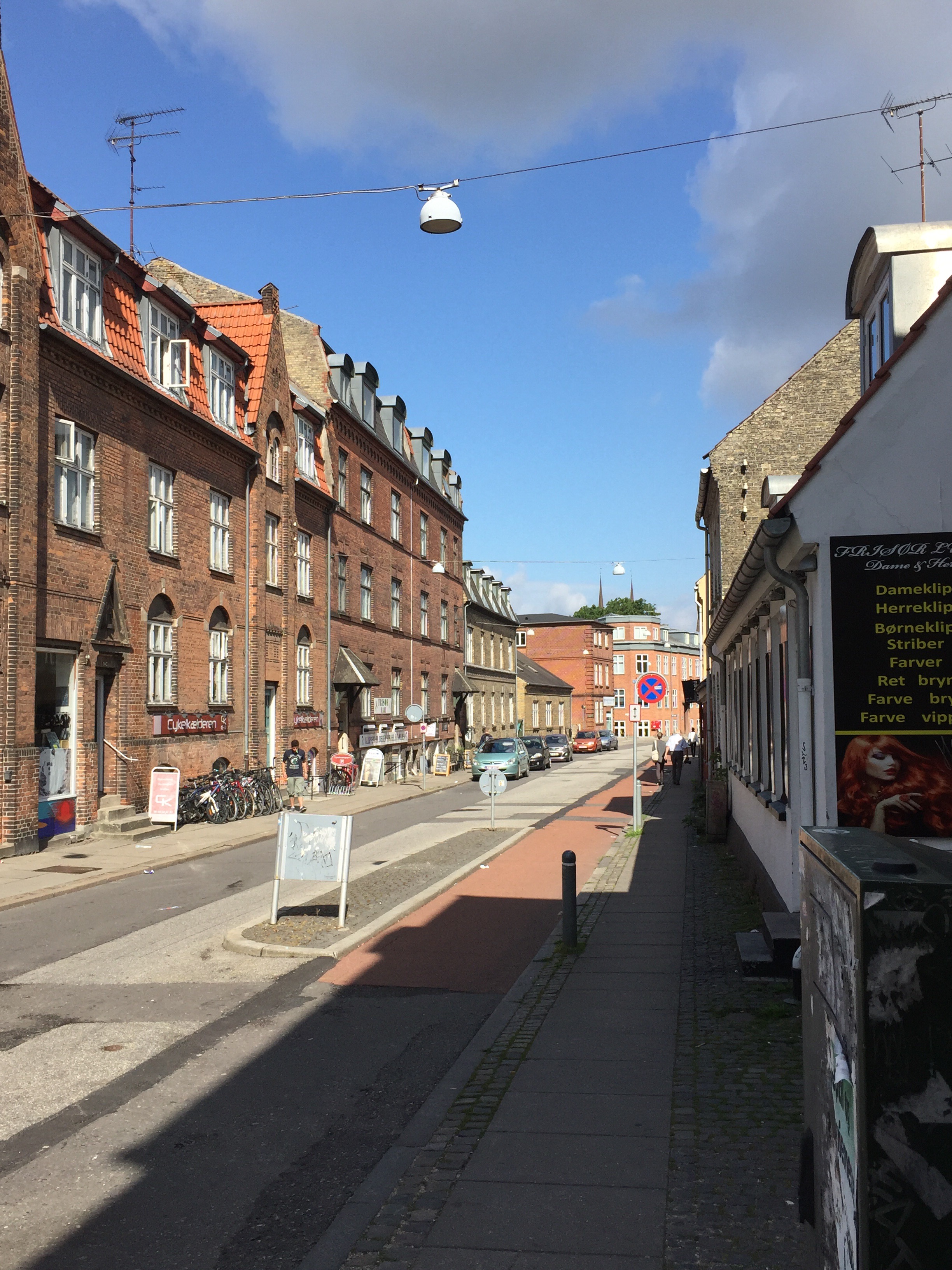
The twin pointy things visible over the rooftops are two spires of Roskilde Cathedral.

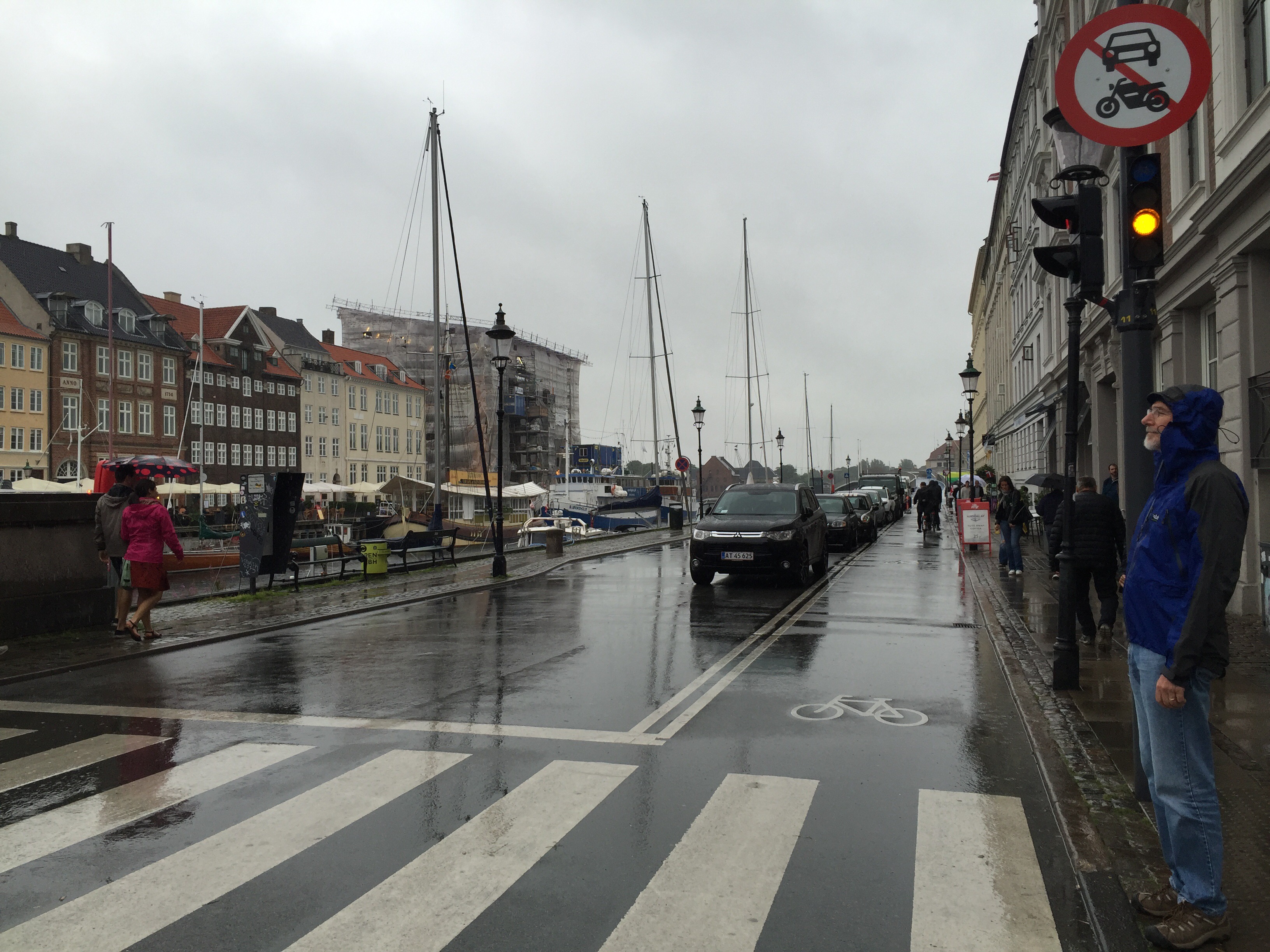
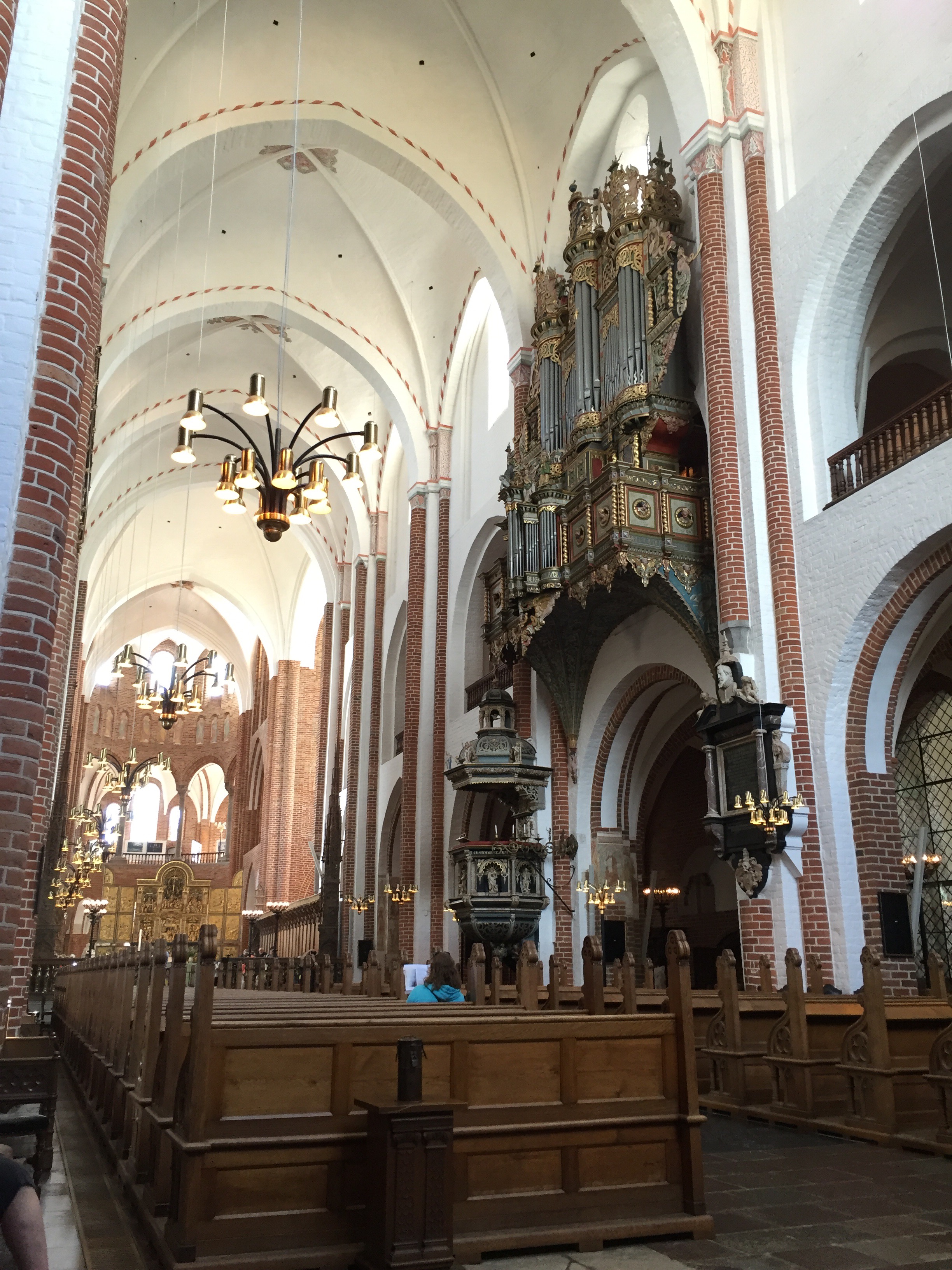
So at long last on Thursday morning we walked north to Nørreport for the train to Roskilde.There is more to see here:  Roskilde Cathedral is a UNESCO World Heritage Site, the first Gothic cathedral in Scandinavia, the first Gothic cathedral built of brick, and the burial place of Danish monarchs since the 15th century. 

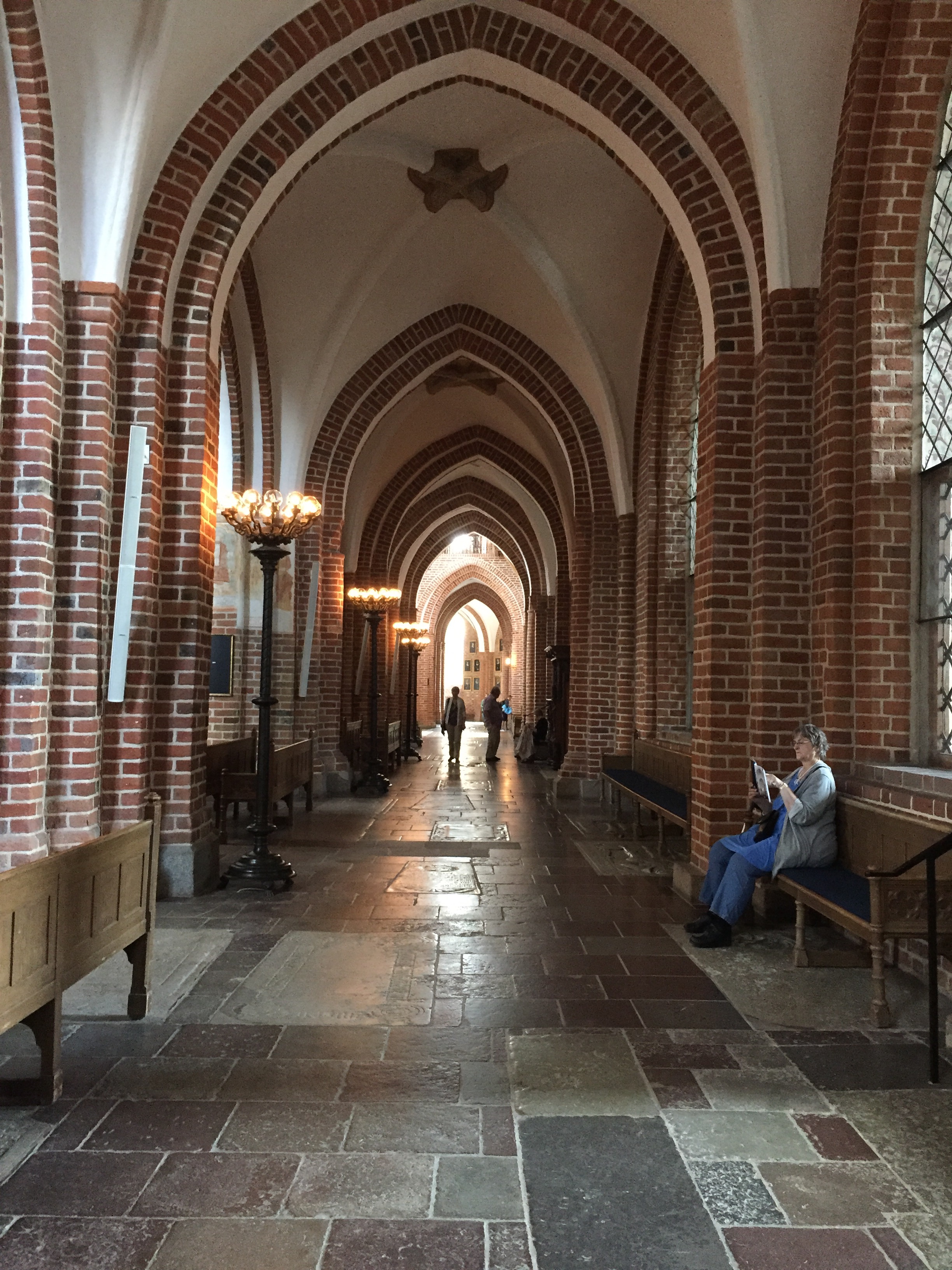
It’s impressive. Very impressive. Strangely approachable, almost homely in warm red brick by comparison with the   more usual cold grey stone. Someone was practising on the organ (the oldest parts of which date from 1555).
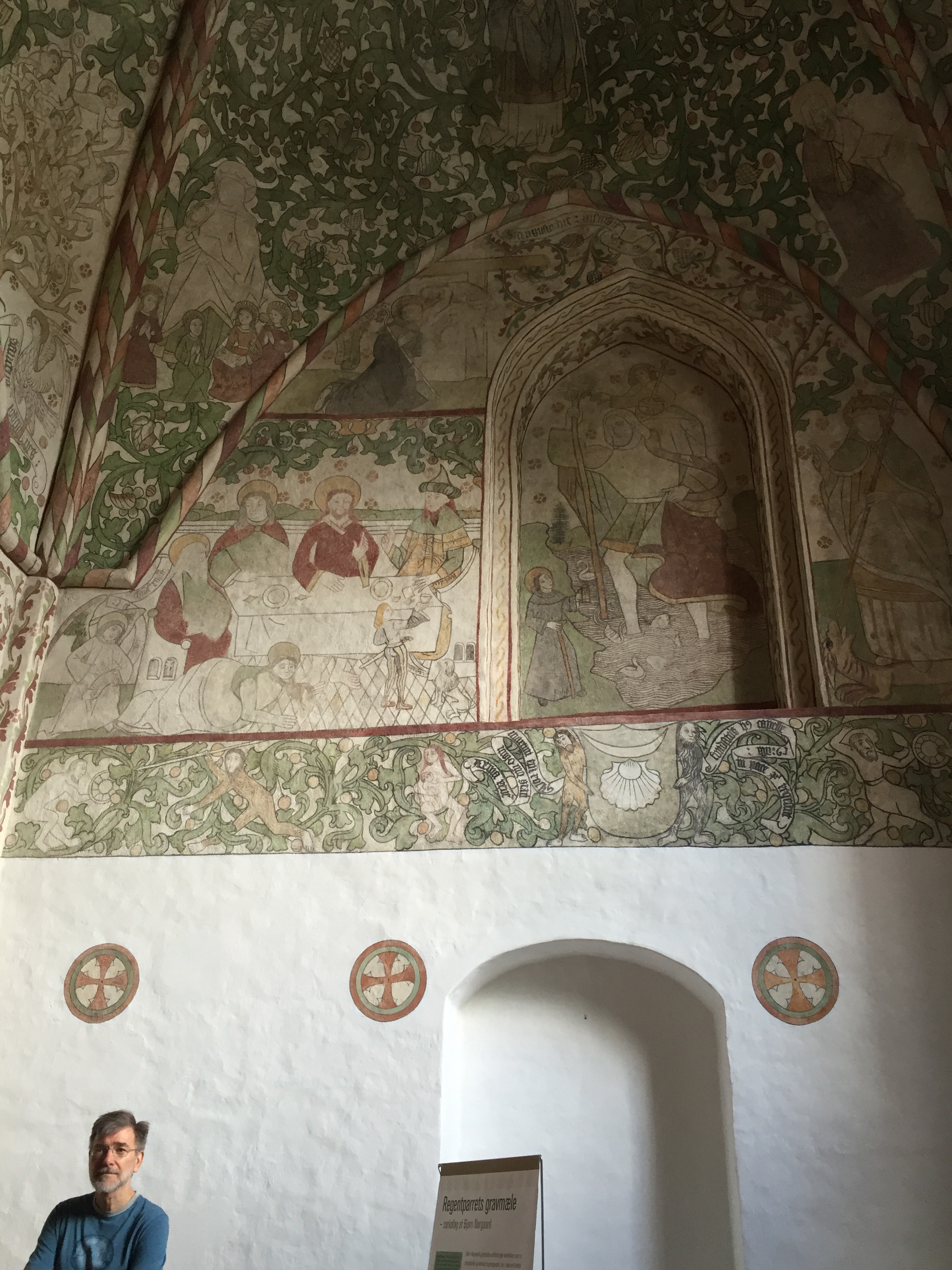
Medieval wall paintings cover some of the chapels. Those in St Birgitta’s chapel date from the early 1500s.
The main theme, though, is the death of Danish monarchs. There’s a good summary here with photos, albeit not English text.

The chapel containing the monuments to Christian 9 and Louise, Christian 10 and Alexandrine, and Frederik 9 and Ingrid is stunning in its relative simplicity. Tombs of grey granites and marbles and white marble statues (the ‘three sisters of the Little Mermaid’: Grief, Memory and Love. The sculptor Edvard Eriksen’s wife was the model for all four) are bathed in light from the dome, reflecting off the white walls. It’s Northern and beautiful, and too busy for a photo while we were there. 

The chapel of Frederic 5 has a similar feel but the neo-classicist style is more ornate.

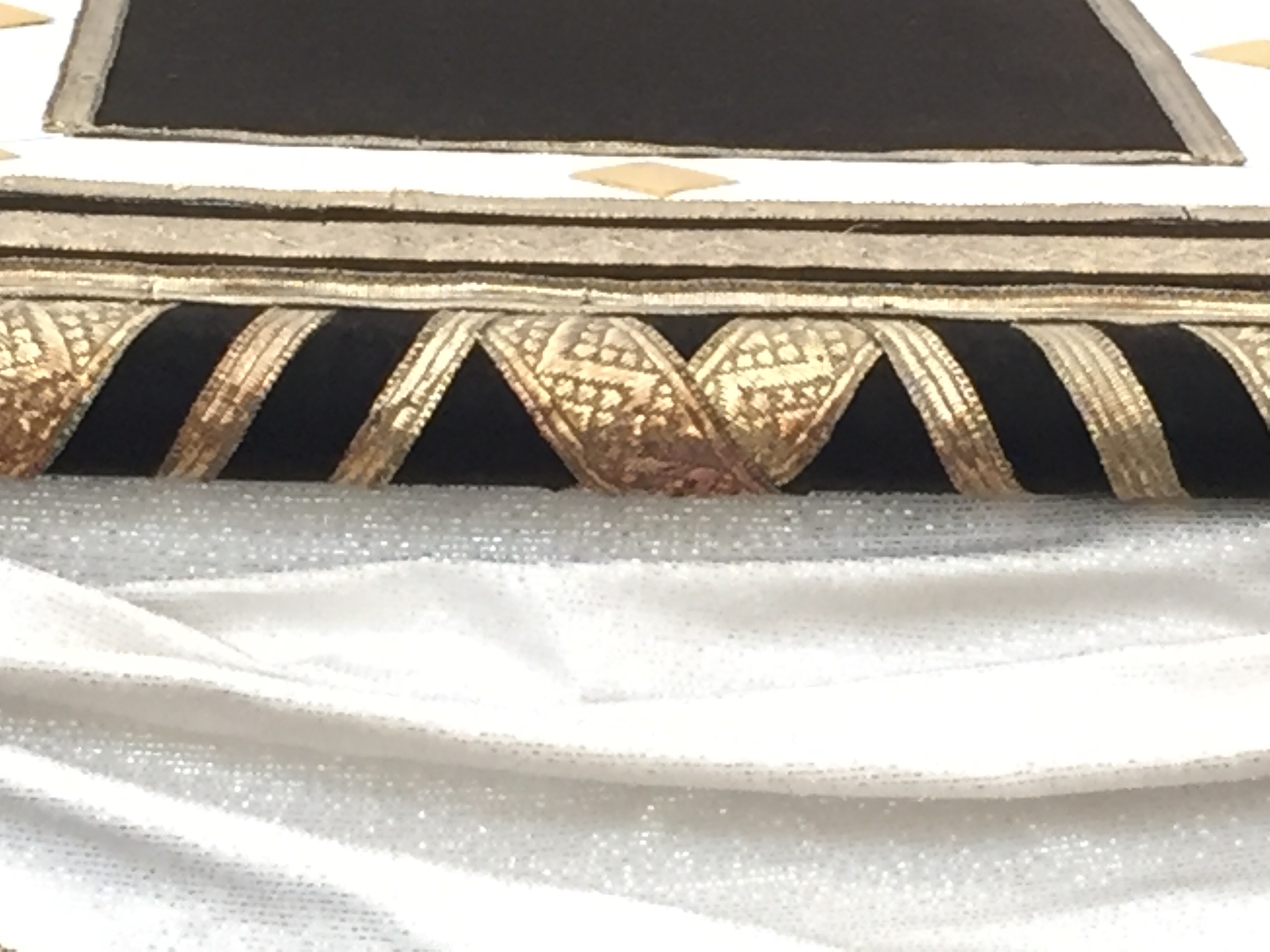
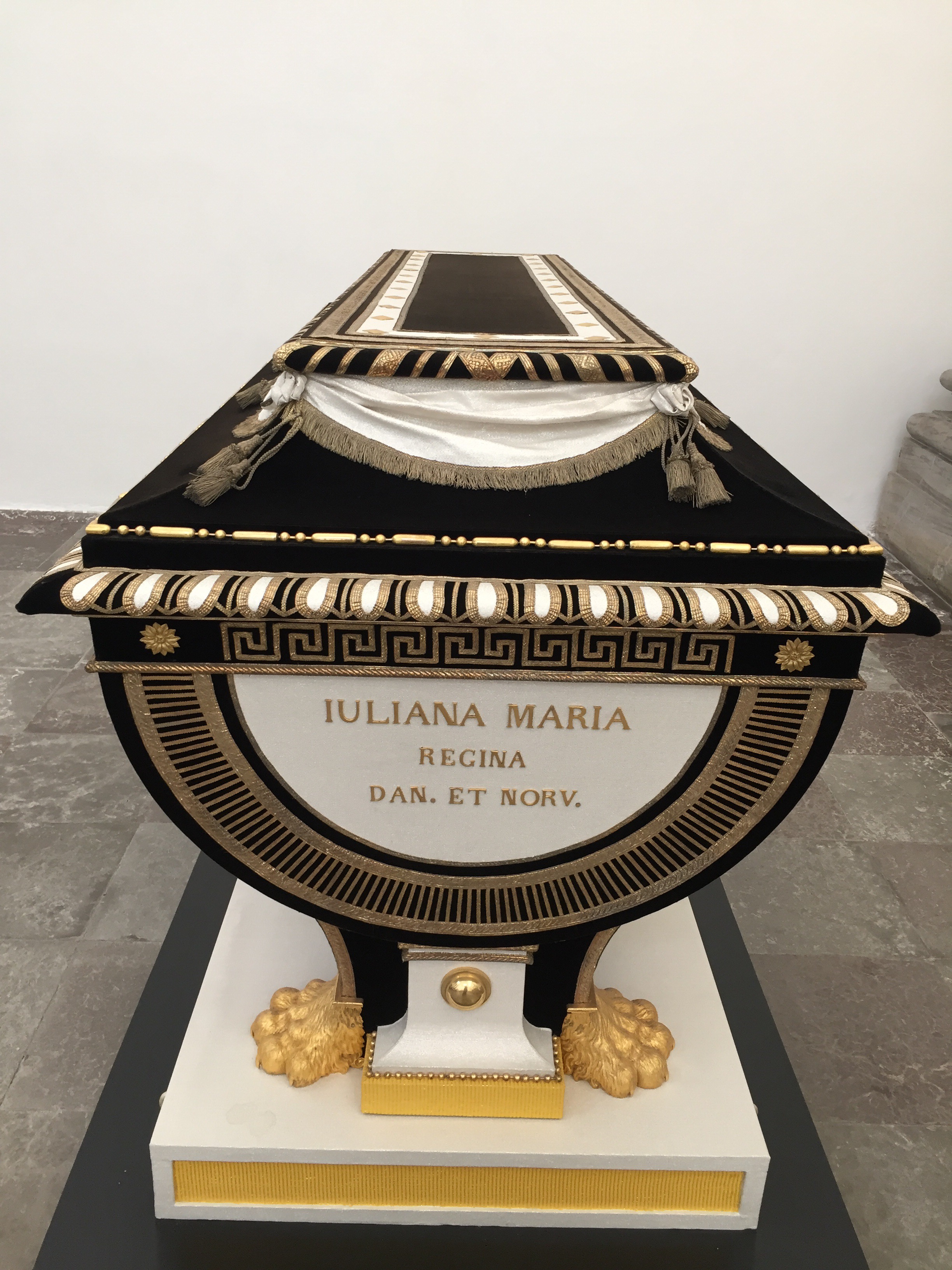
I was rather taken by the use of dead blacke velvet to cover some of the coffins. Intending no disrespect to Juliana Maria, my eye was caught by some of the gold trim … It looks very like brocaded tablet weaving.
Christian 1’s chapel is also richly painted with frescoes from the second half of the 1400s.
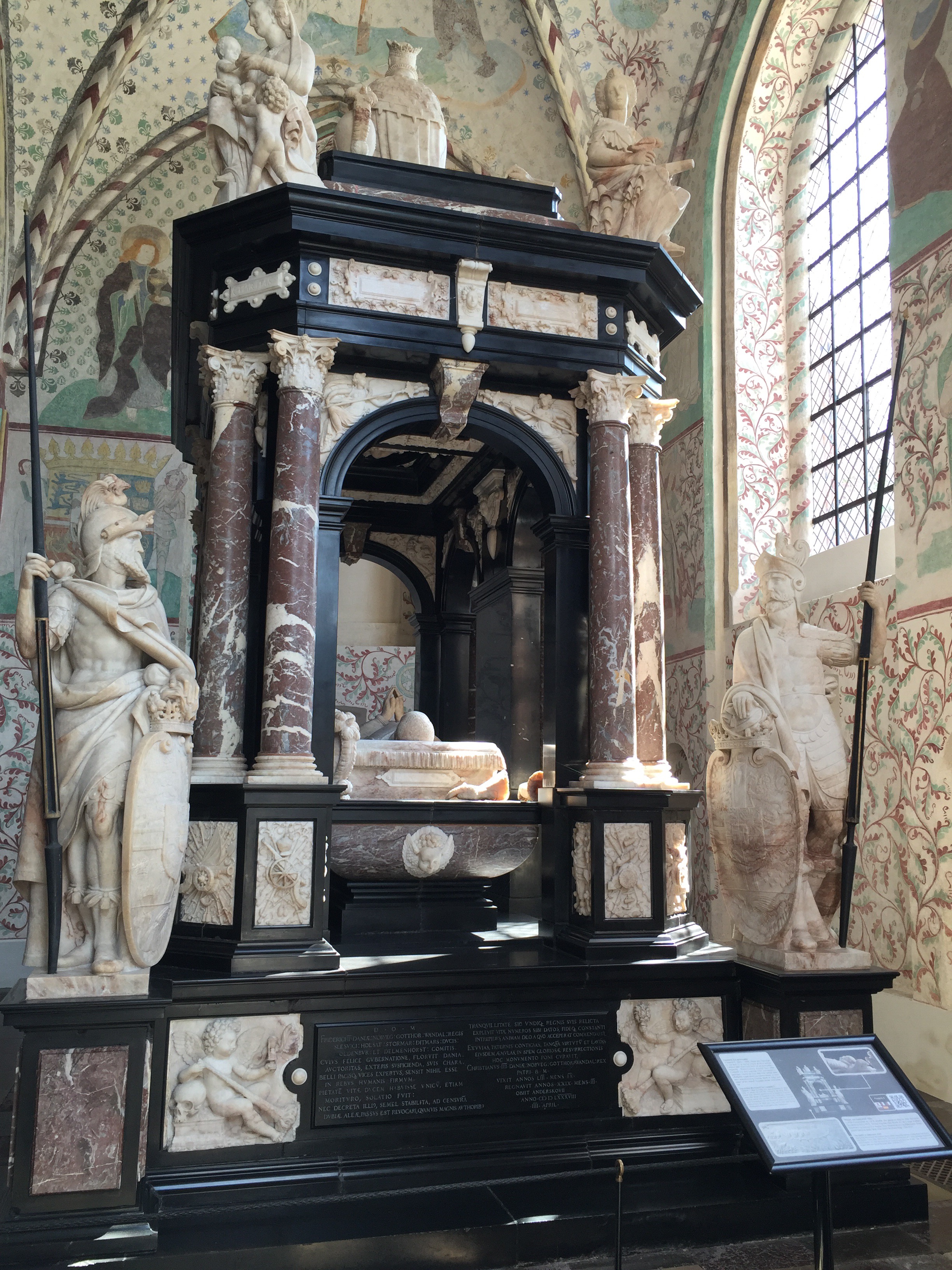
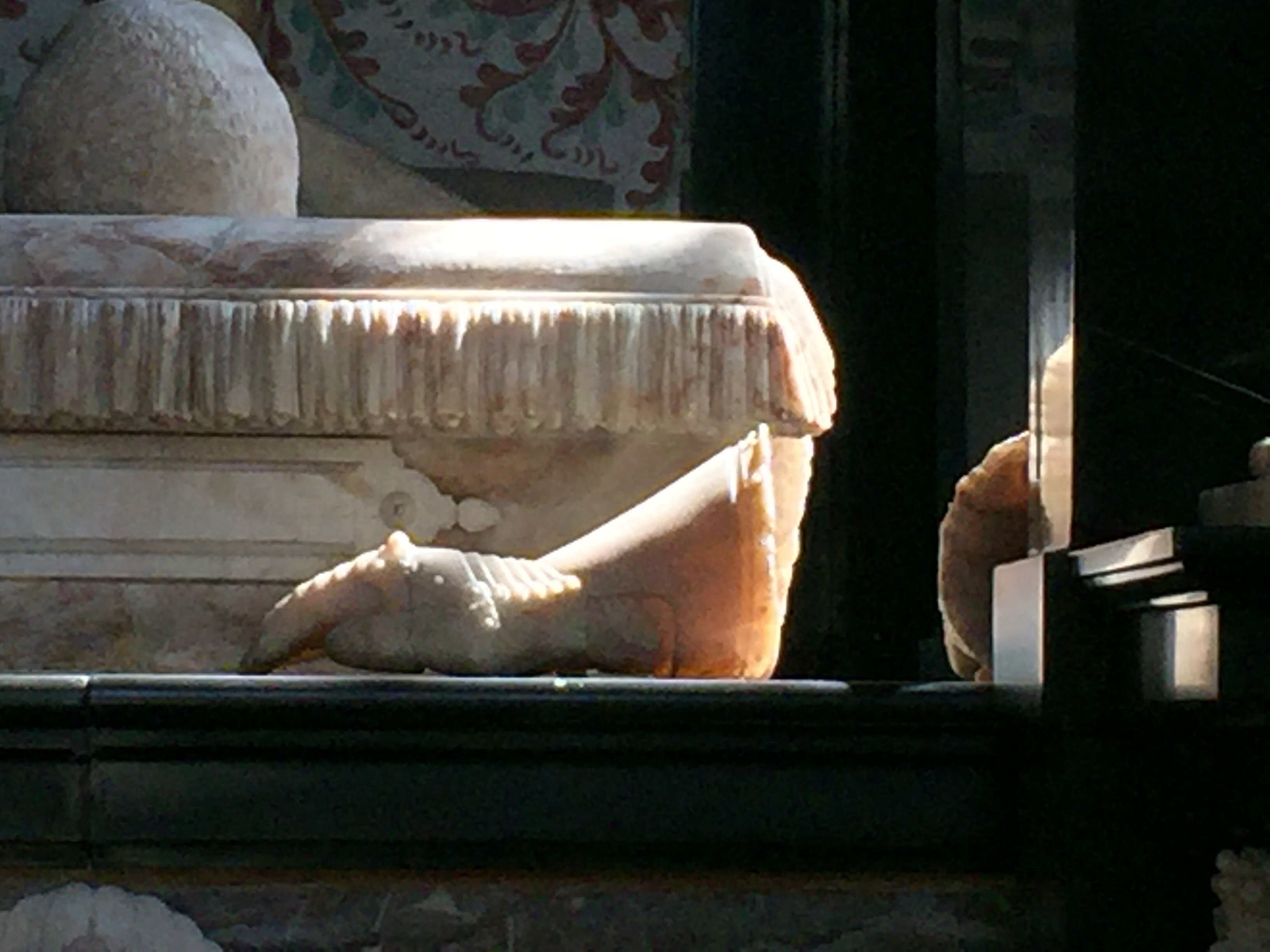
It’s worth several hours.
Follow the signs, walk down the hill to the harbor, and we’re there.

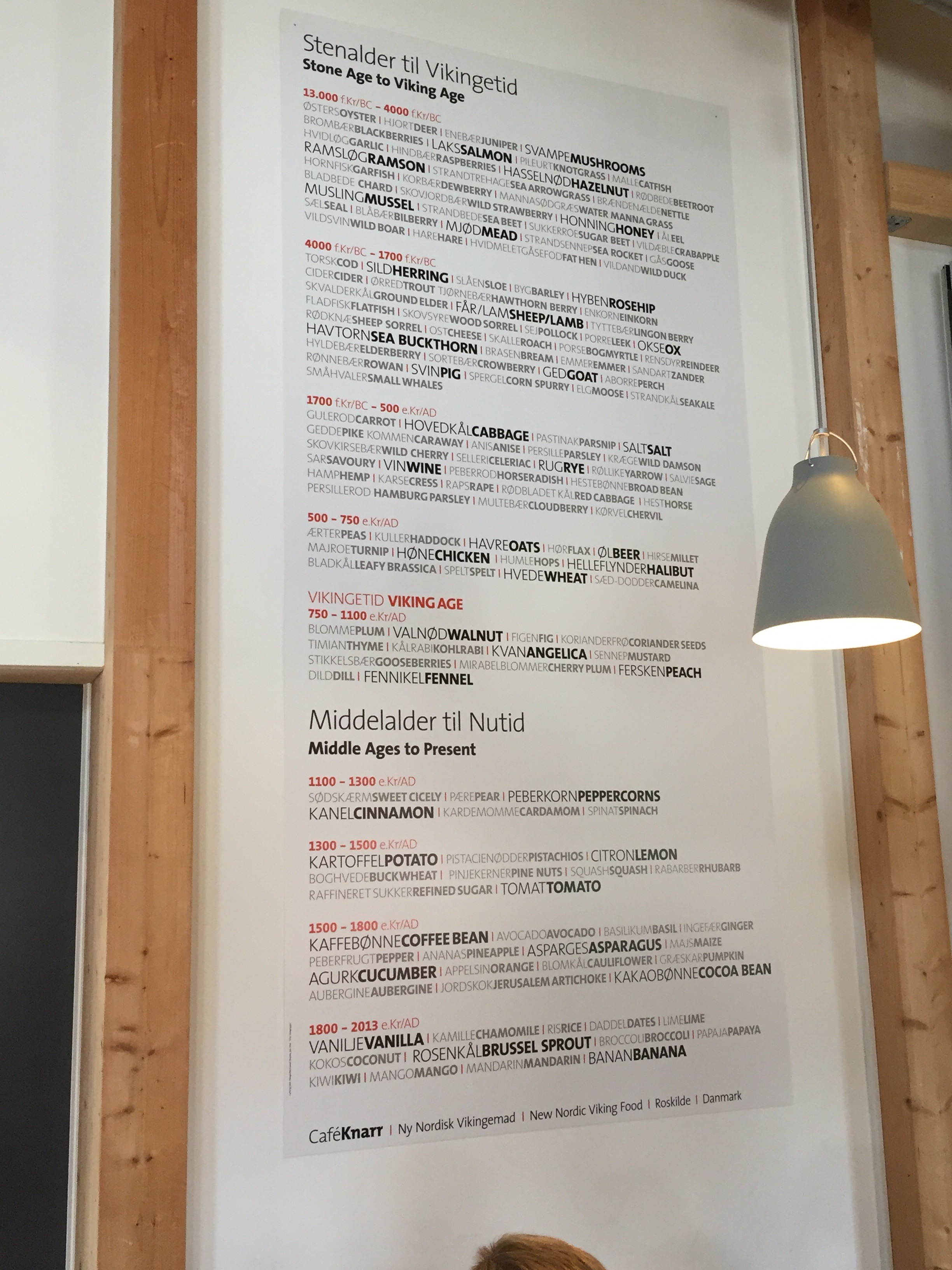
The café serves good food and information
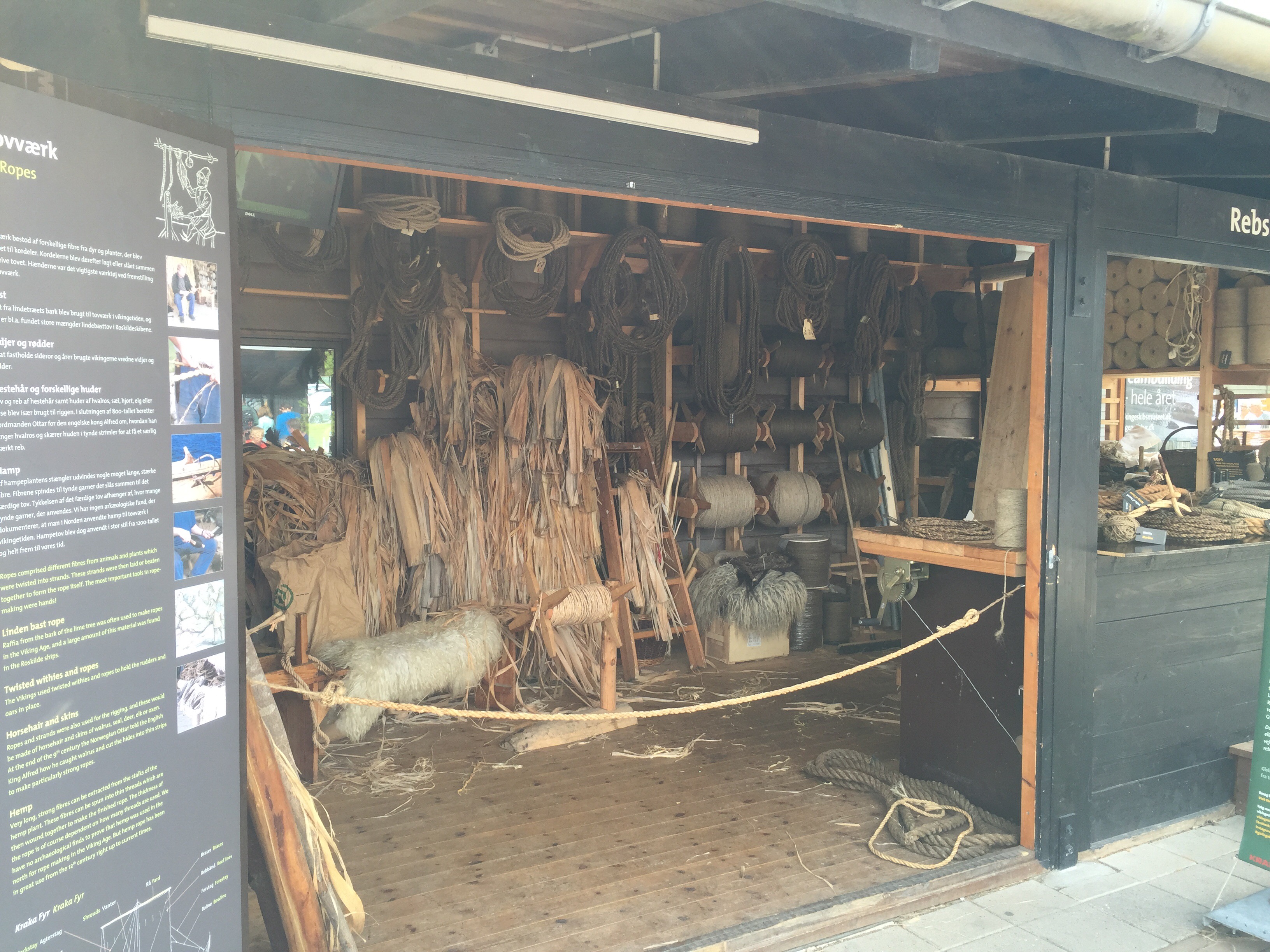
While we waited for our lunch (it had been a long morning and would be a longer evening), i bounced around the workshops in the yard. Especially this one: the rope maker. He was at lunch, but the materials – and a counter covered with sample ropes were there to be admired. Look closely at the cones of hemp yarn visible at right: that’s the last stock of hemp yarn tight-spun for  ropemaking in the world. If they want more they’ll have to commission it, and the minimum order is enough to rig an entire ship larger than any Roskilde have.
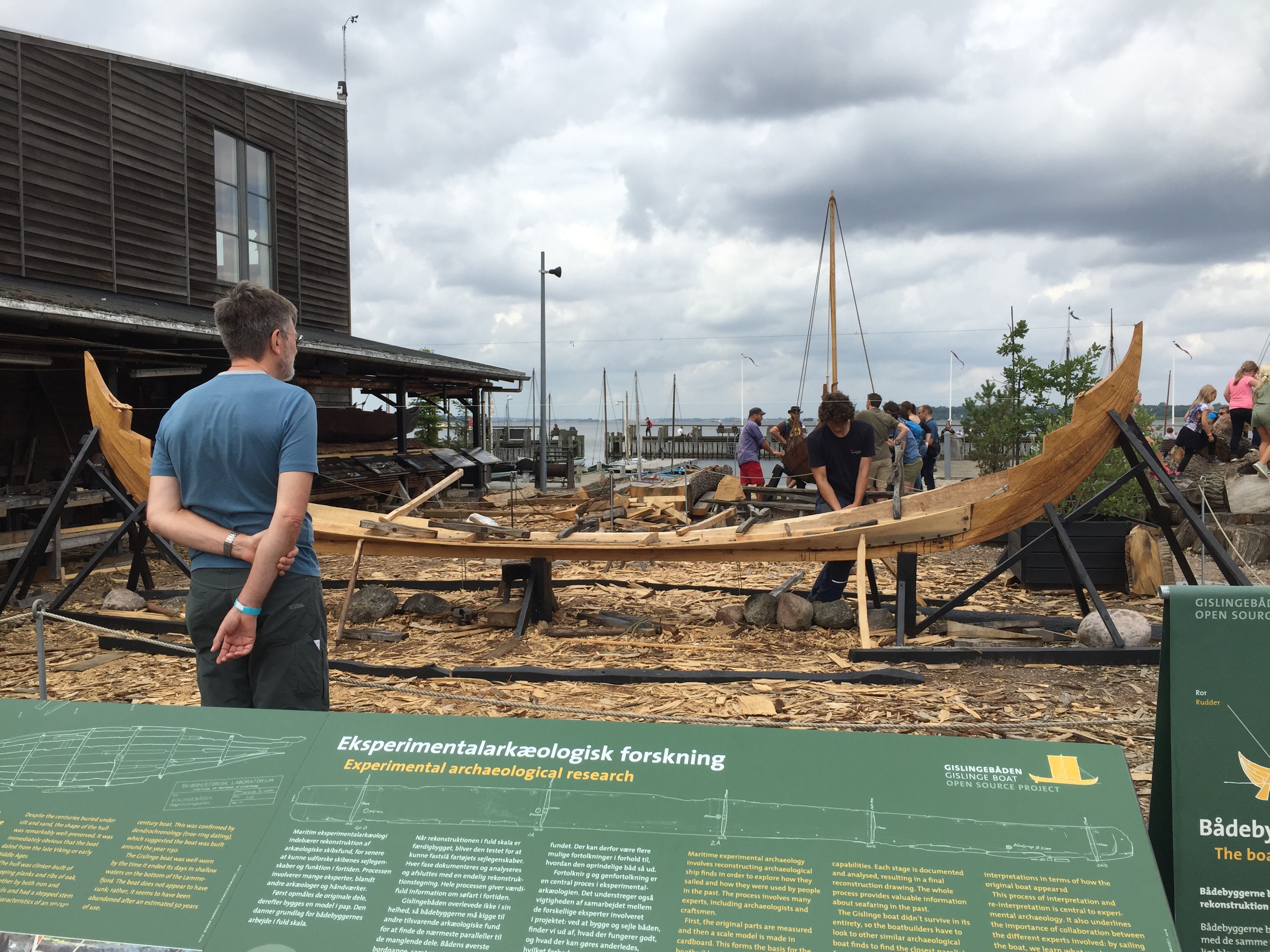
In addition to the ‘Viking’ boats, the ship museum builds and maintains a collection of traditional working boats. They’re building another take of the Gislinge boat, a working boat from c. 1130. She should be ready for the water some time in November 2016.
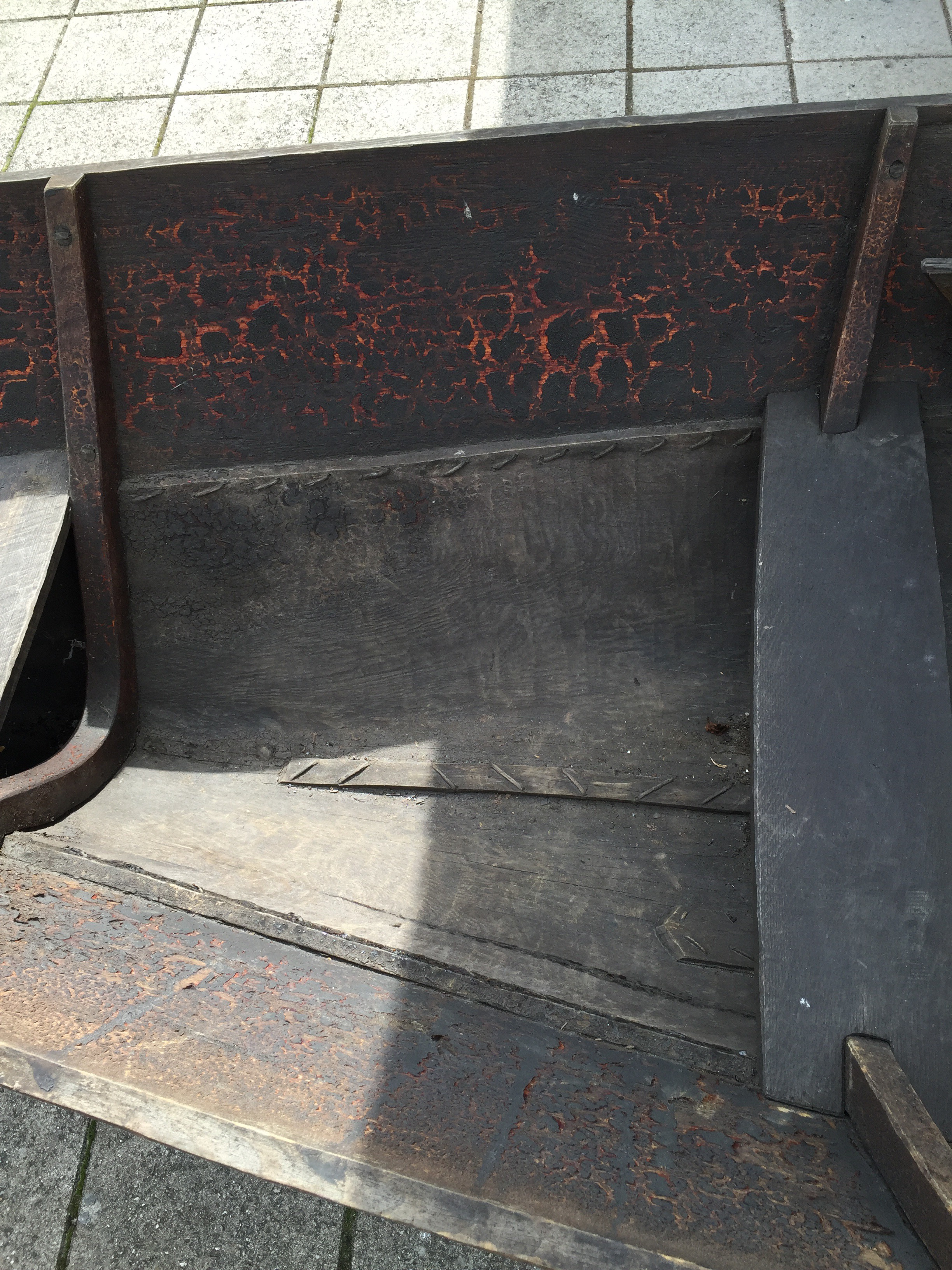
Early log boats (hollowed trees) were enlarged by adding boards to raise the side, sewn together with fir or spruce roots, or lime bast.
The rope maker was back! We talked about lime bast vs seal hide, and he showed me how to make rope from bast. I’ve studied Youtube to no avail, but now I think i understand.
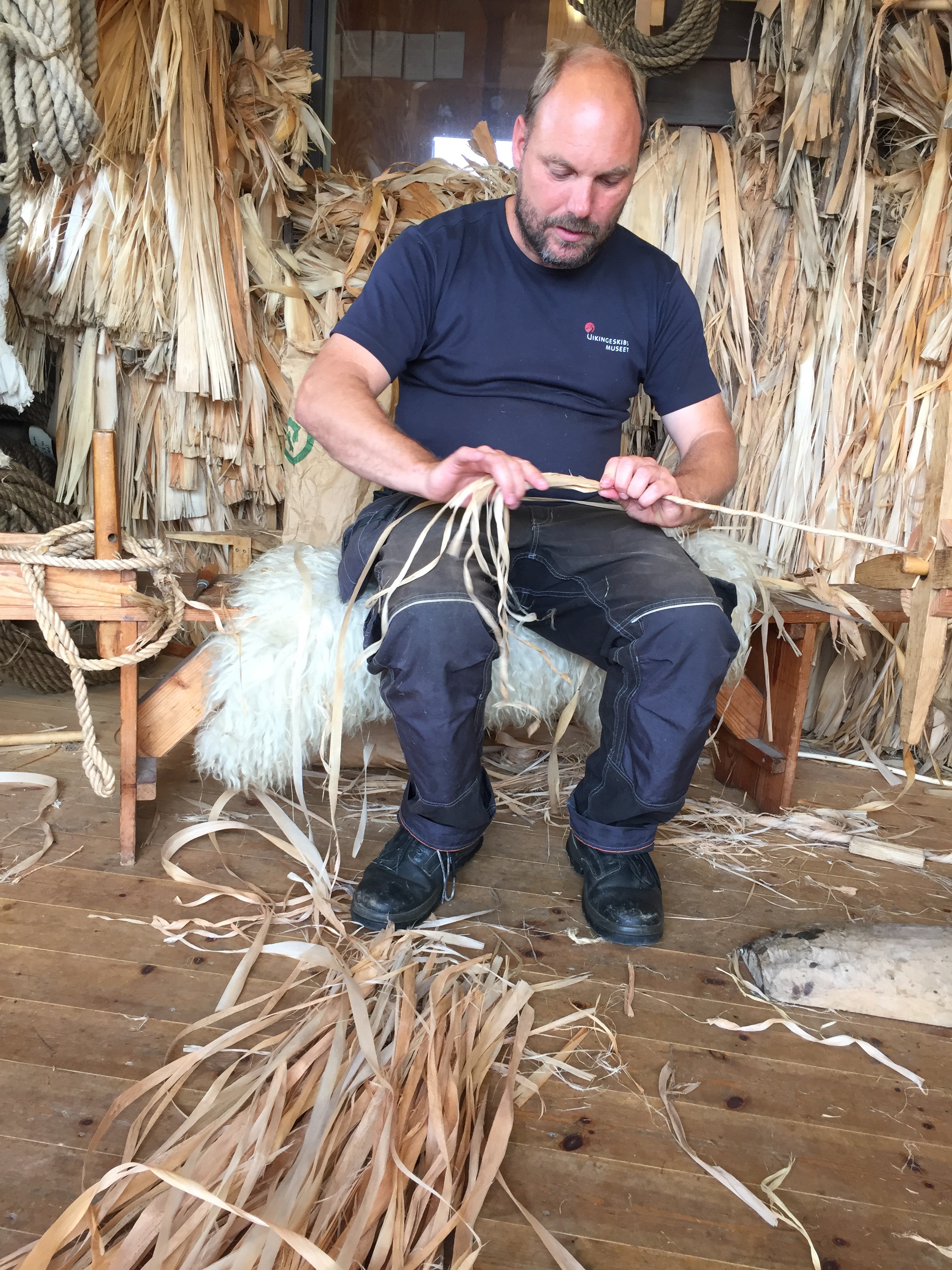
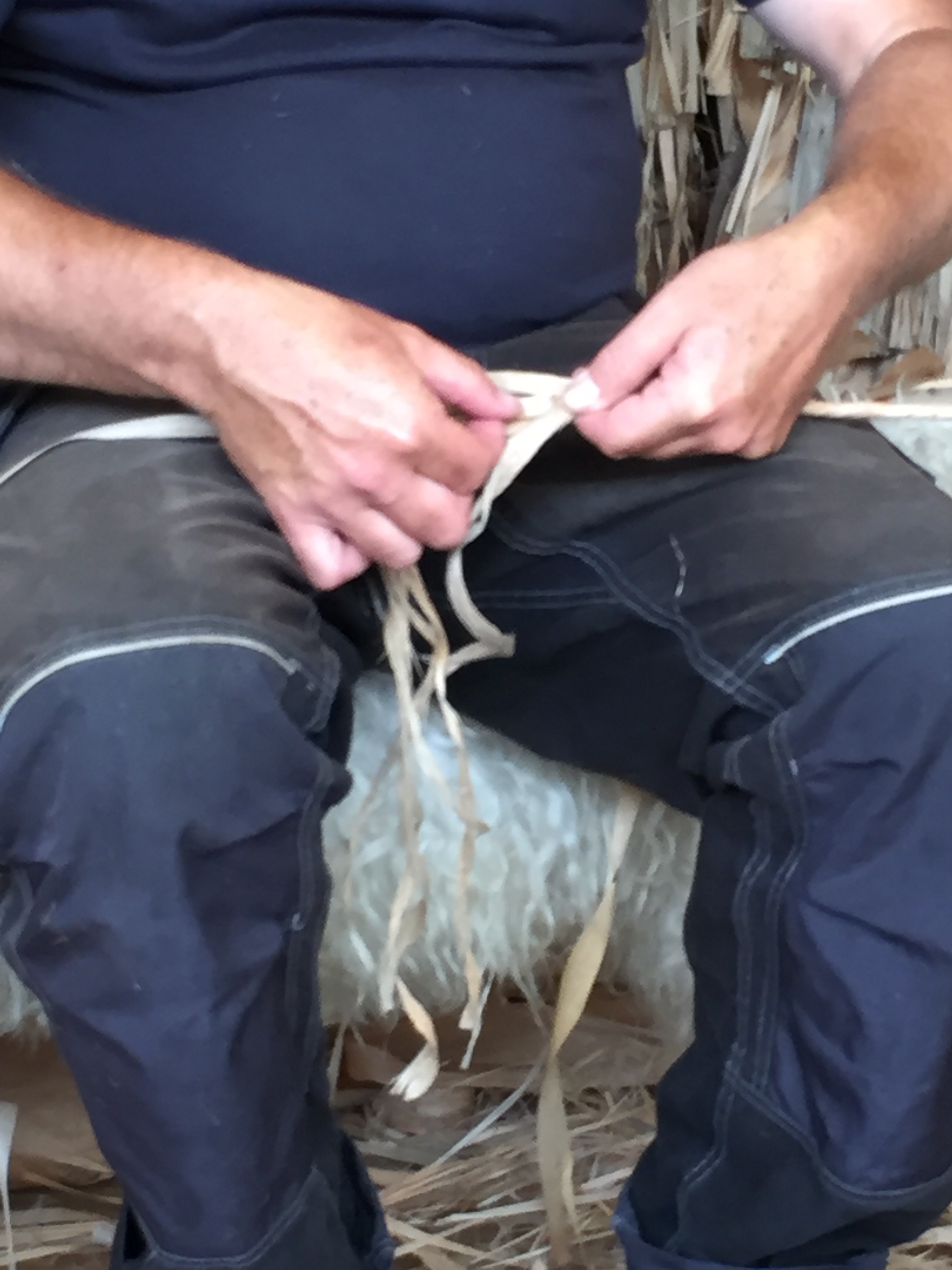
It’s more wrap than twist, although there is twist. The winder is used to add a little more twist.Starting the loop at one end of the rope. Each piece of bast rope is made to order, a specific length, with the ends finished in a specific way.
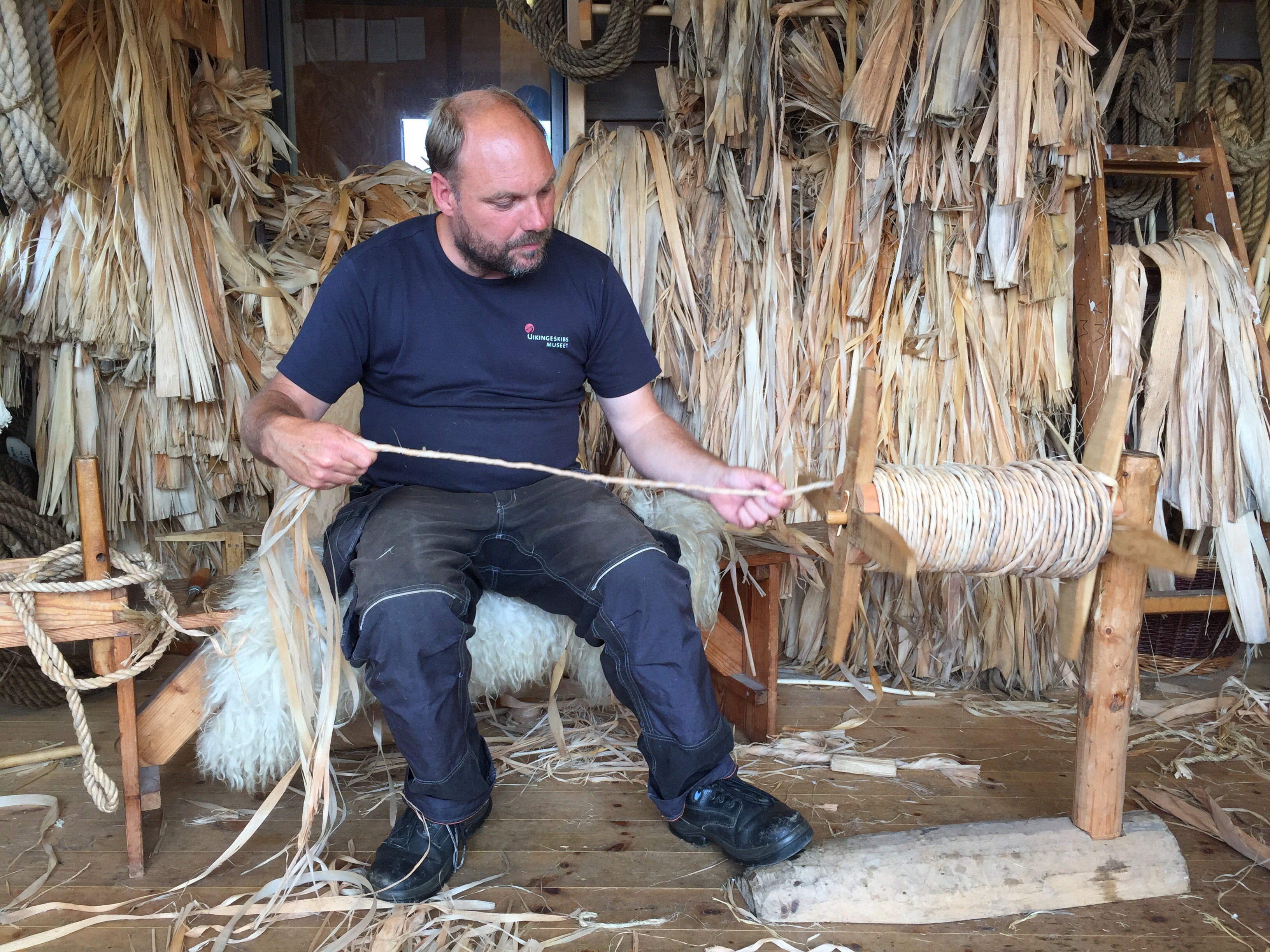
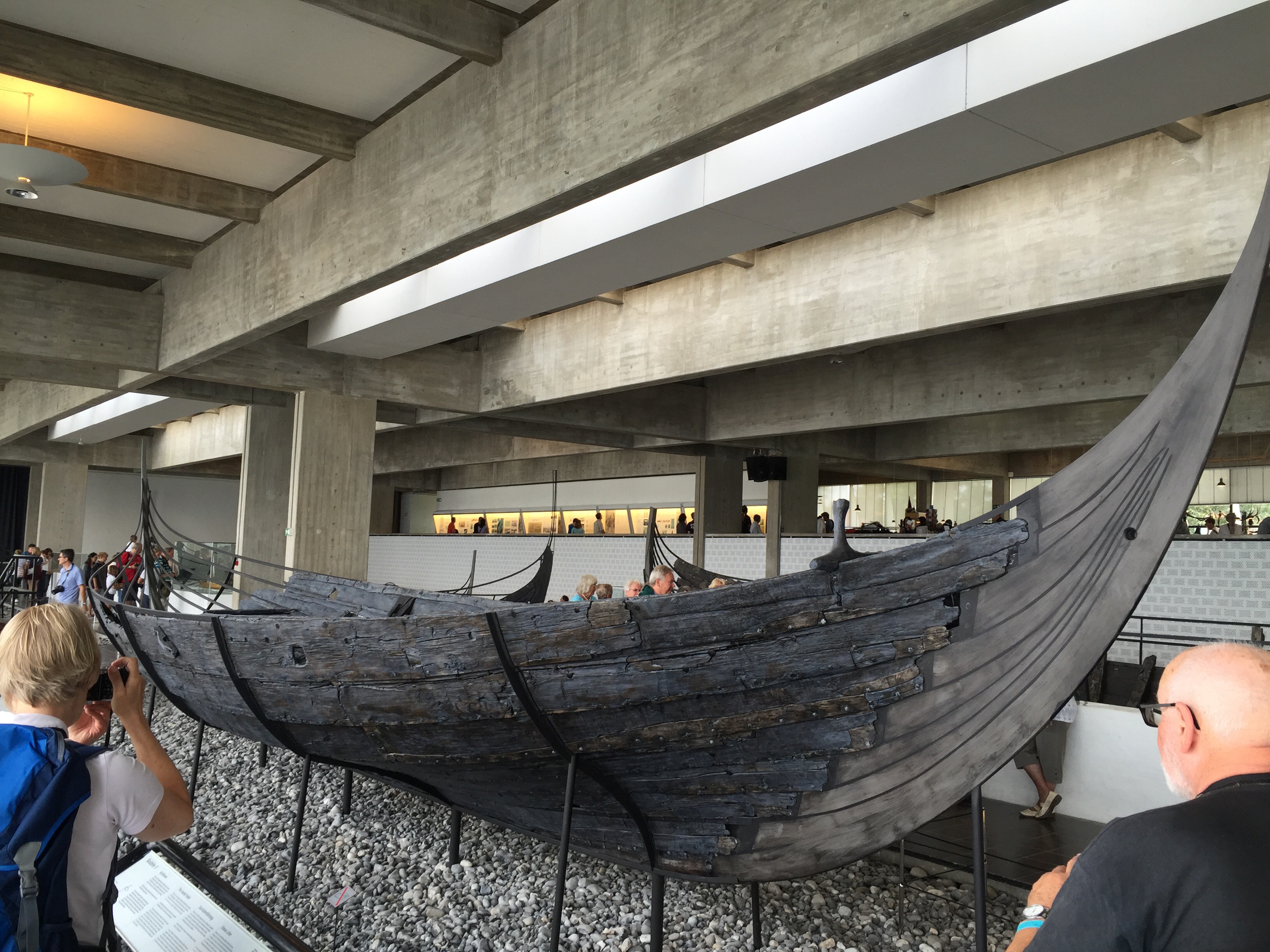
I spent ages watching and asking questions before i took my leave and we headed into what is for most people the main event: the building housing the restored original Viking boats.
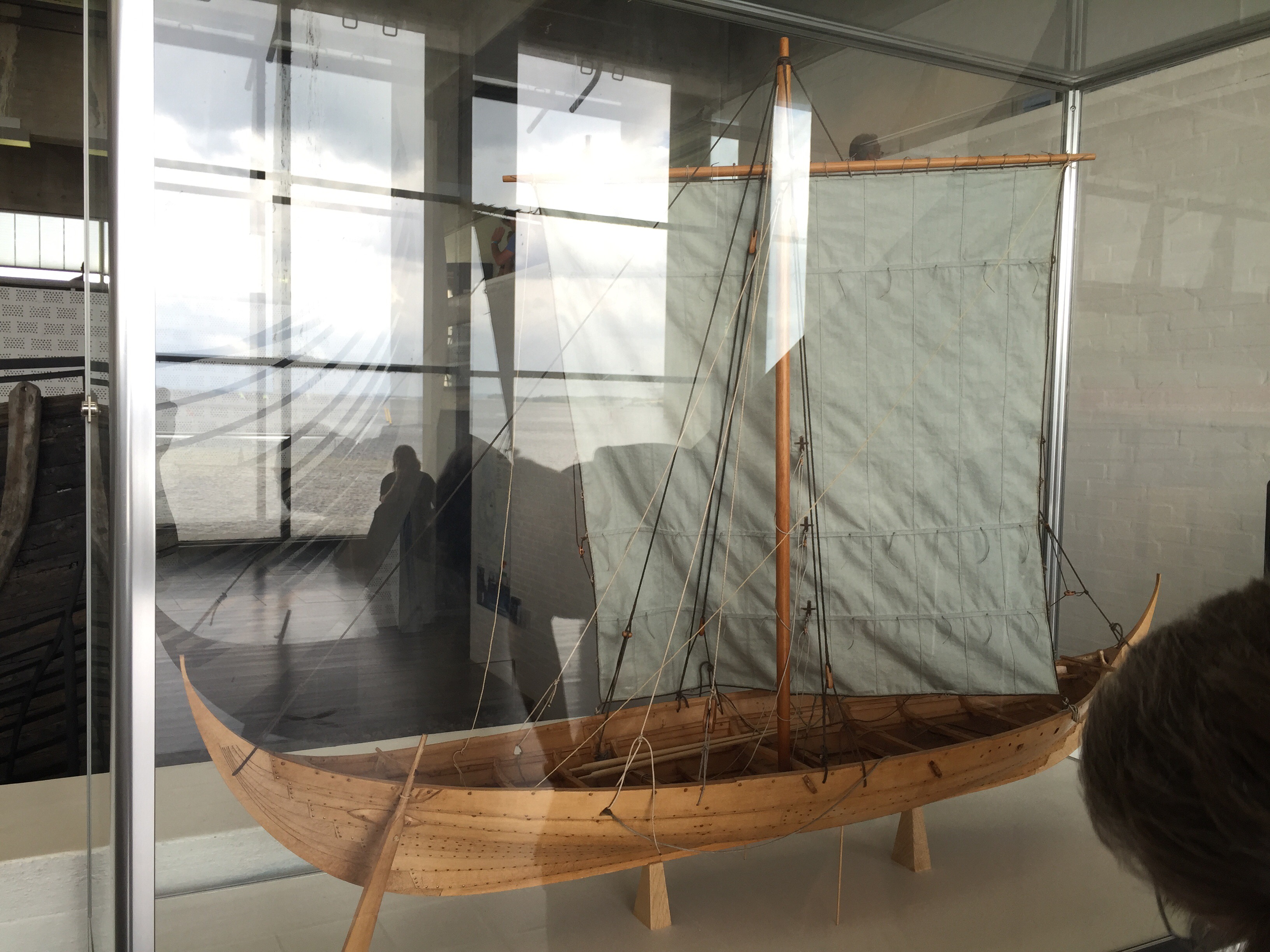
A 1:10 model of one of the boats, used to work out the principles before planning the full-size replica.
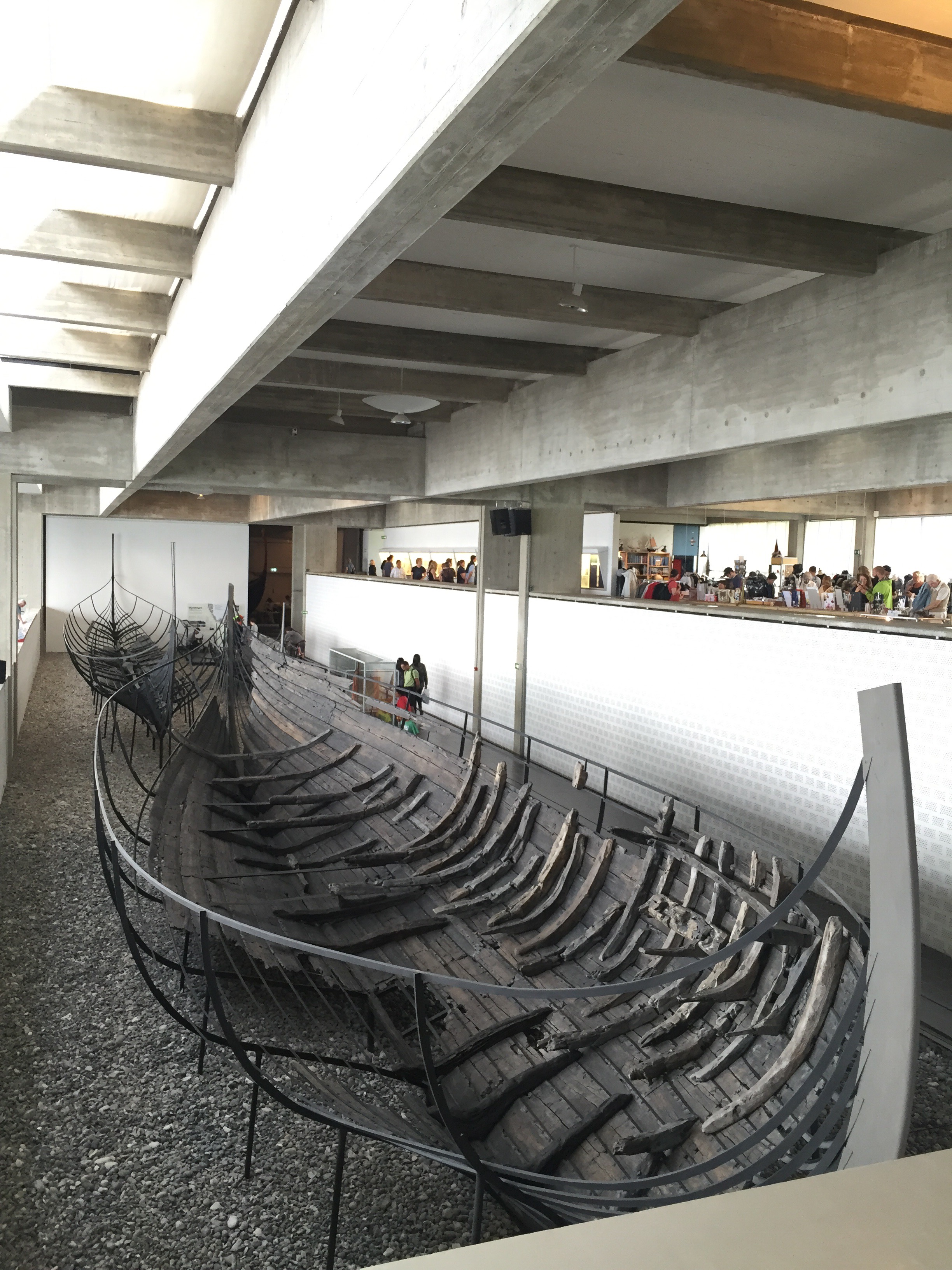
Down the far end, in good light, we saw a warp-weighted loom of linen yarn and someone sewing: Anna making linen ‘summer’ sails for the 2016 Gislinge boat.
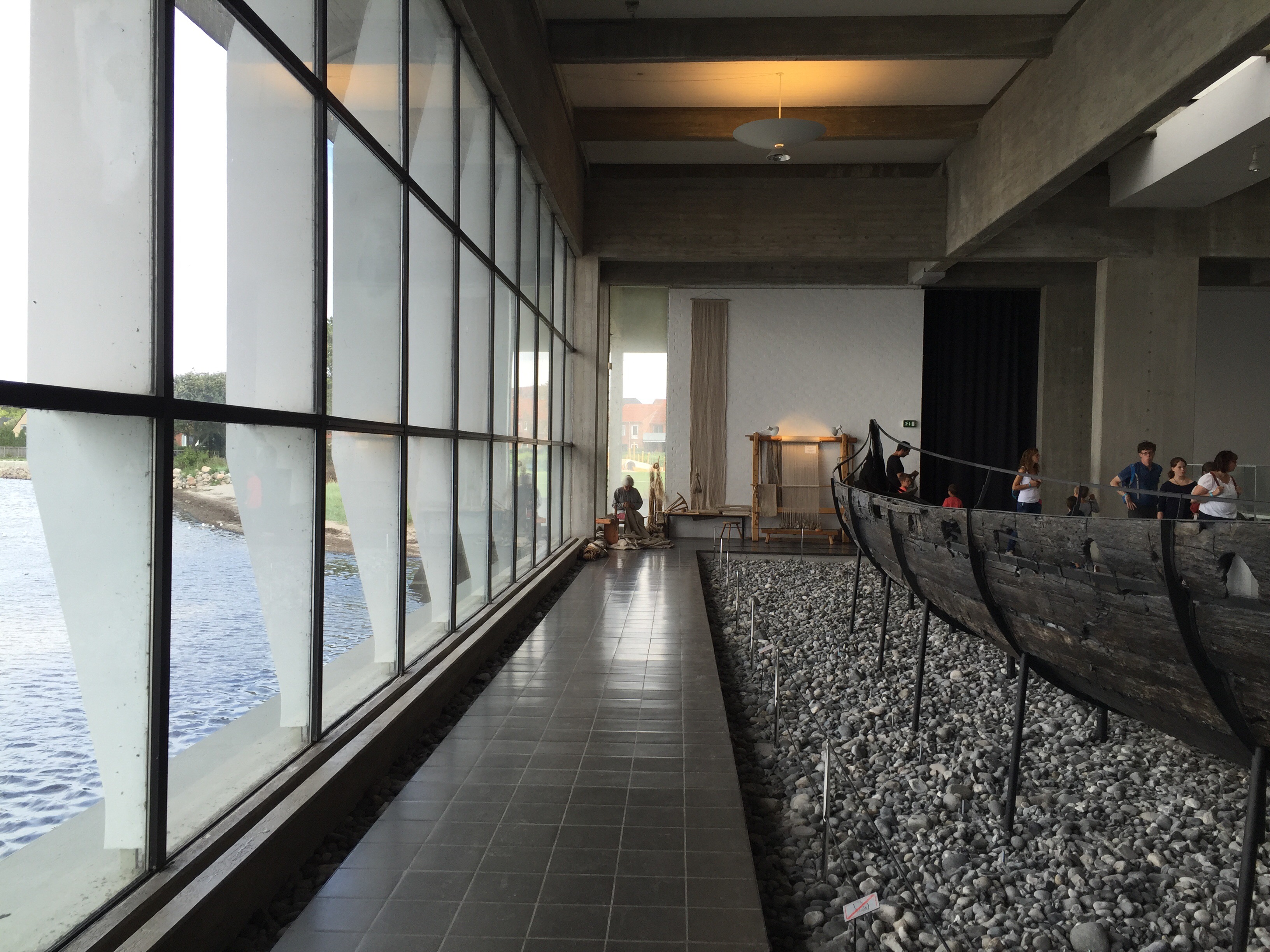
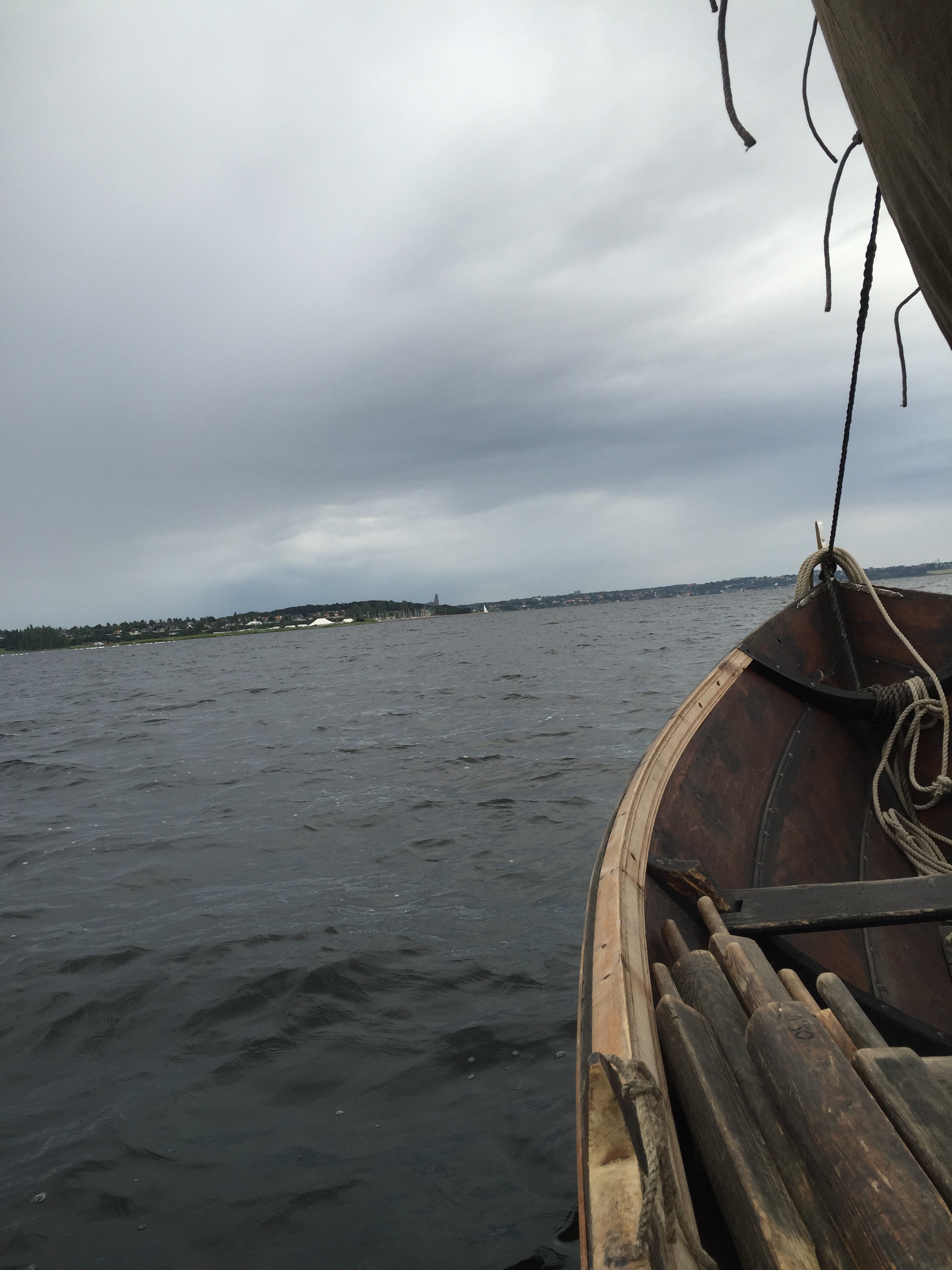
We talked about nettle and linen and the Must Farm finds, and then it was time to go and wait for the evening cruise. Not in fact one of the big and rather temperamental Viking boats, but a replica Norwegian working boat – with a hand-woven, hand-sewn greased woollen sail. Not hand-spun: it would take too long for one spinner who also has to weave! Anna spun samples that were sent to the mill. I don’t have many photos: I was a little reluctant to have my phone out while we were on the water. 
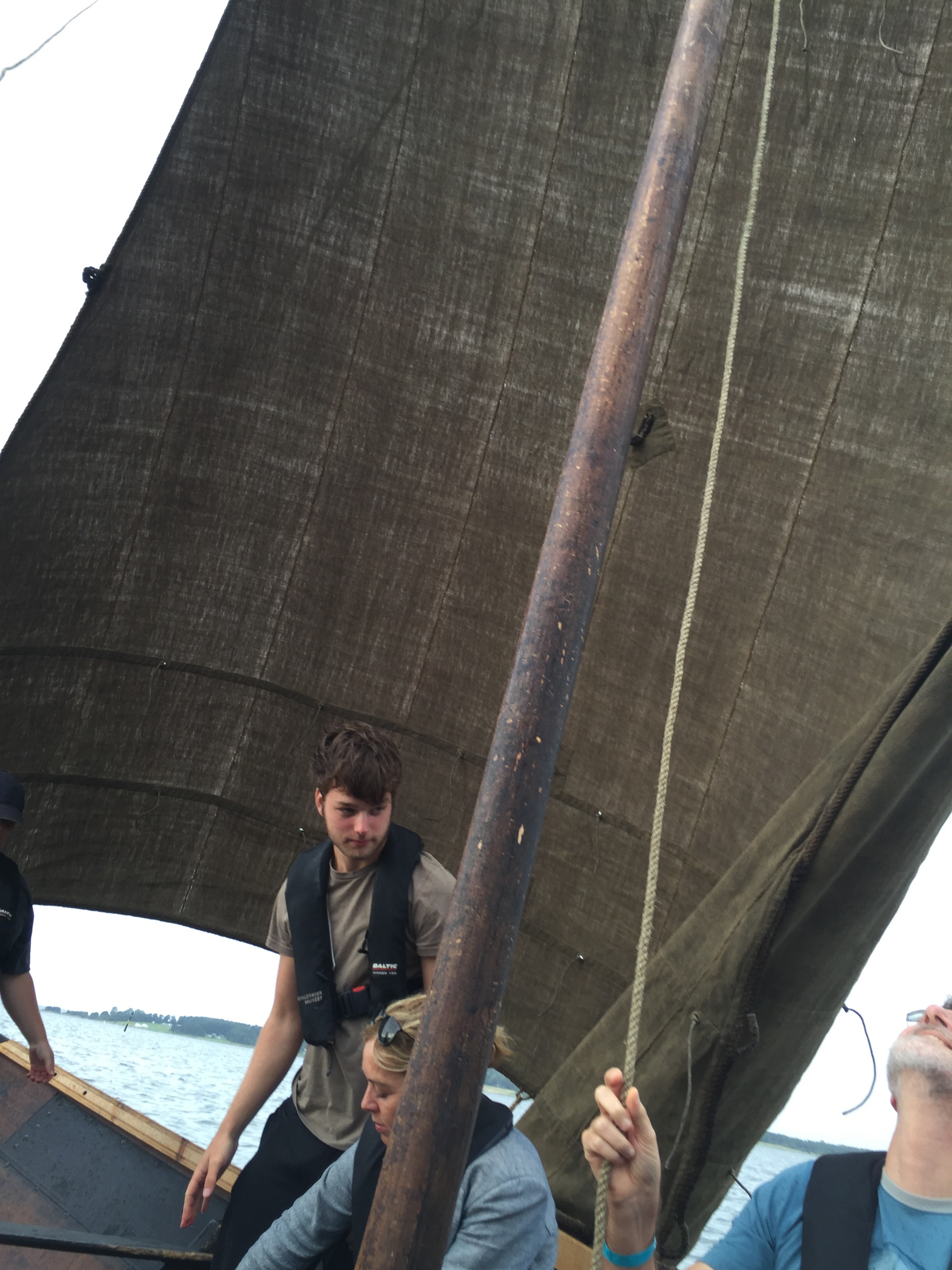
Apparently this is an old sail, wearing thin, so the wind goes through it more than it should. It catches more wind when freshly dressed, but people in the boat object to melted grease dripping from the sail in hot weather. 
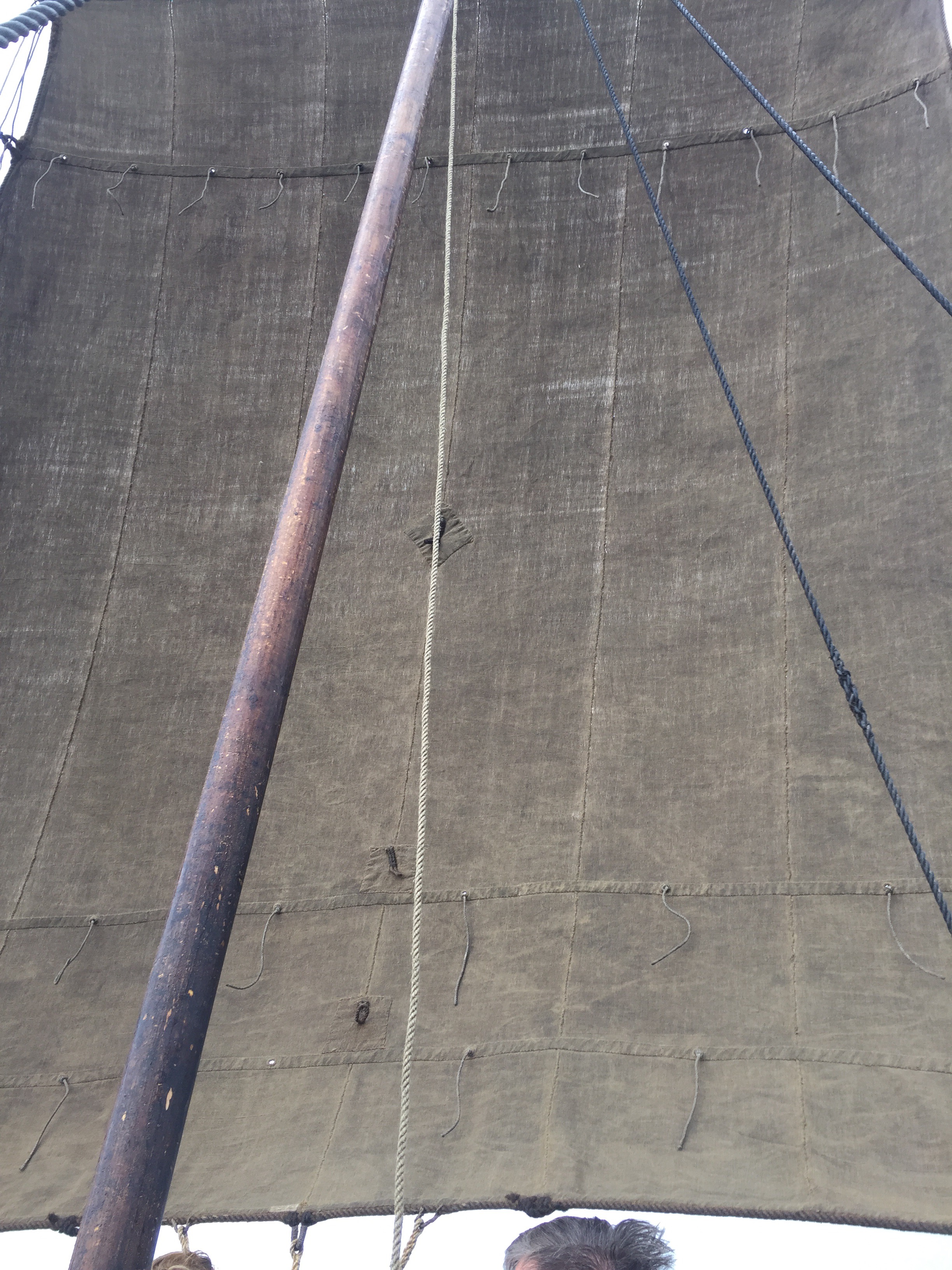

We rowed out of the harbour (i like rowing, except for the person behind me who couldn’t keep stroke) until we caught the wind and could raise the sail. We sailed out, around the island and back; tacking was required. A. had the tiller for most of the journey back and was told he’d done very well fir someone who’d never sailed before. It’s not easy trying to keep the wind in the sail AND the boat making progress to the harbour. Then we rowed back into the harbour and i still liked it, except for the same person behind me.

And then we walked to the station and caught the train back to Copenhagen. 2300 hours was a long day of fun.

Copenhagen Day Three (most of it, anyway)

For at least the last week our weather app has said this will be the wettest day, so we declared it Museum Day, just in case the app was right. 

So, after breakfast at the Lagkagehuset on Torvegade in Christianshavn – where we ate yesterday, and they remembered me as the English person with the skulls – we walked to the National Museum of Denmark. And then around the block because it wasn’t open yet. A, poor man, was following me, and I had one goal: Danish Pre-history (which is to say Danish history before anyone wrote it in words). 

I have, therefore, A Lot of pictures. Well over 100, in fact. Here are some of the highlights…

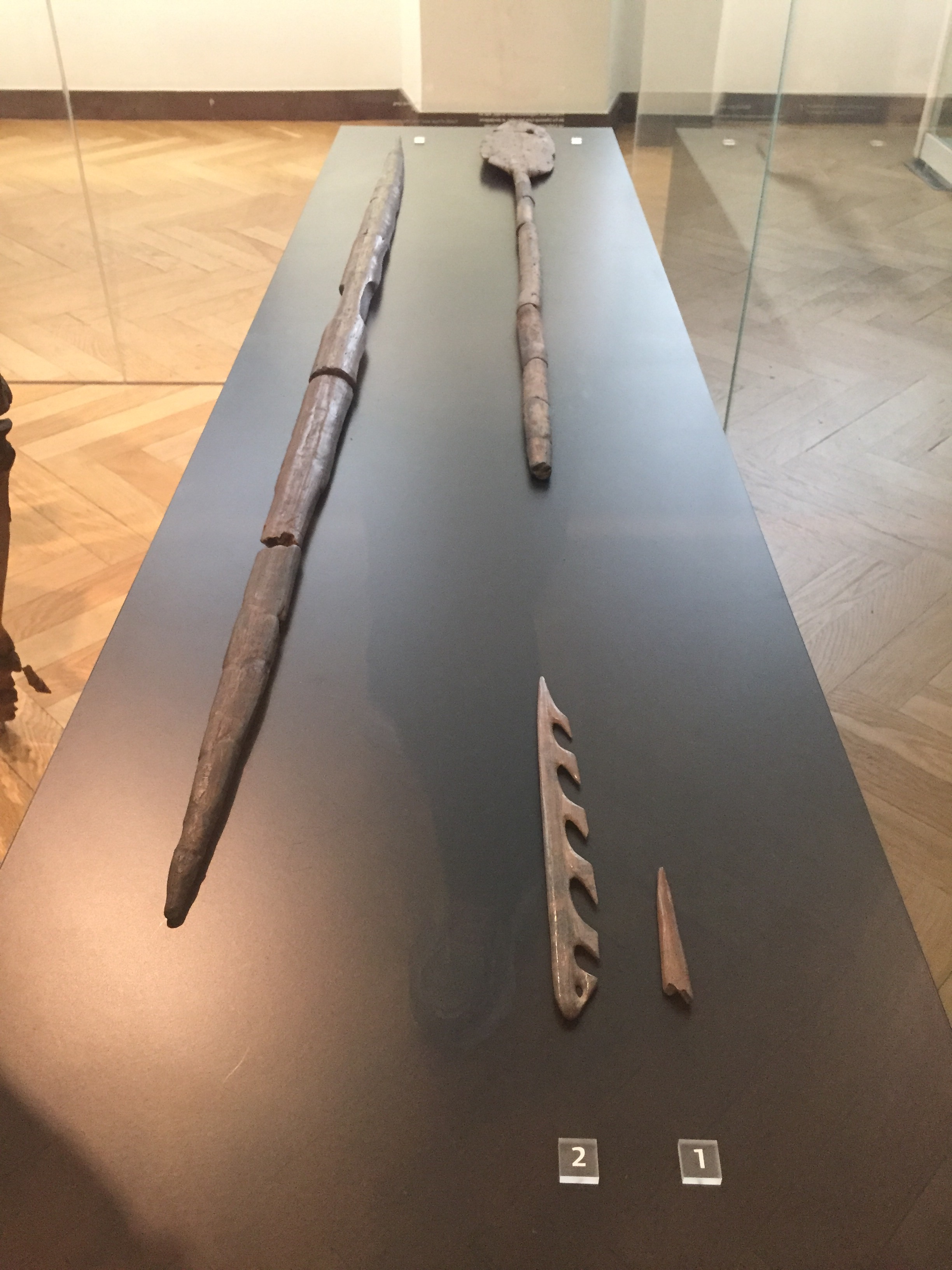
The skeleton of an elk that died in a bog nearly 9000 years ago.Probably not of natural causes: the small bone point was amongst the bones, the harpoon and shafts nearby.

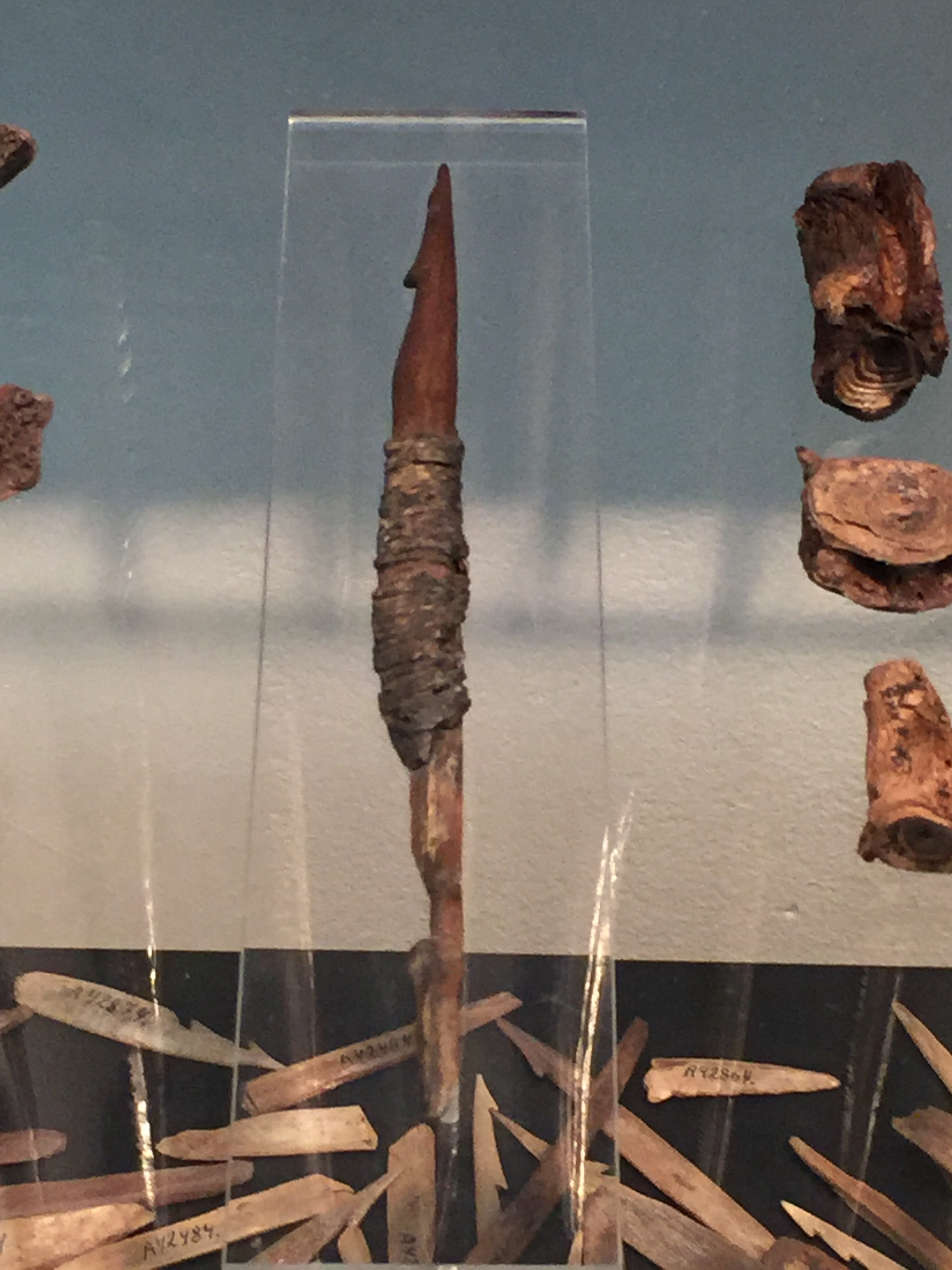
A fragment of fish spear stll bound to its shaft with BAST FIBRES(!! my emphasis), 8000 years ago.

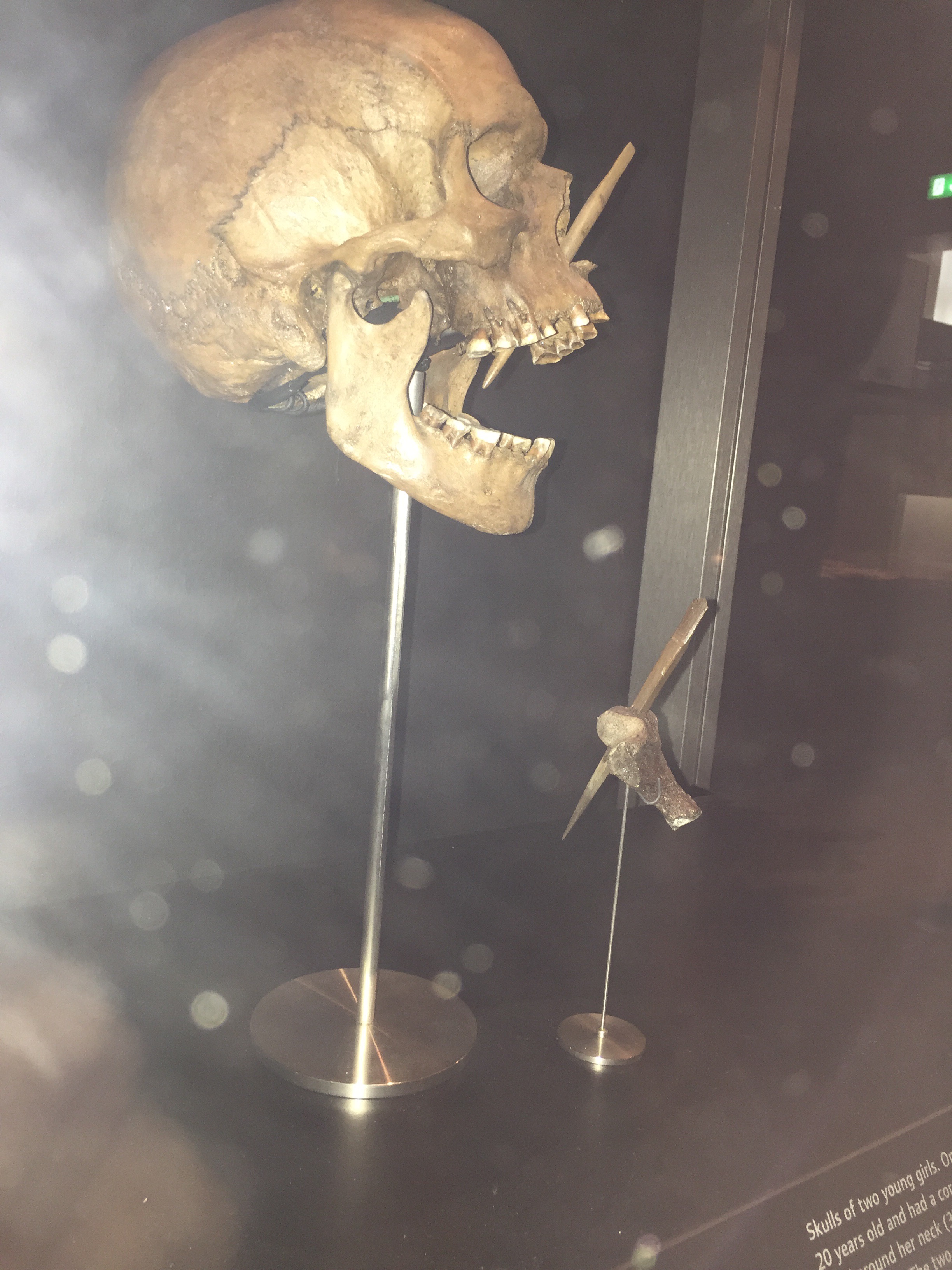
The skull of Porsmose man, bone arrow through his face and another through his sternum. It was striking (ha, not funny) how many weapons were on display in the Prehistory section. Admittedly they survive when other organics might not, but still: imbalance.)

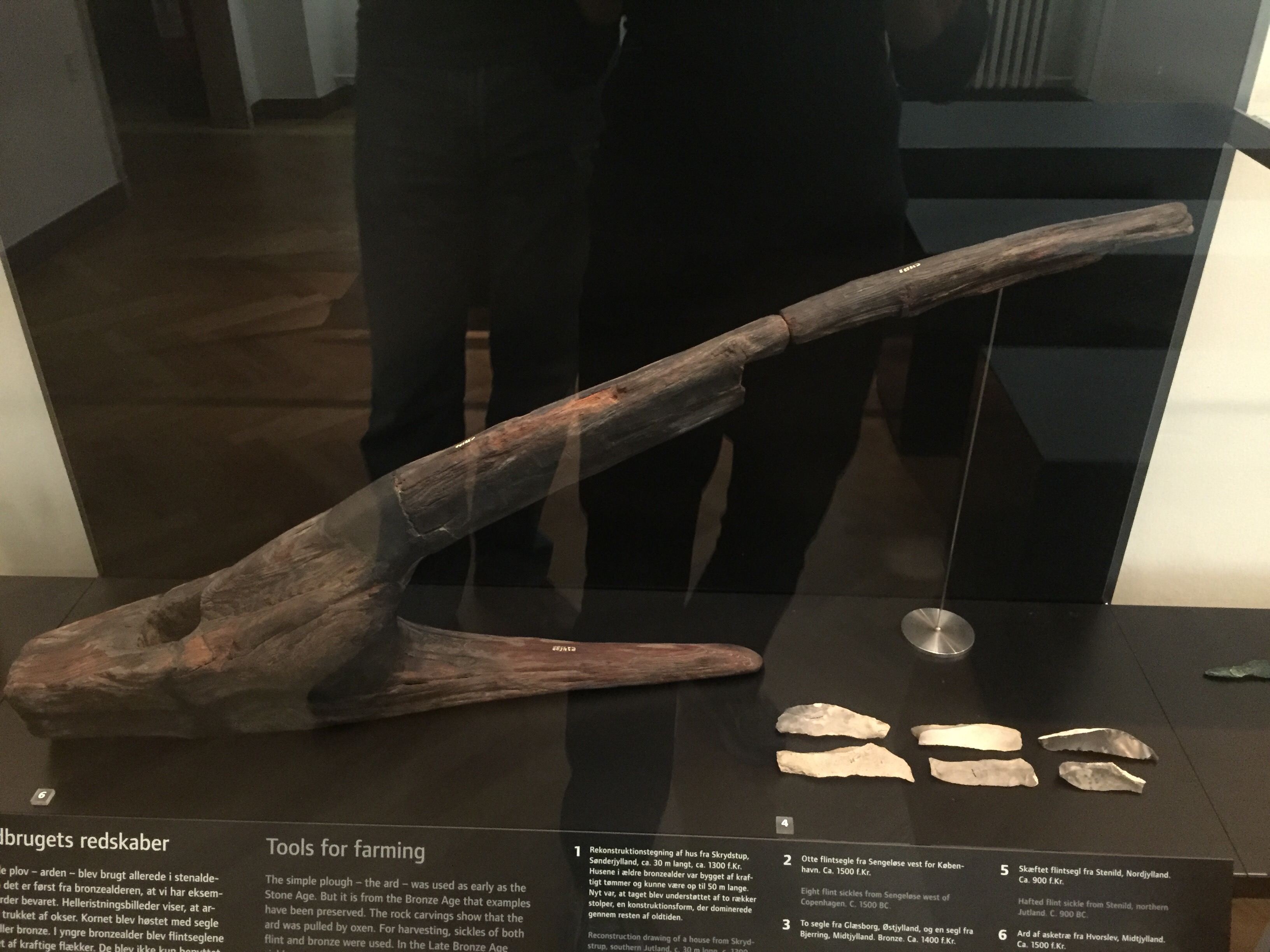
This is so amazing I have trouble finding the words to explain its significance: an ard. The first, the earliest plough. Probably pulled by one human, guided by another. An agricultural revolution before the concept existed.

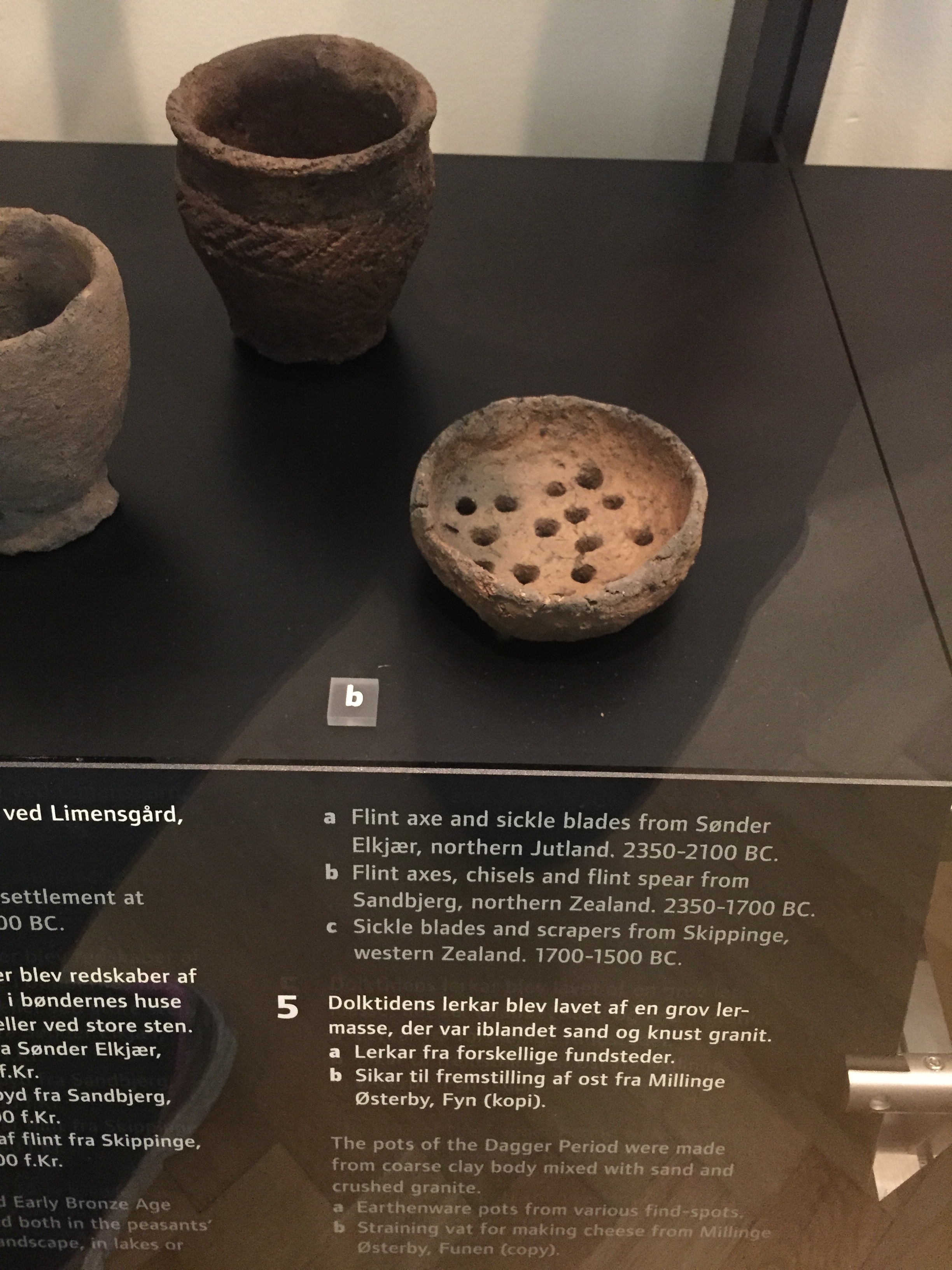
Crops and domesticated animals: a strainer for making cheese.

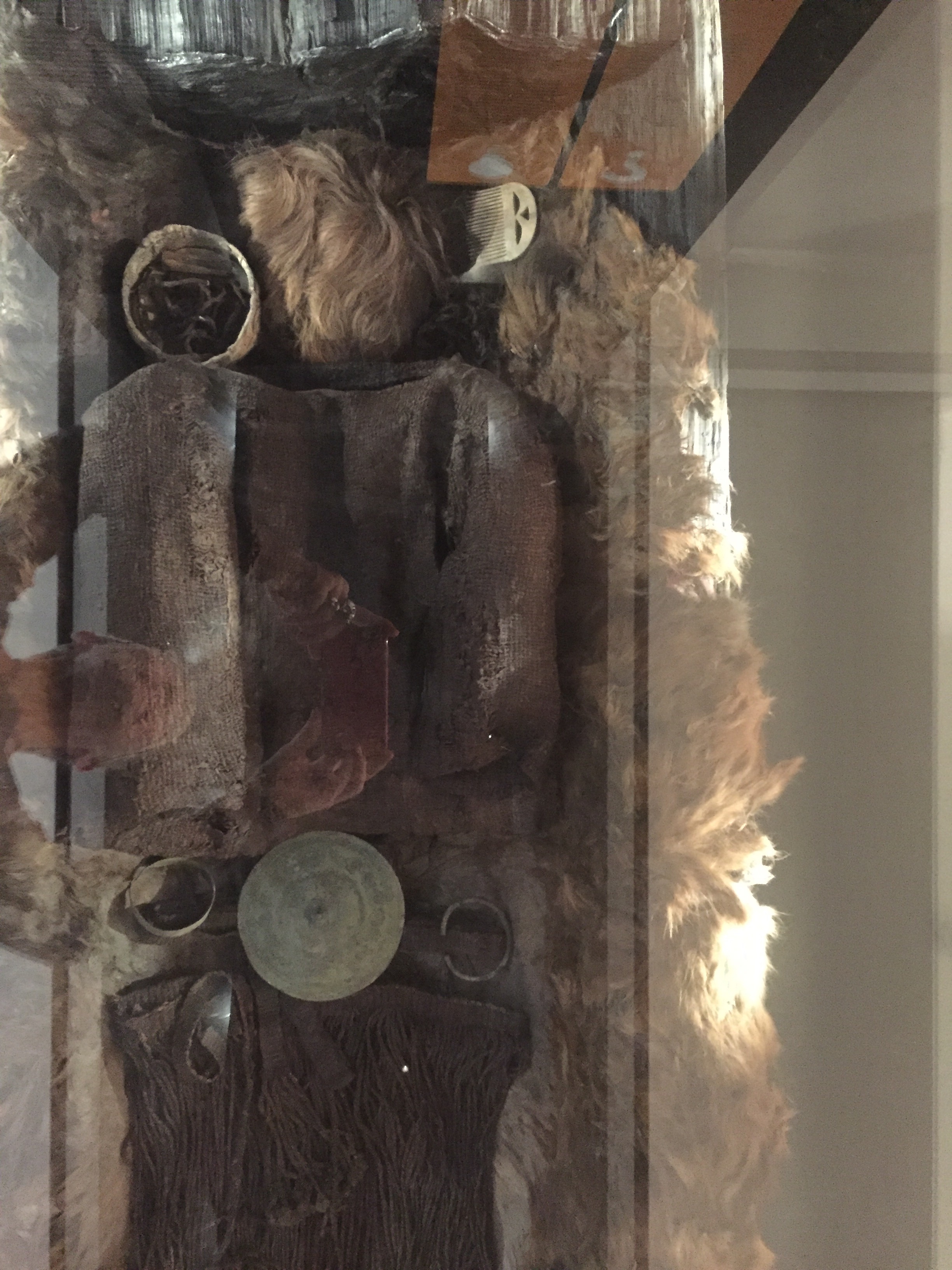
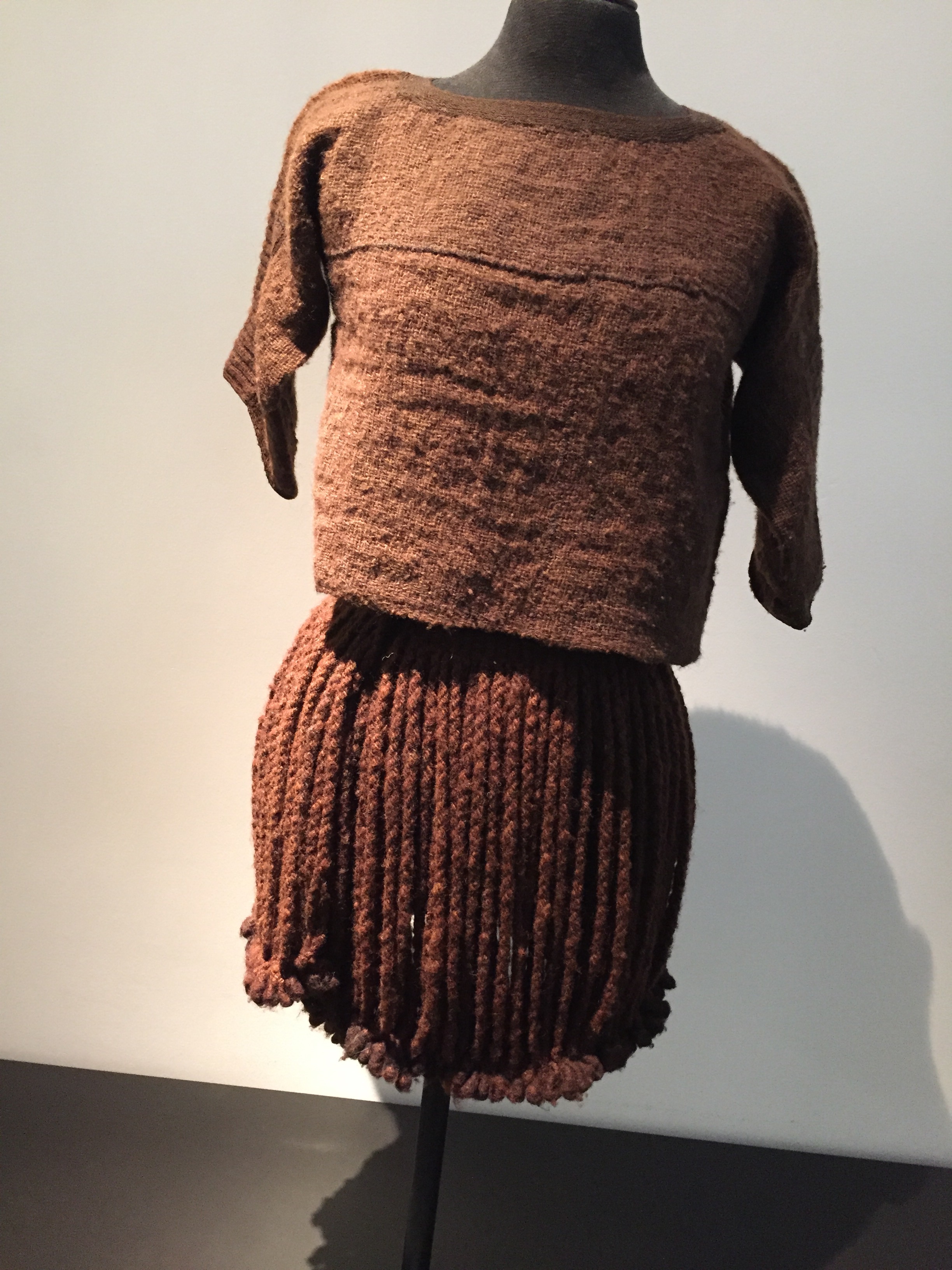
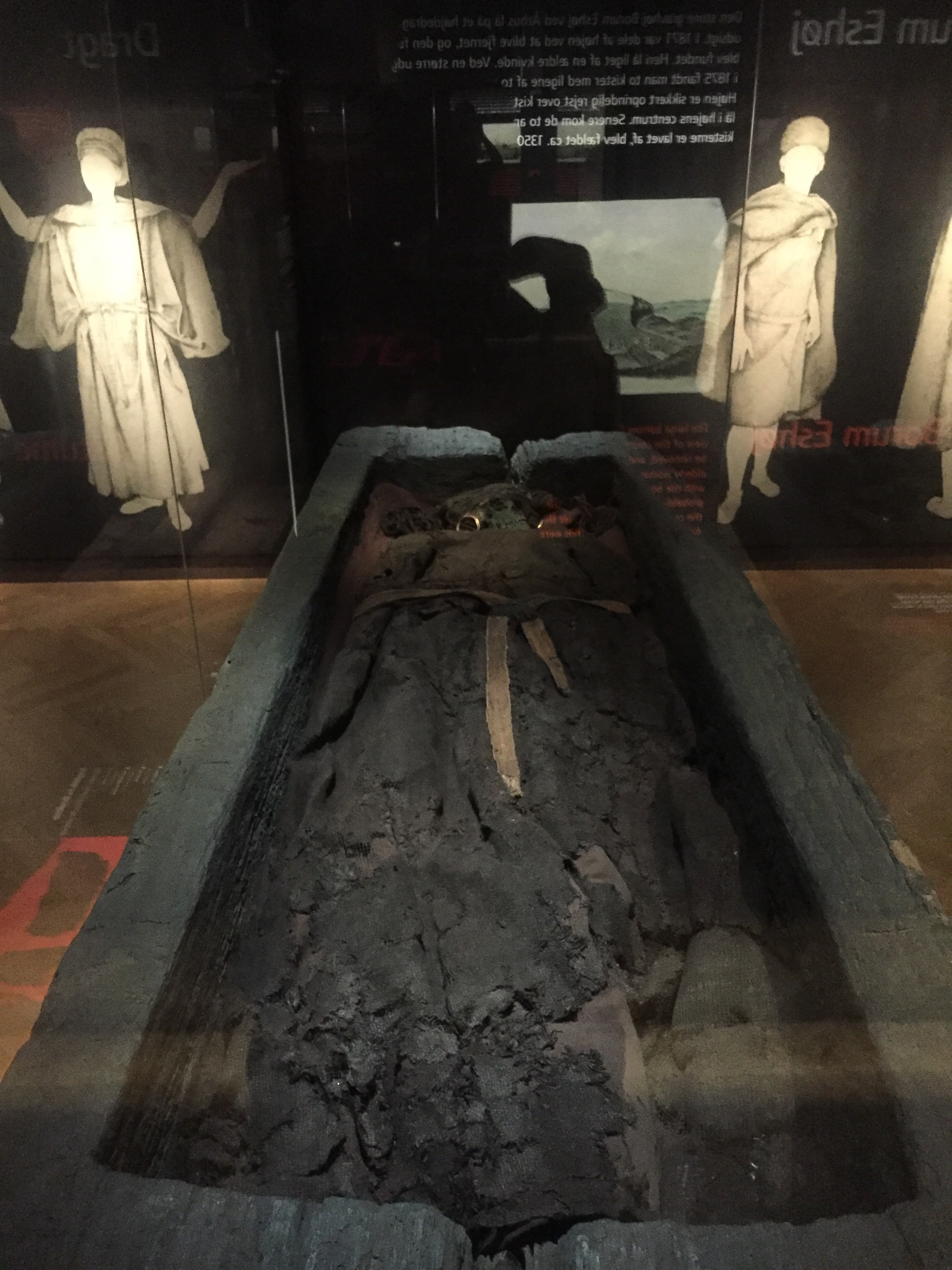
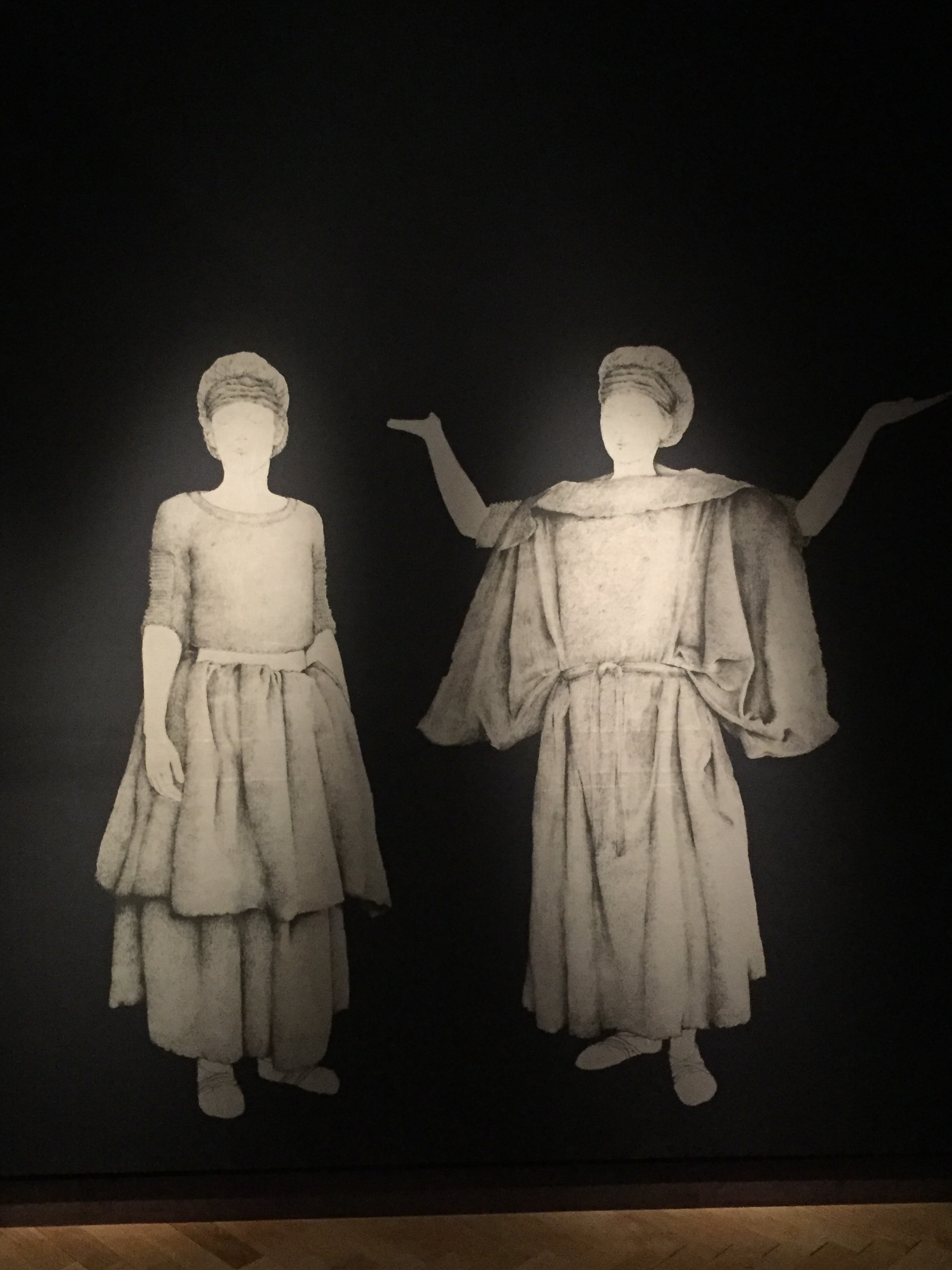
And then the main event, at least for me. The tour groups clustered  around Egtved Girland her reconstructed garments

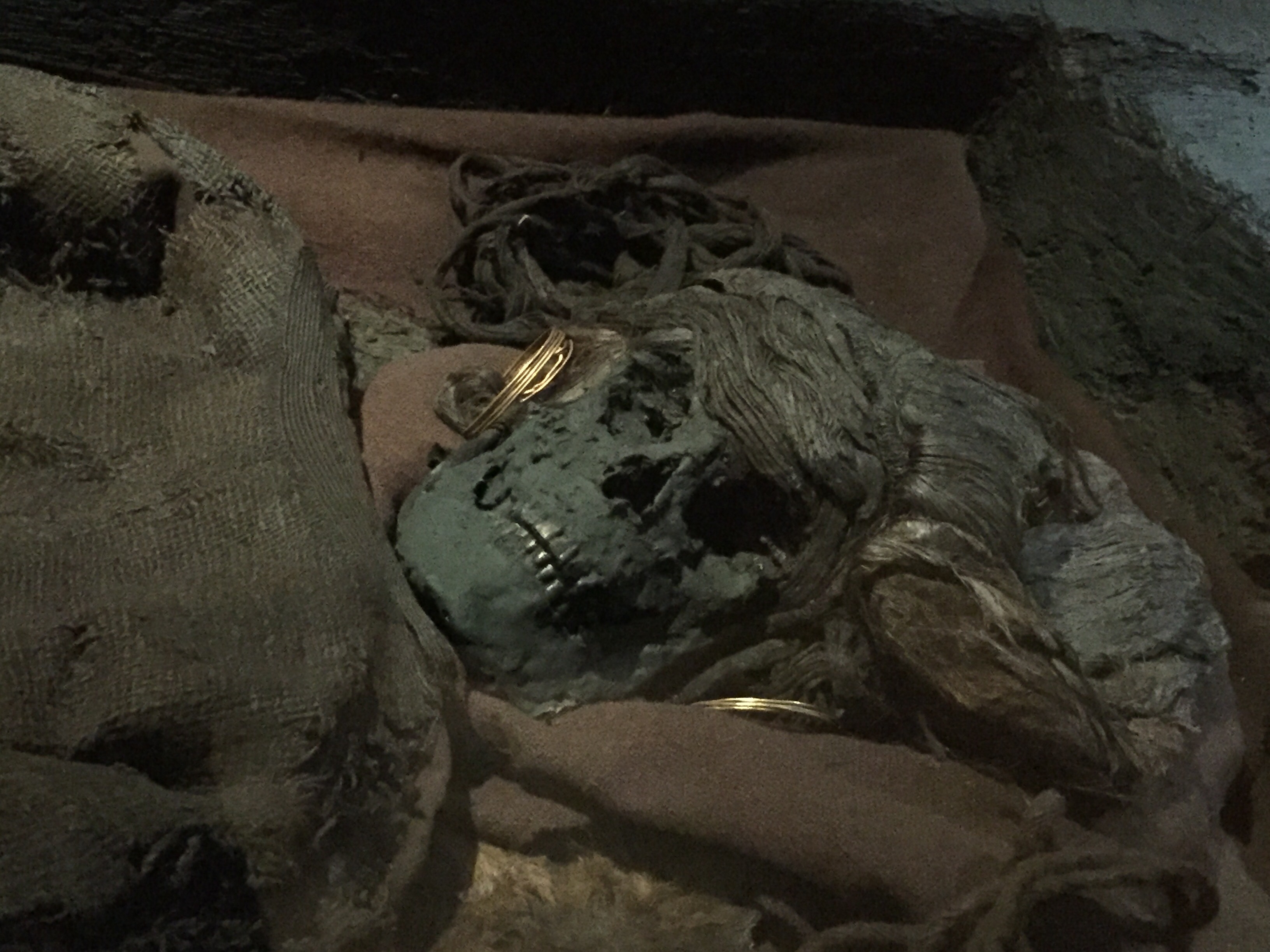
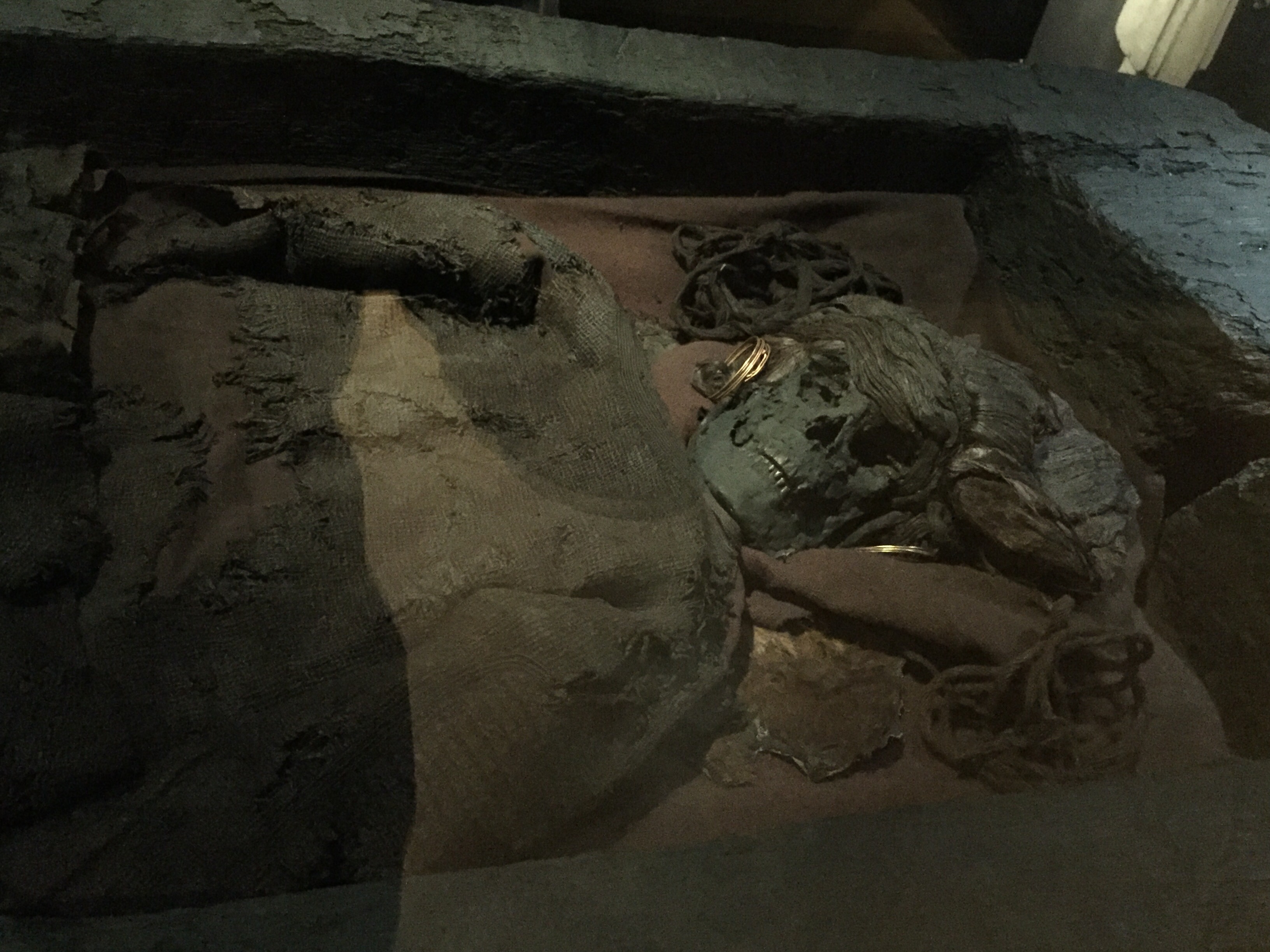
but I looked into the hollows where Skrydstrup Woman‘s eyes should be, and was lost.

There were other graves at Skrydstrup, with textiles, but as I looked at her I felt she could be looking back. Are we answers to her unasked questions?

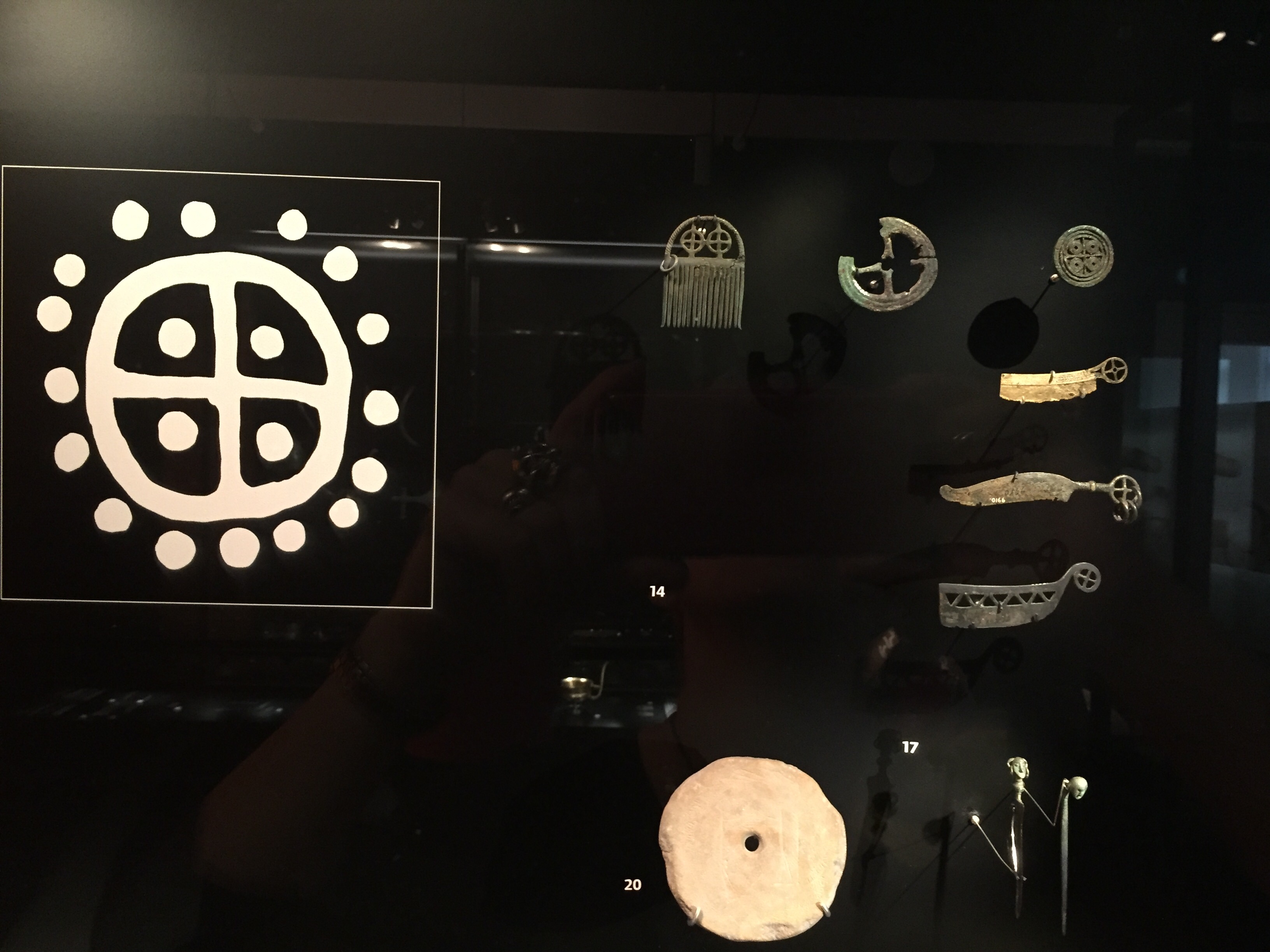
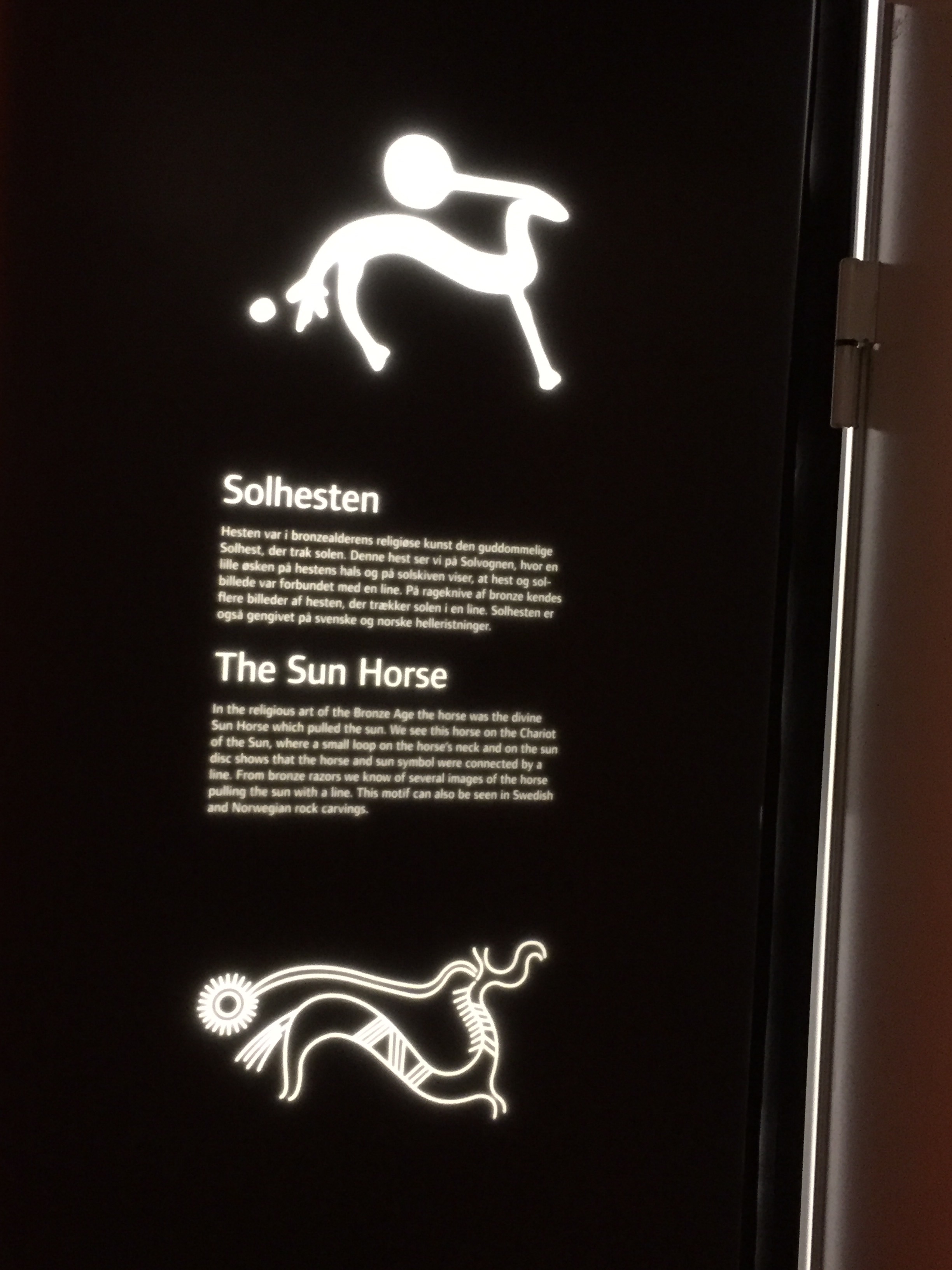
Then I learned new things about sun symbols,and something I’d never heard about before, the Bronze Age concept of the Journey of the Sun across the sky. Their webpage has the diagram, but not the explanation: the sun travels around and across the flat earth. At sunrise a Fish pulls the sun up over the horizon from the Night Ship to the Morning Ship, and is then eaten by a Bird. At noon the Sun Horse takes the sun from the ship -incidentally the stylised ‘s’ of the sun horse(s) looks exactly like other assumed sun symbols in the iconography of Near East rugs and embroidery! In the afternoon the Sun Horse delivers the sun to the deck of the Afternoon Ship. In the evening the Snake passes the extinguished sun to the night ship.Part of the totally engrossing Journey of the Sun display.

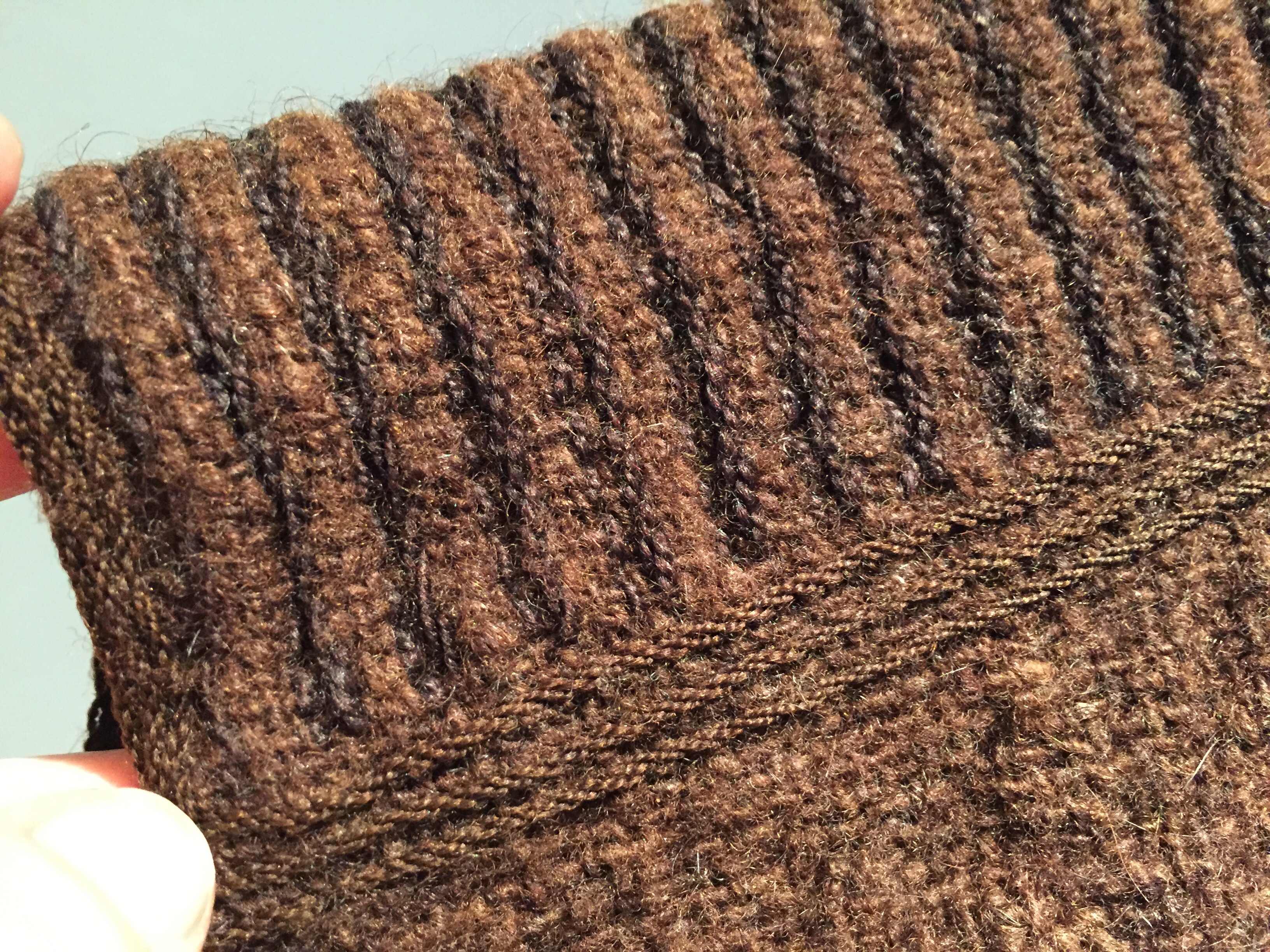
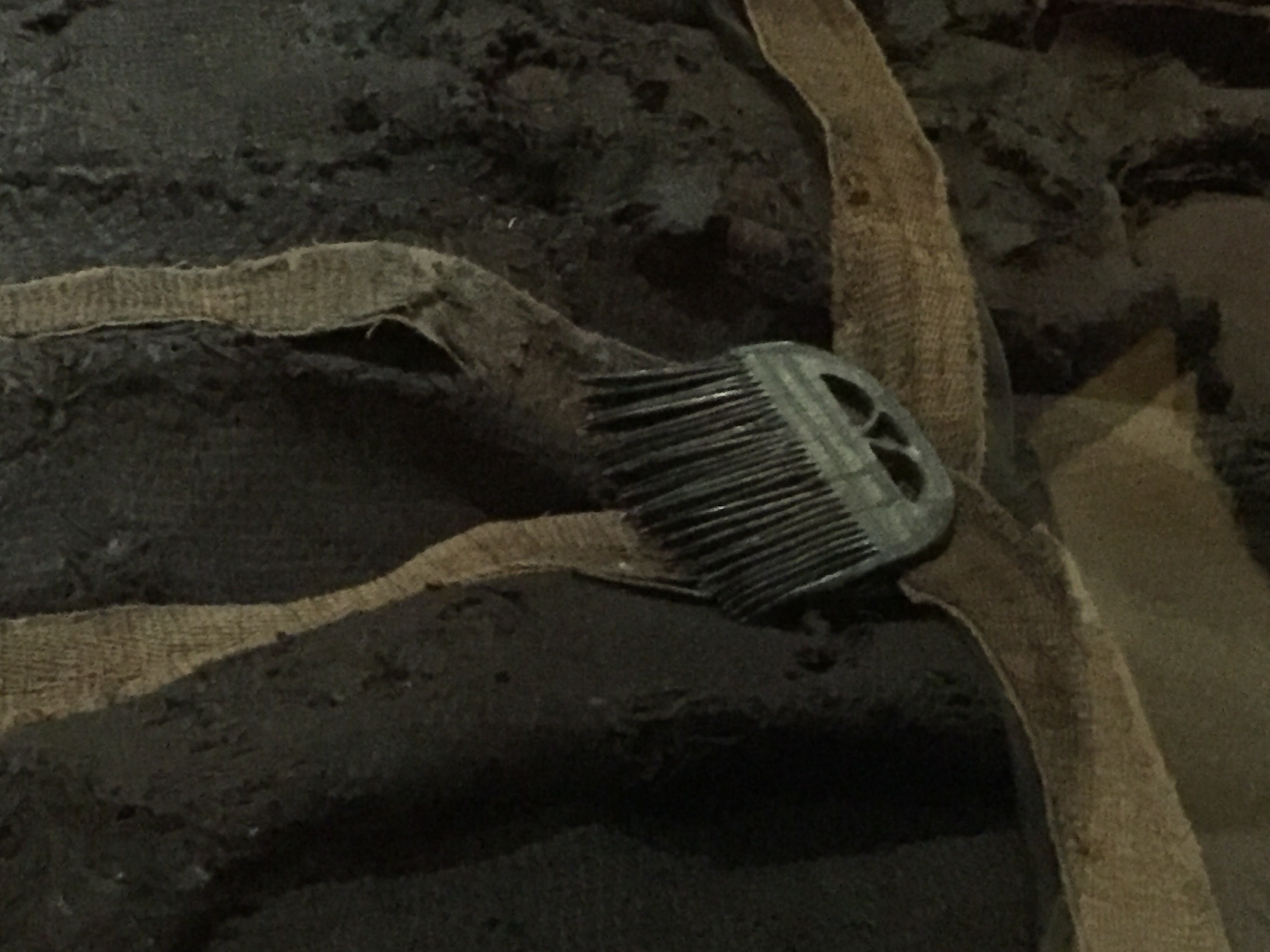
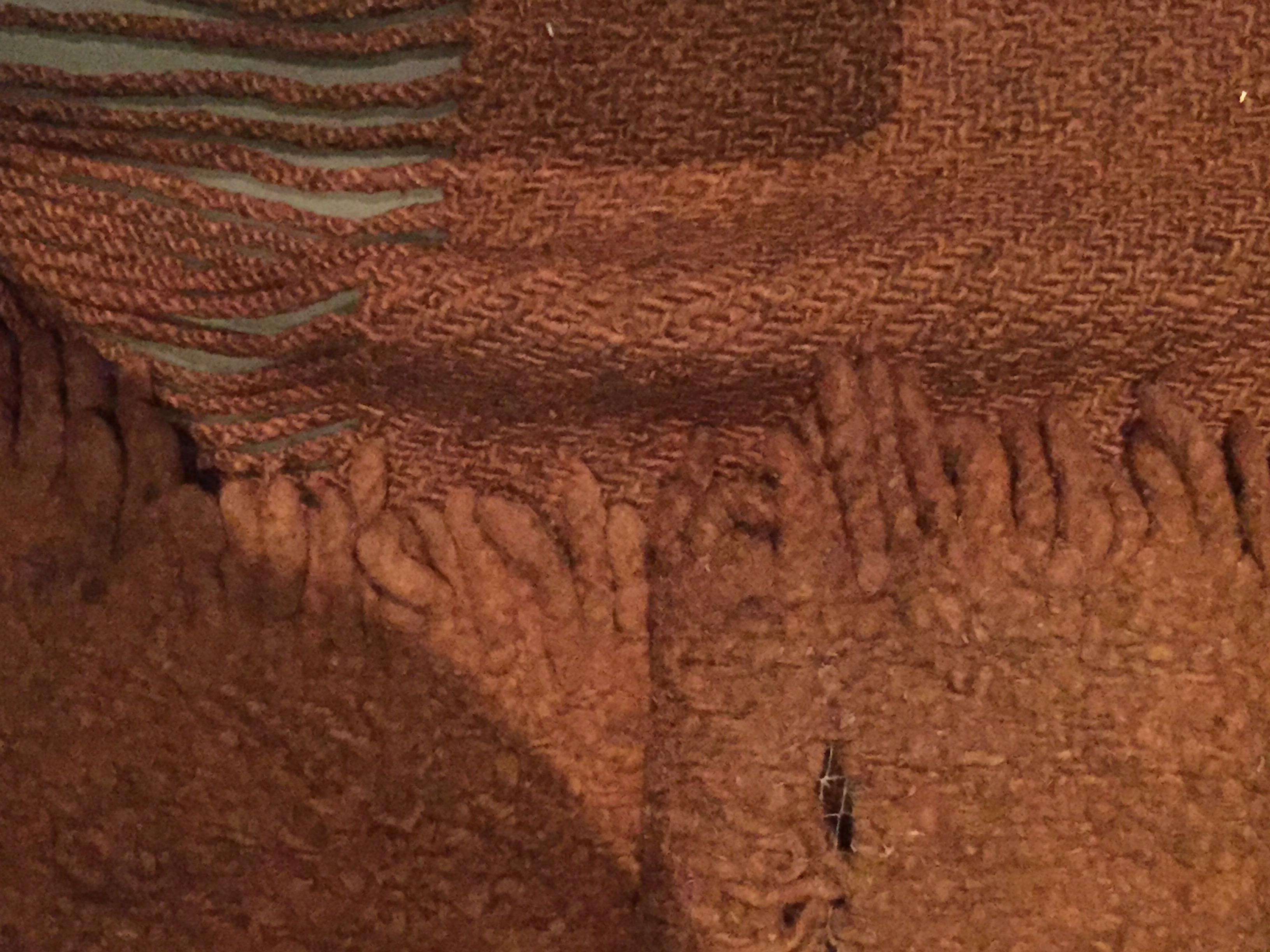
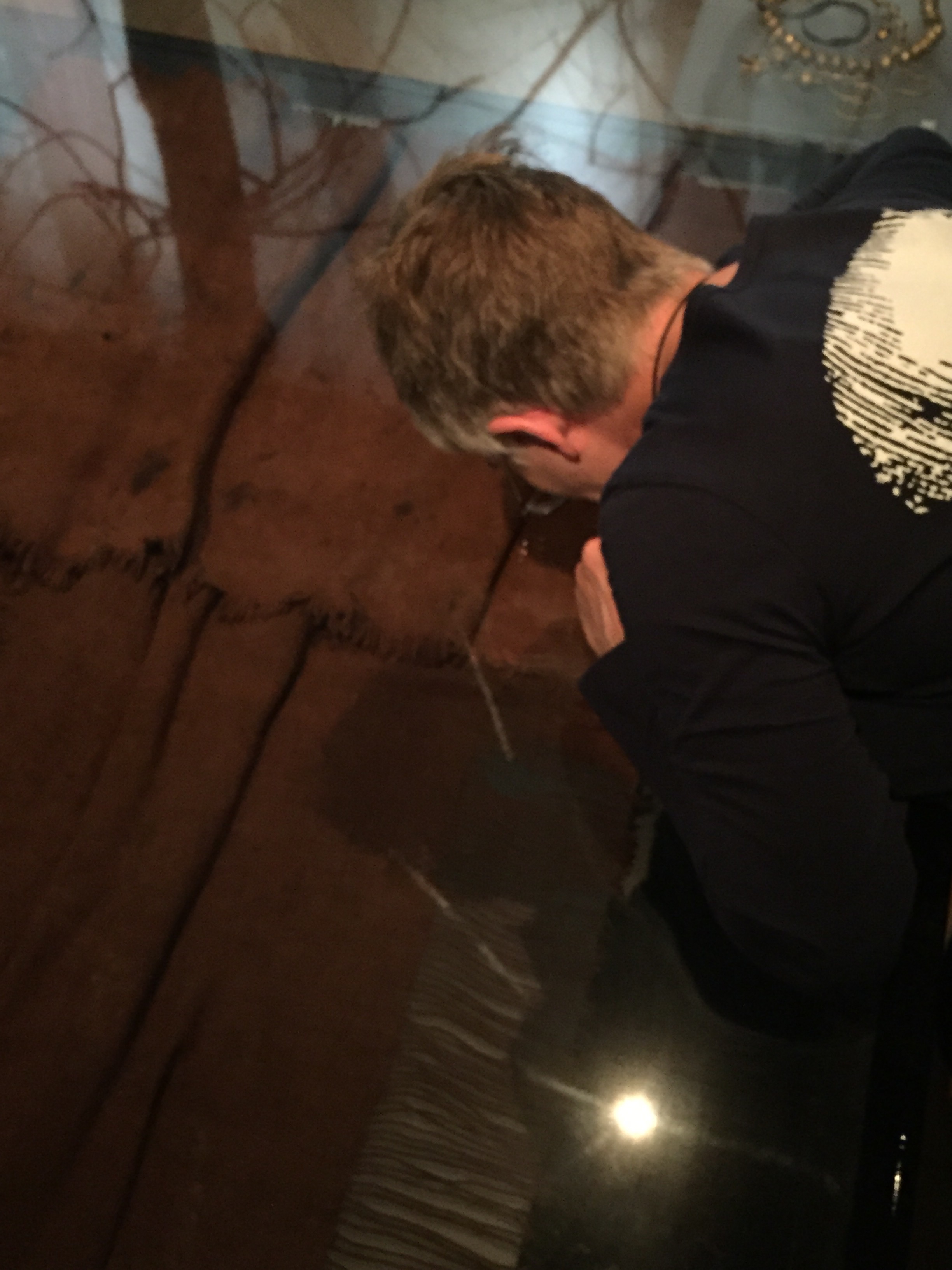
Ninth-century BC blankets found with the body of a woman in a bog in Jutland. Think of the woman, but also note that one blanket appears to be thoroughly fulled.Me leaving noseprints on the glass as I peer at said blankets.

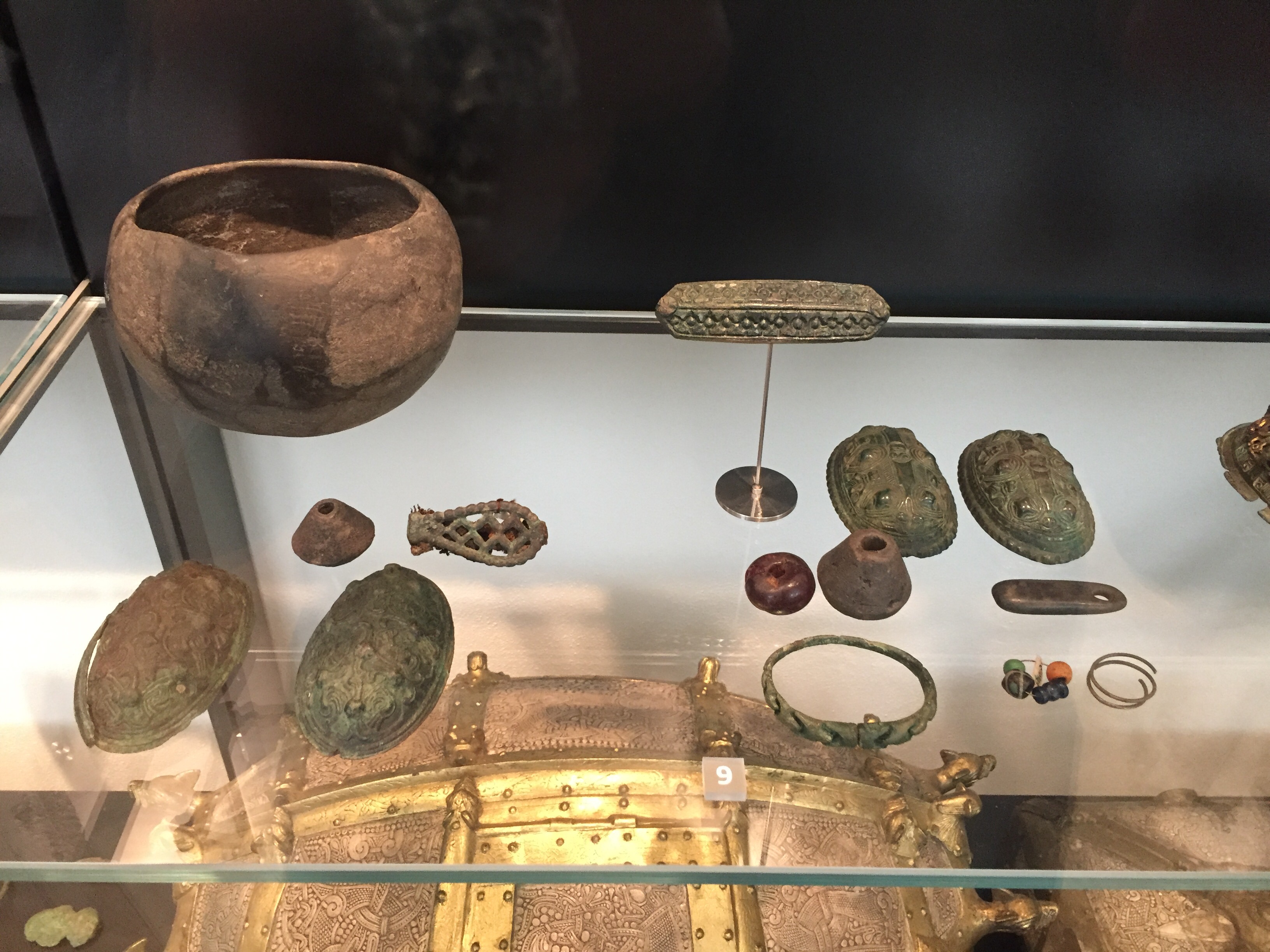
As we walked through pre-history I counted spindle whorls and other mentions of ‘women’s work’. It wasn’t difficult: no discussion of spinning, weaving, cooking. (As opposed to weaponry, battles, injuries.) One Bronze Age spindle whorl (shale) and about 5 Viking age (pottery). Ninth-century AD gravegoods from women’s graves in Jutland, including tortoise (shaped like) brooches and spindle whorls.

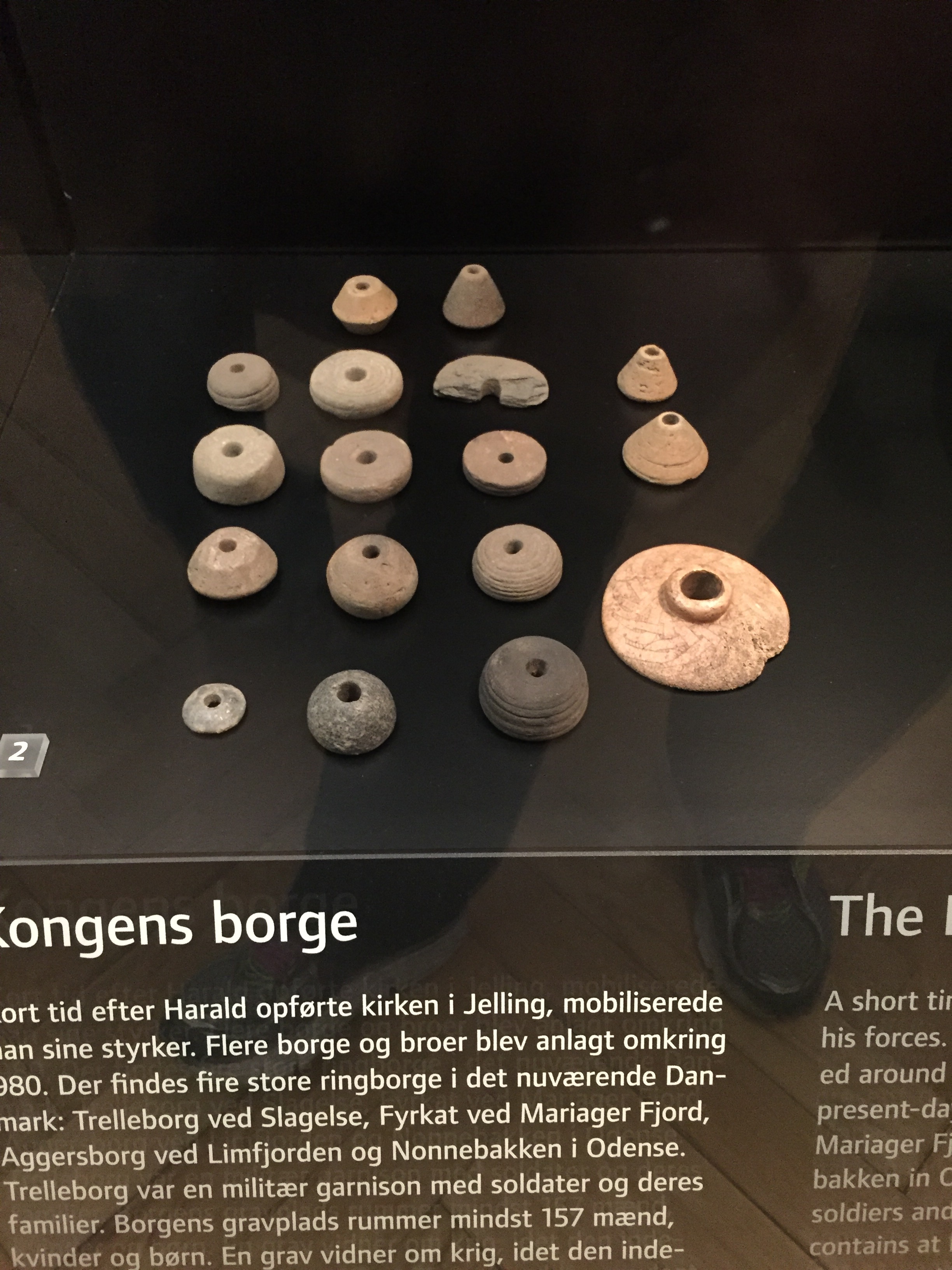
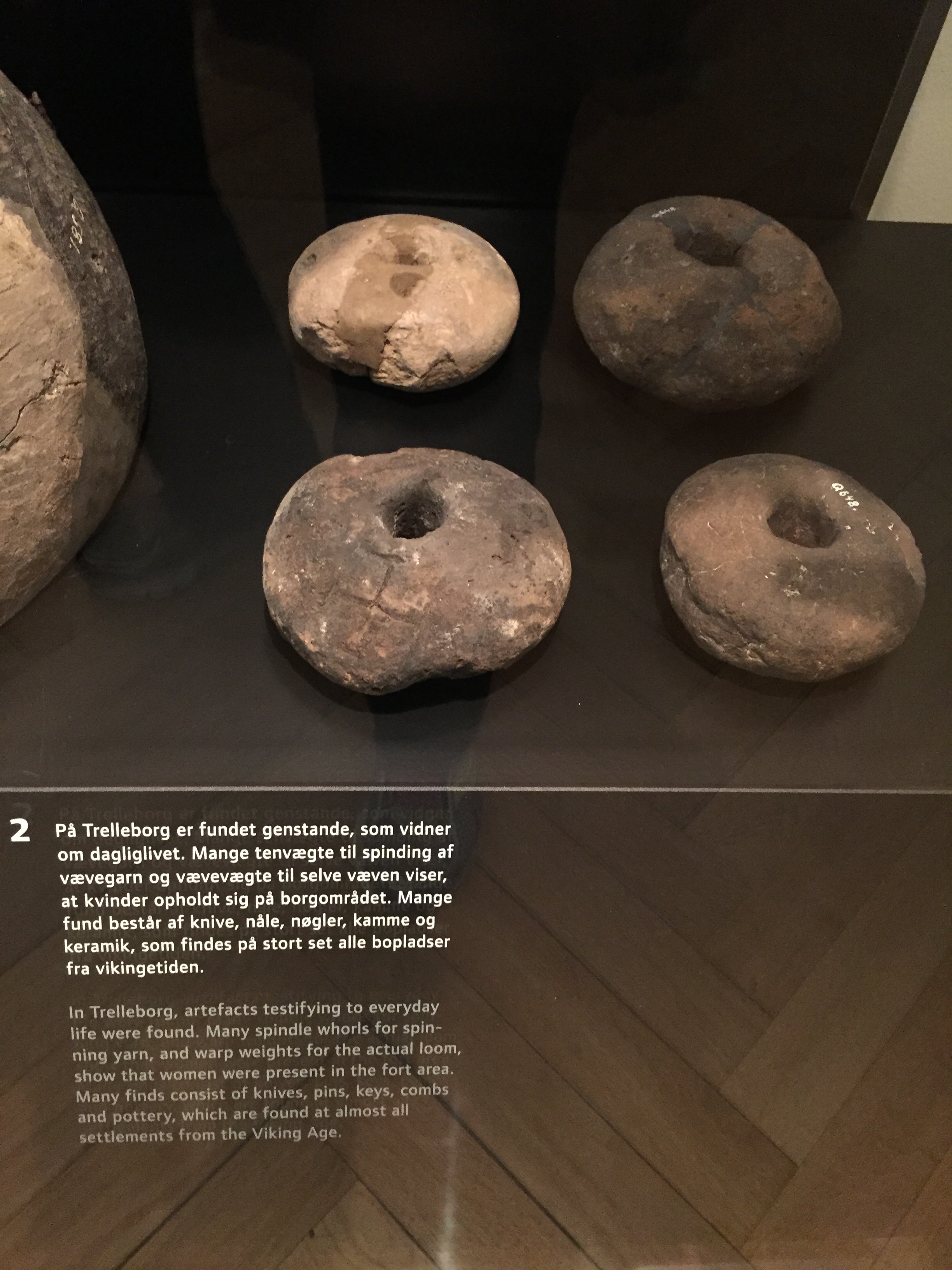
Finally the display of Viking Age domestic finds from Trelleborg included spindles and loom weights.Huh. No wonder the ‘Viking!’ exhibition at the BM was all about shiny and killing people: it was telling the same story. 

But Skrydstrup Woman has forgotten more than we will ever know.

And then we went to the Glyptotek followed by Groms pizza and wine and ice cream. It’s raining, but tomorrow should be dry.Tomorrow is Roskilde and the Viking Ship Museum.

thoughts on seeing a piece of antique lace

I think I’ve mentioned somewhere that I’m a hand spinner. I use my hands and various tools such as spindles and spinning wheels to make what I’ll loosely term ‘yarn’  from loose fibres by twisting them together. It’s an ancient skill. Yarn and the cloth made from it doesn’t usually survive to be dated (it rots, especially the early yarns made from plant materials), but sometimes the impressions of texture and pattern made by cloth and string in mud or soft soil do survive. Fragments of clay found in the Czech Republic show the pattern of cloth thought to have been woven 27,000 years ago. Some of the ‘Venus’ figures found in Europe dating from 20,000 BC have carefully carved string skirts, some so detailed that they show the skirt string is plied. Left dangling loose, a single strand of twisted fibre rapidly untwists to become loose fibre. Only if two strands – known as singles – are plied, twisted together in the opposite direction, will the dangling string remain string. Given the skills demonstrated by the things that have survived, it’s been suggested that people – probably women, as men are traditionally hunters – have been spinning fibre into string/yarn for over 40,000 years.

That’s a long time.

That’s many, many generations of my female ancestors. Only for the last 300 or so of those 40,000 years have women not needed to spin, at least in western Europe, where I come from. I am descended from a long line of women who could spin, and spin well, because the yarn they spun was needed to cloth their families, to be sold for money to pay the rent or feed their families. In the early days the string they made would have been knotted into nets to catch fish and birds. If my ancestors hadn’t been good, productive spinners, they and their children wouldn’t have survived. I wouldn’t be here.

So, as I’m spinning, I think of my ancestors, spinning. I didn’t gain my skill directly from their hands – my mentors passed on their own skills from their hands to mine – but my hands are doing the same things, going through the same motions, as those of my ancestors. Spinning unites us, hand to hand, across nearly 40,000 years.

Lynn, I search out antique handspun textiles because handling those textiles, learning new skills by examining them, is a direct link with the people who made them. For me, it’s all about the people, not the finished piece. I don’t care if something is tattered, too badly damaged for a ‘serious collector’: the ragged edges and loose threads mean I can see how it was made, whether the yarns are plied or singles, estimate their grist. I can extract individual fibres (of wool) to estimate staple length and fineness of fleece. Knowing these things I can try to replicate the yarn. Spinning it, I remember with respect the person who spun the original.

AlençonLace

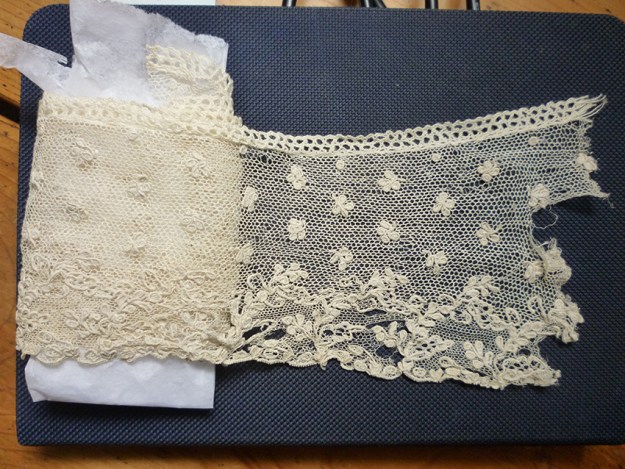
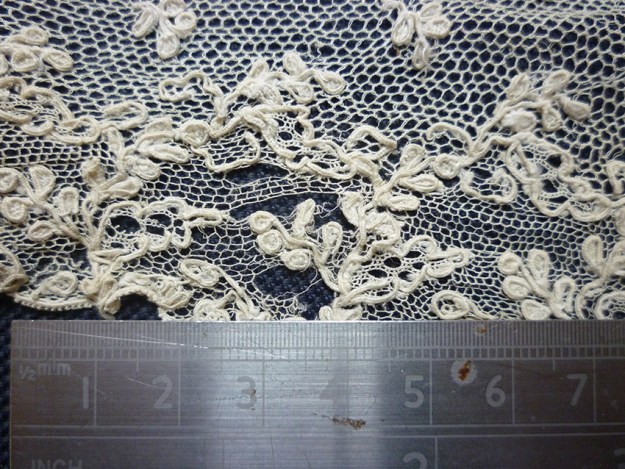
So. Here is a piece of linen lace in the style of Alençon, in northern France, dated by style and condition to the 18th century (1701–1799). Pre-Industrial Revolution, there’s no doubt the thread used for this was handspun and, for lace, of the finest quality at the time. Because in this condition it is of no value to a collector 48″ of this cost £5, but to me it’s beyond valuation. It’s 48″ of people’s lives: the skills of the flax grower, the processors, the spinners, the lacemakers.

AlençonLace2

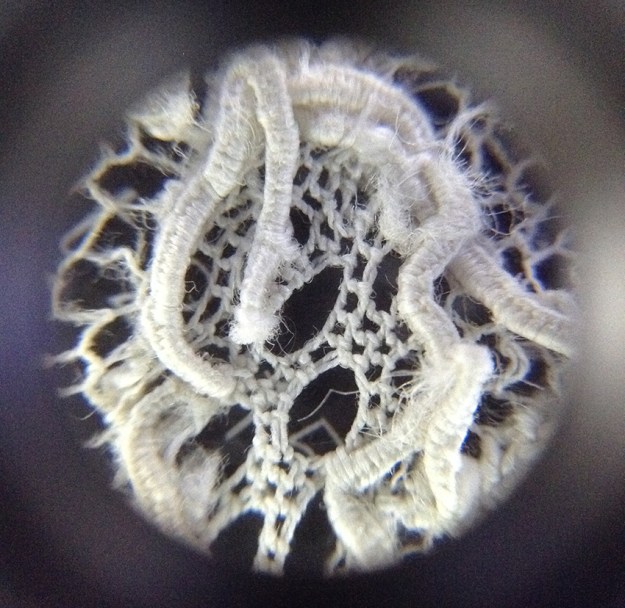
Detail of the lace magnified 20x. The lens circle is 1cm in diameter.


AlençonLace1

The damage allows me to examine the individual strands of yarn more closely.

AlençonLace3

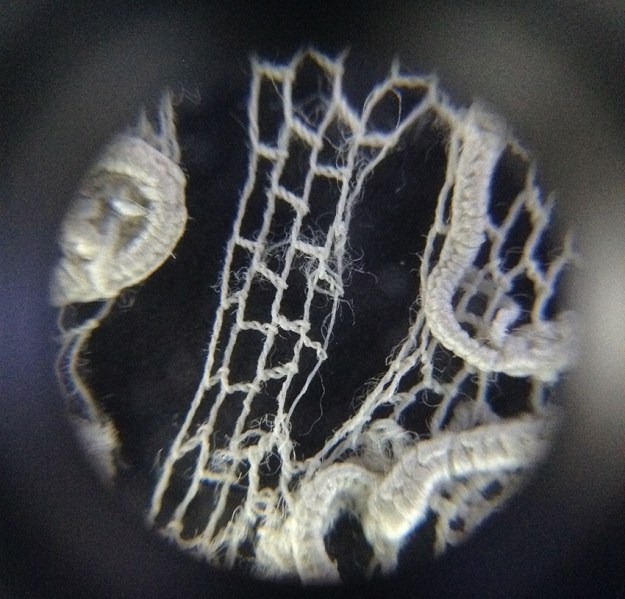
Above, a damaged area magnified 20x, showing what seems to be a single thread.

Below, the same area magnified 80x. 

AlençonLace4

The lustre of the individual threads and the ‘hand’ of the fabric, even after more than 200 years, suggests this is linen. I am awestruck by the fineness of the fibres in the yarn: having done some flax processing myself (this link shows the basic principles), I have some idea of just how tricky it would be to get fibres this fine. Having spun flax, I have some idea of what it takes to spin this fine. At this point I’m not even sure whether this is plied or a singles yarn. I did find a description of the spinning process in Cassell’s Illustrated Family Paper, Vol. 4 1865 on Google Books:

“Why, the flax of which the old Brussels and the point d’Alençon were made, was cultivated on purpose; it was chiefly grown in Brabant, Halle, and Courtrai, and had to be spun in underground cellars, because contact with external air made the thread brittle. The thread was so fine as almost to elude the sight; the spinner had to go by the sense of touch, examining every inch as it left the distaff, and at the slightest irregularity stopping the wheel. The room was kept in darkness, except for one single ray of light arranged to fall on the thread, which was thrown up by a background of dark paper … “No wonder,” said Goody, “that fine lace is so costly; why, I have read lately, that at the present moment, hand-spun thread is often sold at £240 sterling for one pound only.”

MeasuringWorth says £240 in 1865 would be between £20,690 and £471,100 in 2015 pounds. I am stunned.

I hold the lace and I respect the people who made it. I remember with respect the people who, generation upon generation, developed the skill to make things like this. They may not be my personal ancestors, but without them we wouldn’t be here.

All that from a piece of old lace.

The less time I have, the more I want to do

When work is busy, I find myself dreaming up more projects for what little leisure time remains. The less time I have, the more I want to read, make, travel, buy. I’ve begun to suspect that some of this is a form of promising myself that I WILL be able to do these things at some unspecified time in the future, when I am at leisure to devote my leisure to the things I want to do. [Mostly. I don’t want to clean the bathroom, but I’ll still have to do it or risk our early deaths from disgust, embarrassment or horrible diseases.] There was a time when I could not resist a nice handspinning fleece – and didn’t bother trying. I just promised myself that there would be a time when I had time to spend sorting, washing, drying, combing or carding, spinning and then using that fleece. Fortunately a summer spent washing and drying and starting to comb some of the hoard taught me a lesson: I already have a lifetime’s supply of wool to spin. Not to mention cotton, silk and flax.

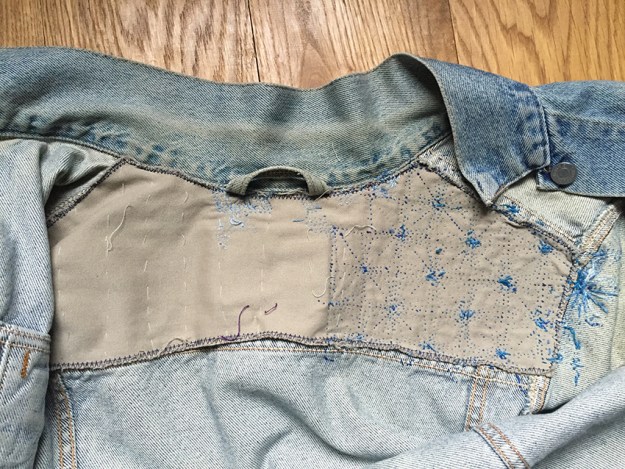
More productive and more fun than buying promises to myself is devoting some of my precious spare time to artistic mending. A couple of years ago I found an umpteenth-hand denim jacket in a flea market. It had a peculiar odour and was covered with a fine red-brown dust, but it fitted me: I bought it. I wore it a couple of times before washing it, which was just as well because I had time to start to love it before the washing machine revealed patches of incipient disintegration.

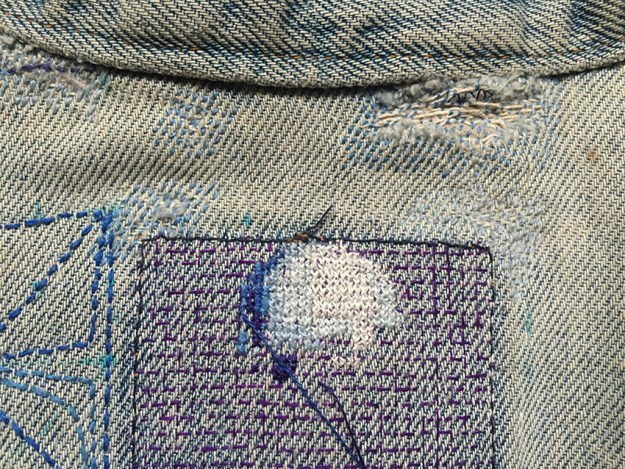
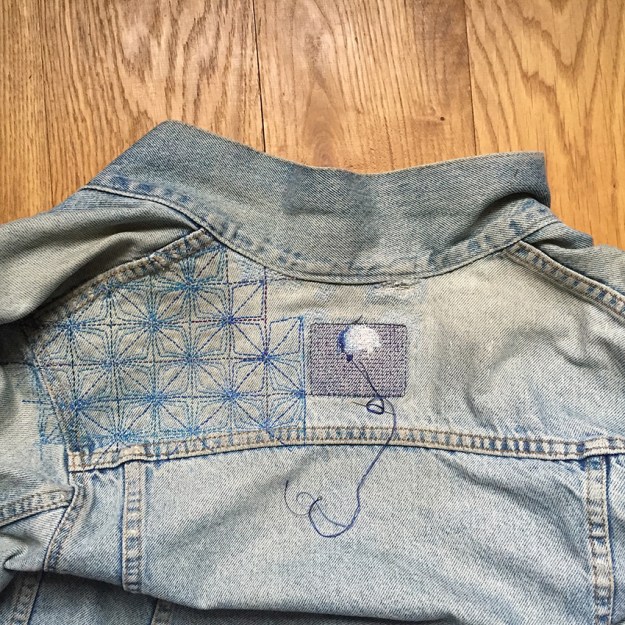
The yoke is in the worst condition, possibly due to exposure to the sun. I decided to learn sashiko [not sashimi, stupid computer] stitching by using it to attach a lining to the yoke, with embroidery thread shading from blue to red because colour can be fun. I tacked the lining to the yoke with a grid of white sewing cotton and began stitching. When I reached the first badly damaged area where only the white weft of the denim remains, I realised that sashiko alone would not be enough to take the strain, so decided to further reinforce those areas. I duplicate-stitched the twill furrows in various shades of blue; the more I did, the more my technique improved. I really like the finished effect (it’s better from a distance when you can’t see all the imperfections as below).

JeansJacket3

The rectangular area marking the position of the label on the inside of the yoke posed a problem. I could try to stitch through or skim the label and continue the sashiko across it, or I could use it to define a feature, which is what I did. I designed a motif suitable for cross-stitch, picked 6 shades from my ancient hoard of embroidery thread, donned my most powerful magnifying glasses, laid out a 6×6 thread grid, and started counting and stitching. Then stopped, counted, ripped out, and counted again before stitching again. Clearly I need practice at both counting AND stitching.

At this point I reserve judgement as to whether a motif was the right decision. Looking at the back of the jacket in its entirety, I think I’d have done better to continue the sashiko. But, with more work on the motif than in the photo above, it’s working and I like it. Even if variations in the thread thickness of the soft, worn denim mean that the stitching lacks precision: to paraphrase Tara, it loses precision but it gains life.

JeansJacket4JeansJacket1

I could rip out the motif and the grid, re-do it elsewhere on the jacket, and continue the sashiko to cover the yoke. And I think I want to expand the sashiko beyond the yoke, too. After all, it’s only time. I should use the time I have to do my best. Who knows, this jacket may long outlive me. I do sometimes imagine people decades or centuries from now looking at something I made and wondering about me and my life, as I wonder about those who made  the antique textiles I look at today.

Speaking of which, who wants to see some antique lace?


Planning another Summer of Blue

I had planned to focus on indigo last summer, but in the event various other things intervened – although I did accomplish more than I posted. I must show you my shoes!

I’m making tentative plans for more blue this summer.

greenhse

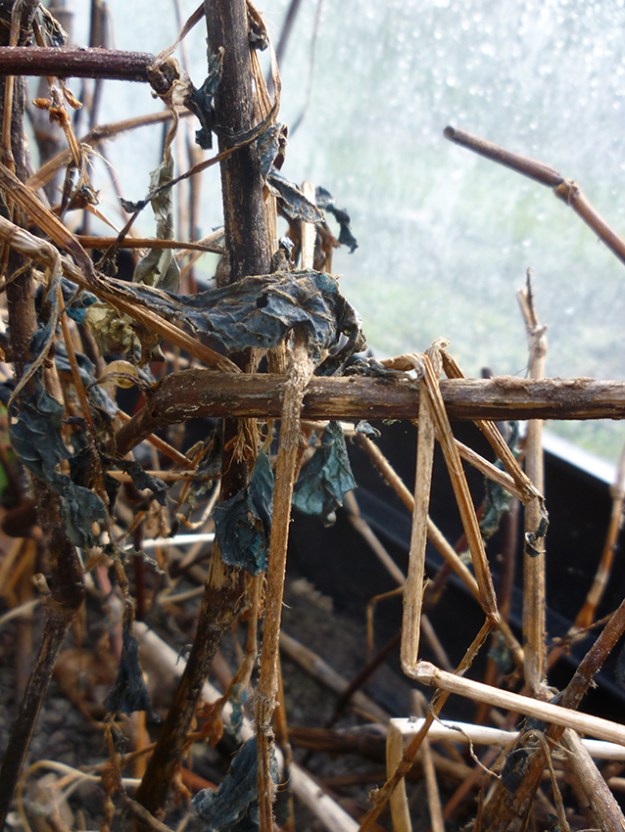
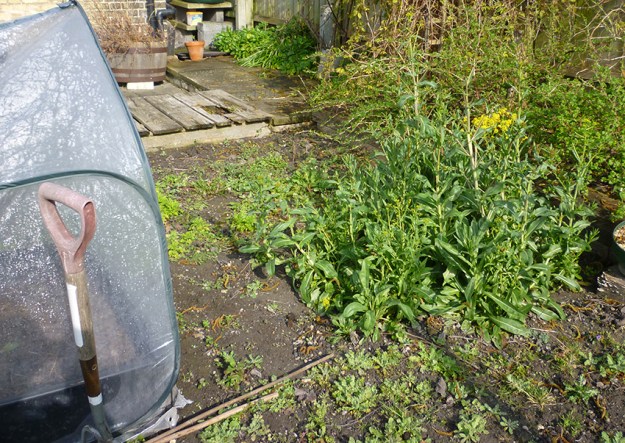
I had hoped that the tadeai, the Japanese Indigo Polygonum tinctorium, would survive the mild winter in its house but even though I added fleece and bubblewrap when the nights dropped to -4C, there’s no life in the stems. It may be an obligate annual, or it may simply have flowered itself to death late last autumn without setting any seed, alas.

I admired the few remaining dead leaves somewhat wistfully: look, they’re blue!

DeadindigoGrense

And then cut most of the stems off. I’ve left a few root masses with stubs of stem for the moment, but there was no green in the pith and the roots I pulled up looked brown and dead, so I doubt anything will shoot. But I sowed seed as well; the seed tray is now sitting indoors in the warmth where I am already watching it hopefully.

I took cuttings  – lengths of stems with leaves – from the plants last October when we returned from our holiday and put them in a jar of water. As might be expected from a Polygonum the cuttings formed masses of roots from the submerged leaf nodes, but the rest of the nodes sent out flower shoots.  I pinched them out and more appeared. The cuttings were extremely well-rooted and looked reasonably healthy in late January when I potted them, but just continued to try to flower until they died, leaves slowly shrivelling. A friend who rooted cuttings in August says two are still alive and seem well, so I wonder whether the trick is to catch them before environmental cues set the growth points to ‘flower’ mode. I will try to test that this summer, as cuttings would be the best way to maintain a line that dyes well.

The woad looked reasonably happy. As a biennial this is its year to flower and seed, with leaves that yield little or no blue. I left the plants last year thinking to gather the seed – these were grown from seed I harvested two years ago – but there isn’t really enough space in our tiny garden to keep plants for seed especially when they attract so many Cabbage White butterflies to lay eggs on my salad rocket! The woad is no longer happy: it is composting and I’ll sow more in the Brassica Bed shortly.

Woad

All this plus ‘standard’ indigo vats means there should be more blue this summer. But what shall I do with it? I’m designing stencils to print with fresh indigo leaves, because that was immense fun. But there’s much more fun to be had: a friend sent me two fascinating books.
dyeing

dyeing1

This is the work of Mrs Akiyama, who made a personal study of the natural dye plants of Awa in Tokushima Prefecture, Japan. Awa is famed for its Polygonum tinctorium indigo dyes; there are pages detailing dyeing with fresh and dried indigo (if I’d had more dead leaves I could have dyed with them!) as well as many other plants. And there are notes on working with bast fibres, as well as information on finishing yarns and fabrics after dyeing.

dyeing2

The other book tells me what to do with what I’ve dyed:

Ikat

No more peering at fuzzy videos on YouTube! With luck this will be a summer to remember.

To finish, a reminder of last summer.

shoes

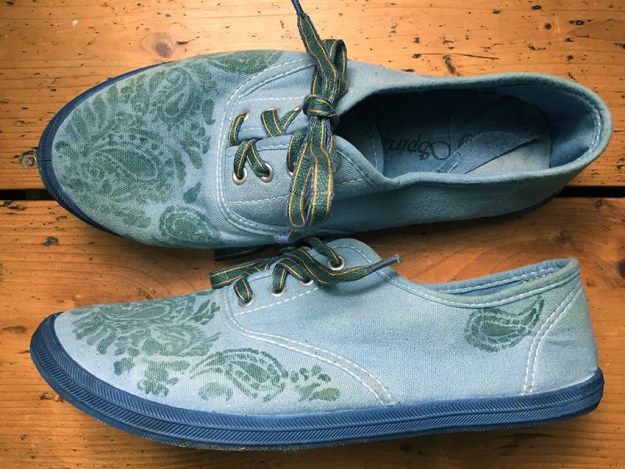
Super-cheap runners, sold as ‘cotton’ (I have my doubts, see below). I washed them thoroughly with dishwashing liquid and rinsed them thoroughly too, then dumped them into a standard thiox indigo vat on the stove.^1 No matter how many times I dipped them, the uppers would not go darker than this; given the depth of blue in the soles. I wonder whether the fabric is in fact polycotton.

The first dyeing attempt was extremely patchy when it dried. Blotches of pale fabric near the heels, more blotches on the toes. I left them outside in the weather for a week or two to think about their sins while I sulked. Then I needed to exhaust the vat, so I reheated it, added reducing agent, and chucked them back (dry, I think), out of curiosity rather than any expectation of success. Imagine my surprise when, after two or three dips, they emerged a relatively solid and respectable pale blue. After washing thoroughly and drying, I considered decoration: stencilling with fresh tadeai was the obvious answer. I cut an assortment of crude paisley stencils and discovered that stencilling on curved surfaces is rather tricky. But the end result is a pleasing variety of blues produced by a variety of indigo techniques, especially when embellished with tablet-woven laces.

It’s a great shame that the shoes are so uncomfortable :-/

^1: A caution. If you try this, be prepared to spend ages scouring melted runner-sole off the sides of the pot. A hint: reheating the pot gently softens the stuff a bit, but it still requires a lot of effort.


COTTON! (and more)

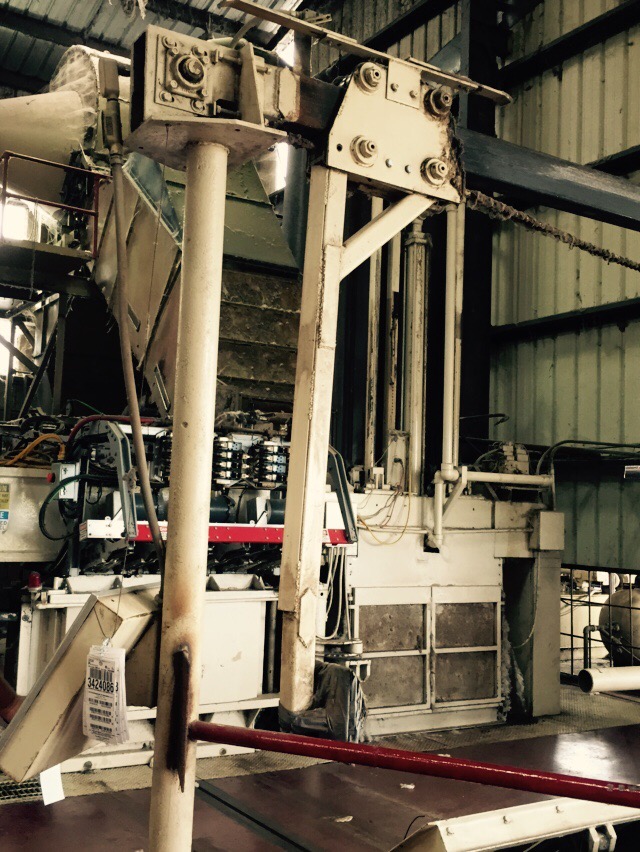
We’ve had such a good day in and around Natchez and Vidalia. We came for Frogmore Plantation and cotton, but we also saw rice, an armadillo not in a zoo (ok, it was dead on the roadside, but still not in a zoo), mounds created by native peoples of the Mississippi Valley, giant poison ivy, lots of kudzu … such fun. And it was my turn to drive, too.
We began the day at Frogmore, which offers a wonderful tour of an old plantation, reconstructed from original buildings donated by other plantations.  

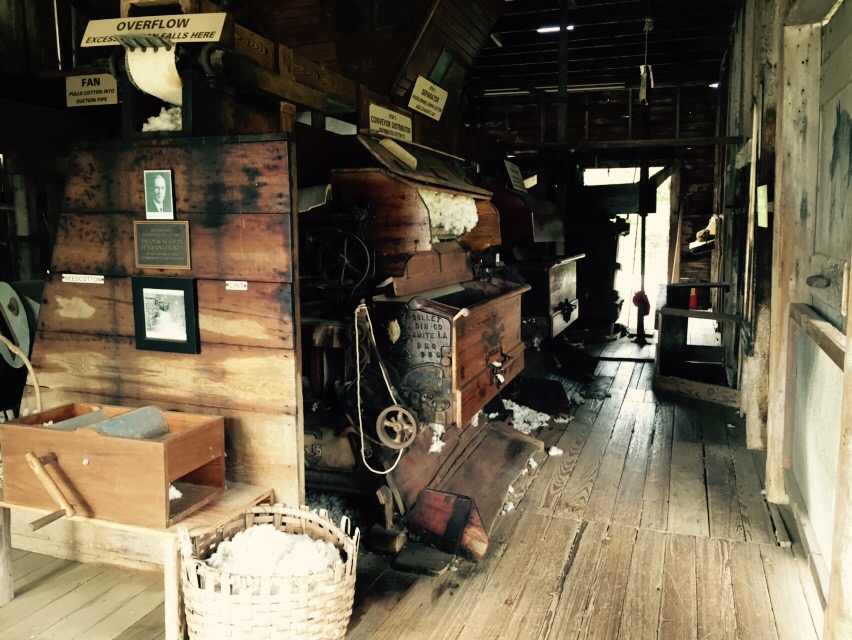
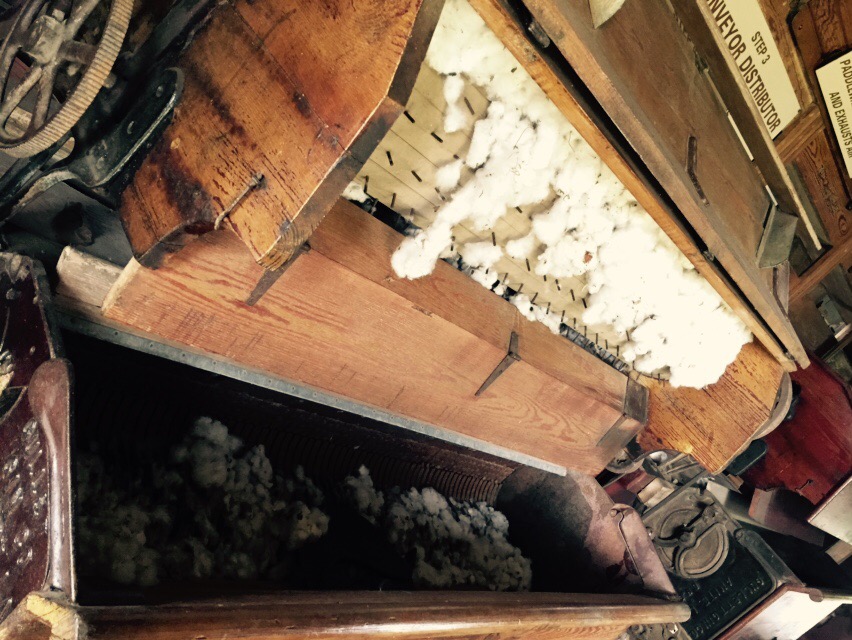
The tour started in the 1880s steam-powered cotton gin, where hand-picked cotton was processed to separate the seeds and fibre.      

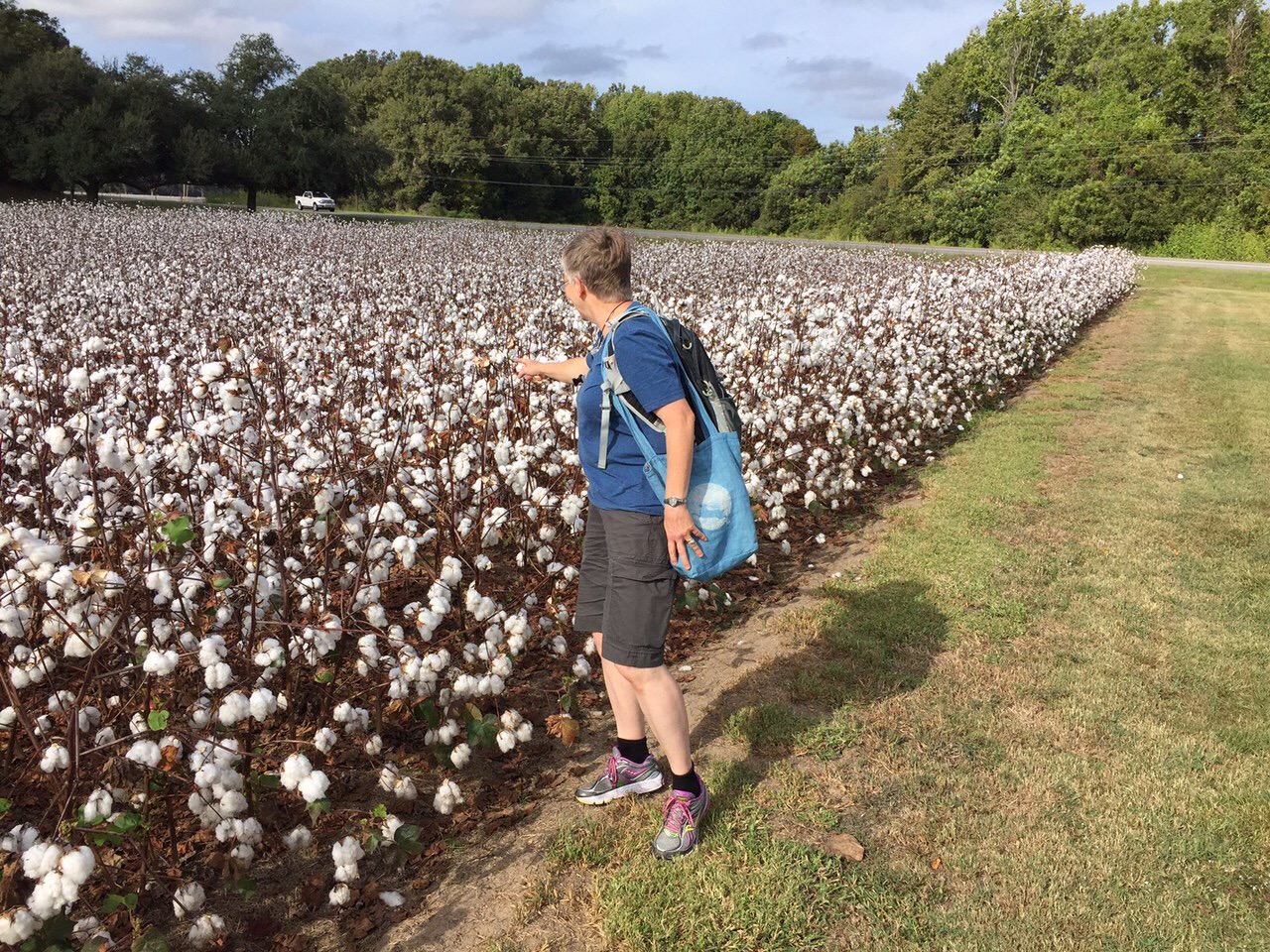
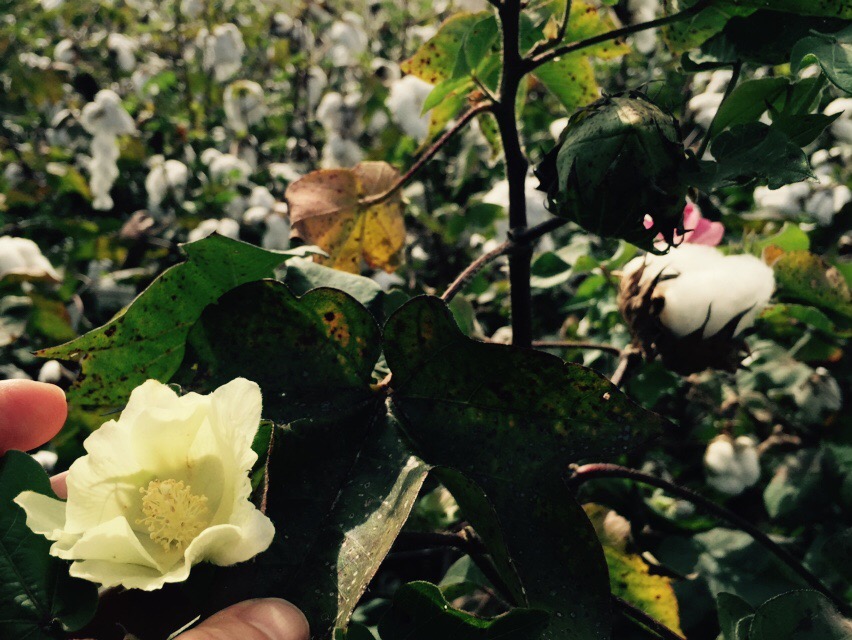
From there we walked to the edge of the cotton field(!) and I picked cotton for the first time. (It’s an Egyptian long-staple, by the way.)

 
The cotton is sprayed with a defoliant (I think we’d call it a dessicant in the UK) to kill the leaves, which otherwise may stain the cotton during harvest; the modern stainless steel screws that harvest the cotton are less selective than human hands. The edge of the field near the museum was not sprayed and some of the plants are still flowering even though the harvest has begun.


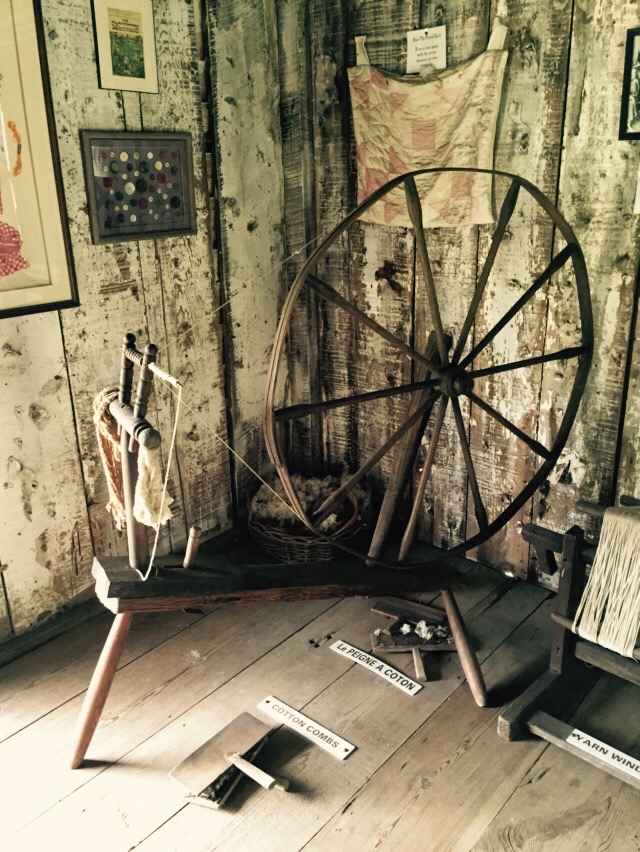
 We walked through the slaves’ quarters, including the wash house, which displayed a cotton wheel – basically a small great wheel – cotton cards, a loom and  quilting equipment and samples. The wheel had all its bits but was fragile and not set up correctly.     

Look at the wear on the treadles, the hand-smoothed polish on the wheel. 

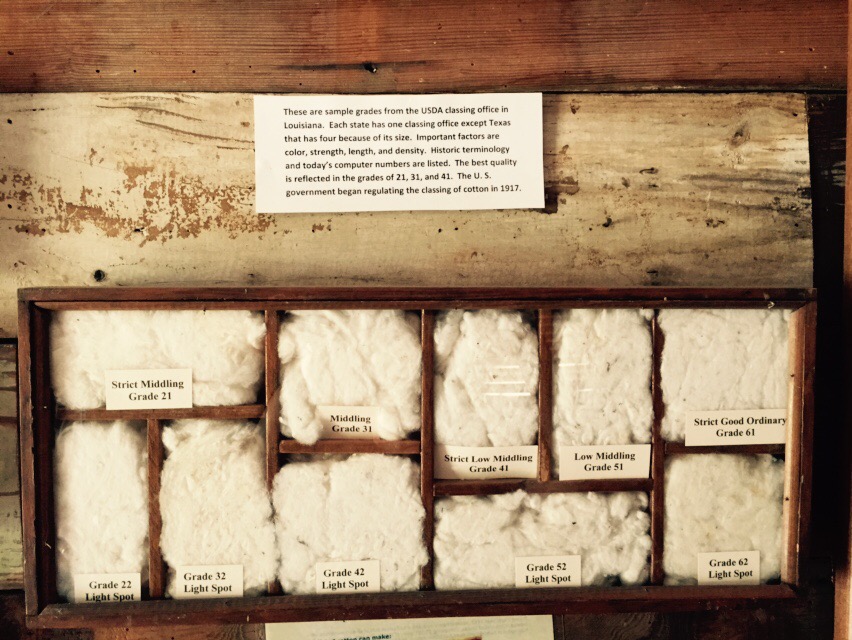
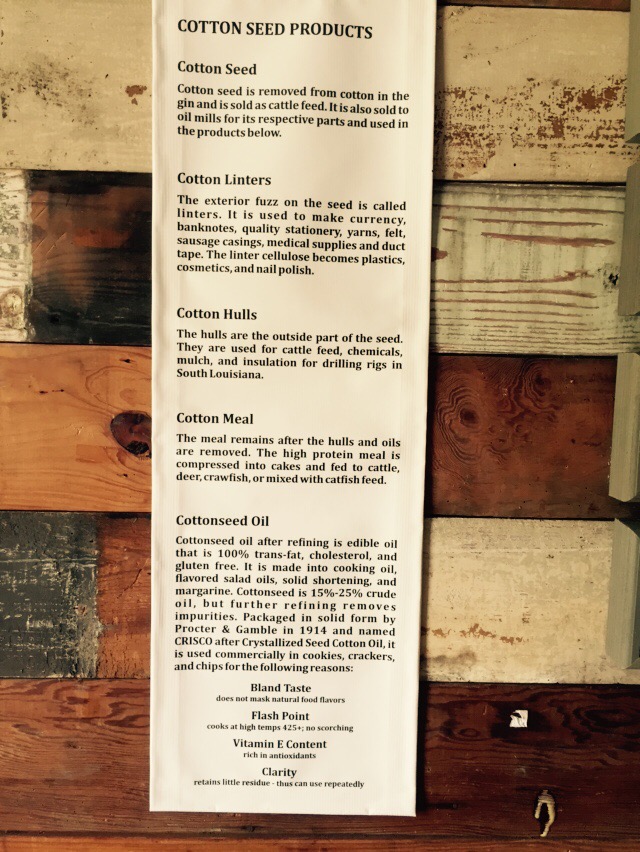
There’s a small lecture room with more information about cotton.

  
The Café du Monde cooks its beignets in cottonseed oil.

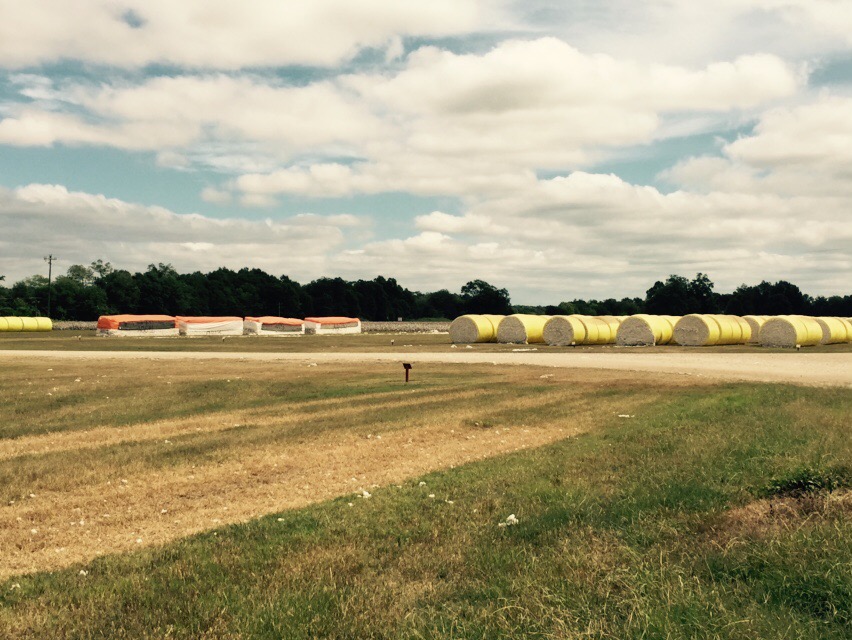
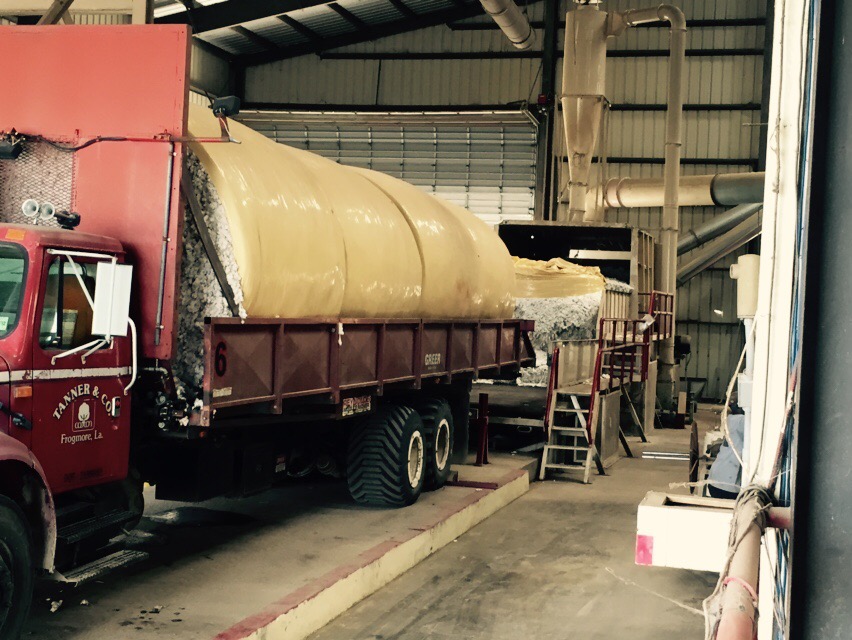
We then drove about a mile east to visit the modern gin, the only on in Louisiana. Perfect timing: they began processing the harvest early this morning. Already bales from other growers are waiting in the field; they’re ginned here, then the clean bales are sent to await buyers in the warehouse in Concordia.   


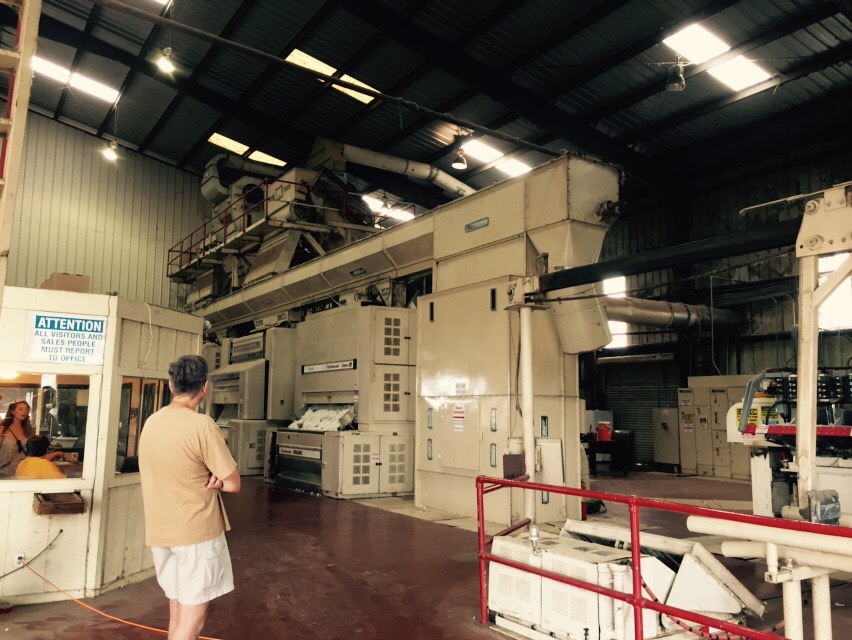
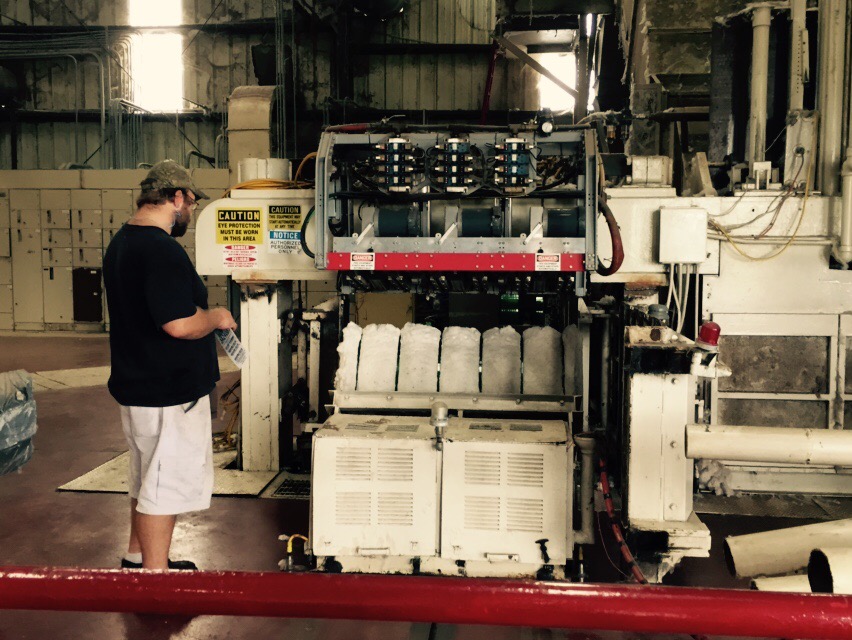
In a process reminiscent of that I saw at the BWMB Bradford depot, the bales are opened, the cotton pulled off and sucked into the ducts that supply three immense computerised gins.

 
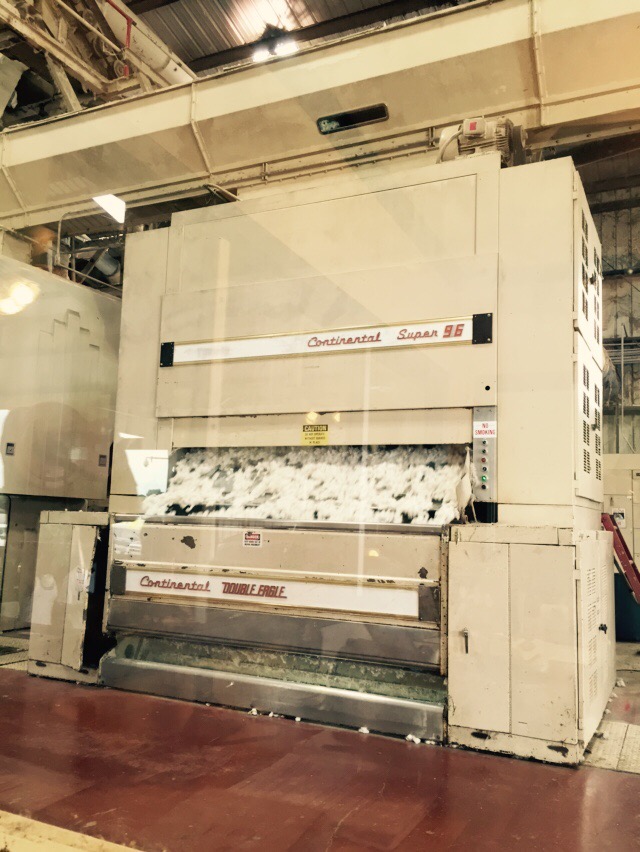
A waterfall of cotton cascades into a trough  at the front of the machine while a hail of seeds is visible below it. The Tanners, who own the gin, do not charge money for processing cotton: they keep the seeds and the value of the seeds pays for it.


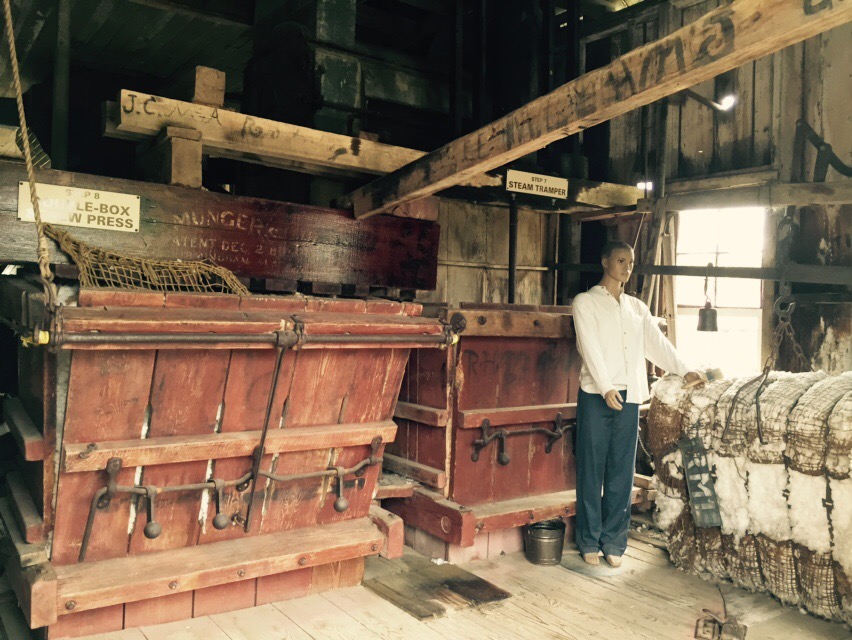
A stream of cotton flows down to the baler, which compacts the cotton and kicks out a bale.


that is tagged and weighed before being trucked down the road to Concordia.
Replete with information, we set off into the farmland north of Frogmore, where we saw the armadillo, rice, cotton, bayous, more cotton before returning to Natchez to visit the Grand Village of the Natchez. The mounds are peaceful in this last week before the school tours start, and we walked the nature trail (giant poison ivy with stems as thick as my wrist, river cane, horsetail 6′ tall, pecan trees…) before returning to the museum where I bought a small but very beautiful woven river cane basket. 

But the cotton is the prize.


P.S. A. says I should clarify the New Orleans cockroach situation: the things on the sidewalk ARE cockroaches, but they’re probably the wild ones known as palmetto bugs that live free in the greenery while their relatives live indoors.

A quick post: indigo leaf prints

Just to prove I’m still playing with indigo, although I’ve had less time than I thought I would.

If you’ve only got a few leaves, try leaf prints.

IndigoLeafPrintSilk1

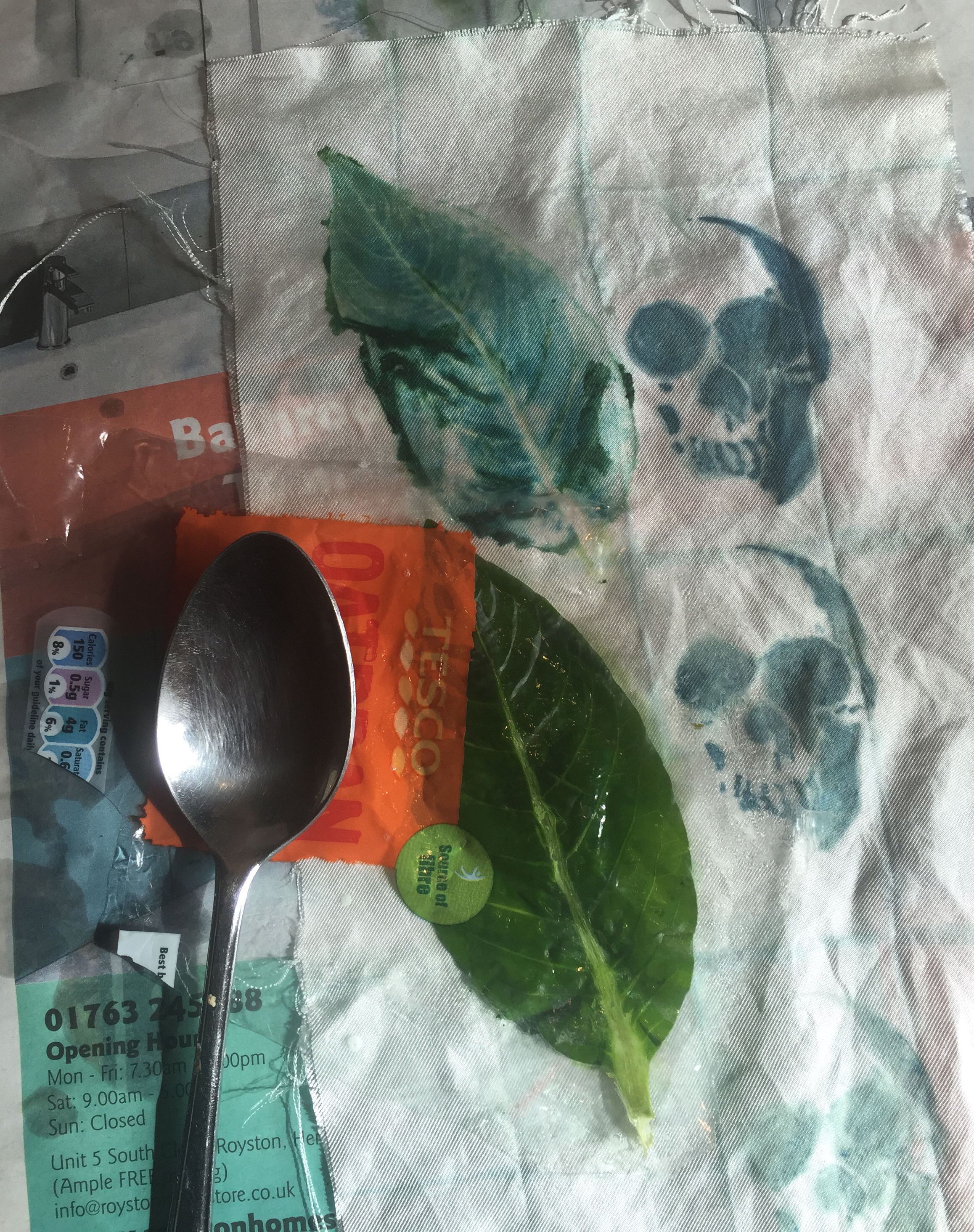
This is Japanese indigo. The technique also works for woad leaves, although the print is fainter than this, at least from my plants; ‘true’ indigo should also work. I am astonished by how much of the leaf structure can be captured by this technique. (The skulls were printed by rubbing fresh leaves through a stencil; I have to post this, too!)

Leaf printing seems to work best on finer fabrics like this silk; I tried it on a heavier cotton/light canvas, and the juice didn’t penetrate far enough to make a good print.
Take a leaf, put it on the fabric, cover it with a piece of clear plastic/heavy cellophane (I used a piece from a packet of oat bran). Take a dessert spoon and hammer the leaf with the bowl of the spoon through the plastic; try to make sure you cover (damage?) the entire leaf area. I think this breaks the cells to release the juice. Then put a dab of washing-up liquid on the plastic to act as a lubricant (don’t get it on the cloth) and ‘polish’ the leaf through the plastic, using lots of pressure. Too much and you can see the leaf squash into mush that obscures the detail; too little and the juice isn’t pressed into the fabric. Practice. Have fun!

IndigoLeafPrintSilk3

pH damages protein fibres: a test.

SilkpHDamage3

“Protein fibres prefer acid conditions; plant fibres prefer alkaline conditions” is a truism that I’ve repeated myself on many occasions. It’s a commonplace when discussing indigo dyeing, as the vats are generally alkaline: indigo is more soluble at high pH. Warmth only makes things worse: hot alkali is said to cause damage faster than cold. Liles and others mention the risk posed by the vat fluid “Indigo vat fluid may be allowed to dry on cellulosic fibres but should never be permitted to do so on protein fibres, since the alkali becomes more concentrated as drying proceeds” ( JN Liles, 1990. The Art and Craft of Natural Dyeing. University of Tennessee Press).

In accordance with this I don’t allow the vat fluid to dry on my silk and wool; indeed, I sometimes put dyed goods into a citric acid rinse as soon as they’re cool, then plunge them into cold, thoroughly oxygenated tap water. The theory behind the cold rinse is that not only does this rinse out alkali not neutralised by the citric acid and oxidise the indigo compounds, it washes out loose indigo particles while they’re still truly loose, not dried onto the yarn or fabric to wear off later onto skin or other garments.

But I’ve been wondering exactly what damage alkali does, and how quickly the damage occurs. Should I be quite so paranoid when working with wool and silk, counting the minutes that the dyestuff is in the vat? I decided to investigate.

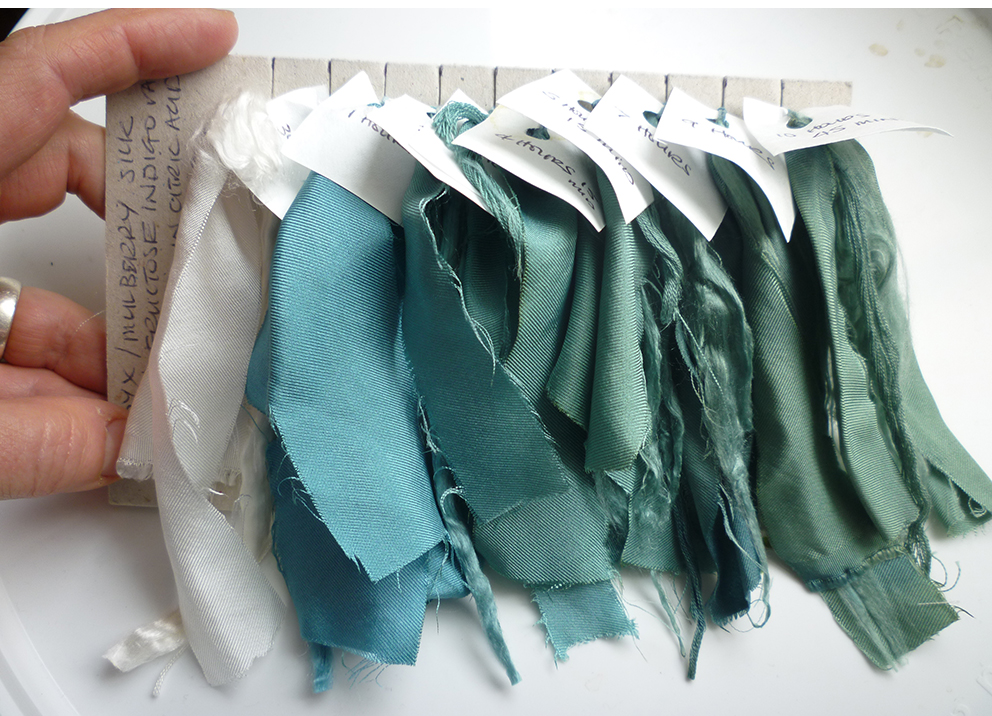
Bombyx aka Mulberry Silk seems more fragile than wool and therefore more likely to reveal damage. I took samples of commercial silk fabric, yarn, and Bombyx spinning fibre, tied them into bundles and submerged them in a 1-2-3 Fructose vat. I tested the pH of the vat at the start of the session and every time I removed a sample: it was over pH11 the entire time. The vat was maintained at 50–55°C for the duration of the test save for a brief overheating to something like 65°C  for about 30 minutes between 2 and 3 hours into the test (I forgot to turn the gas off! Oh, for a water bath). The samples were removed from the vat, cooled slightly, then briefly rinsed in a citric acid solution (pH4) before further rinsing in cold tap water and air drying.

SilkpHDamage1

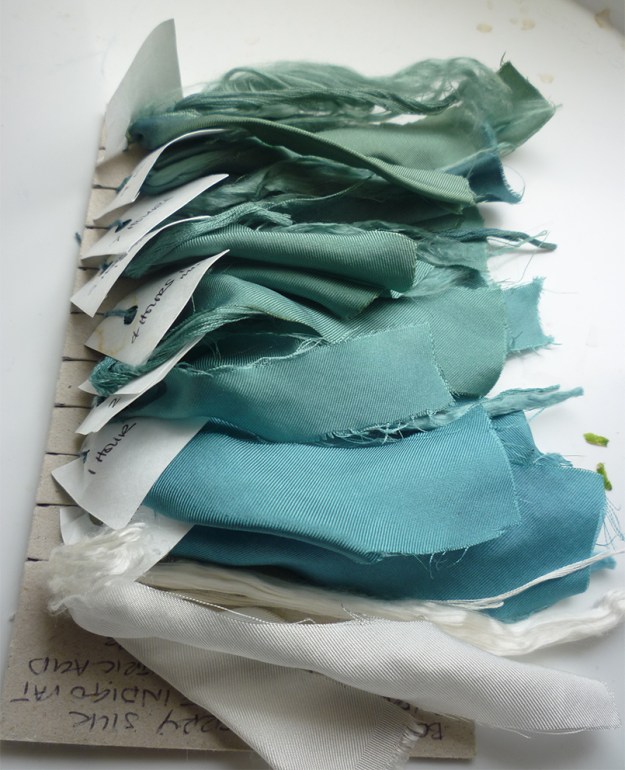
And this is the result of the test. From left to right:

Undyed silk; 30 mins; 1 hour; 2 hours; 3 hours; 4 hours 15 mins; 5 hours 15mins; 7 hours; 9 hours;  10 hours 45 mins (I had to go to bed, the next day was a gym day).

I think there’s a visible difference: after nearly 11 hours at 50°C or higher at >pH11, the silk on the end is less lustrous. As the photo suggests, it’s lost some of its drape, its flexibility. The difference is more obvious in the hand: that silk is ‘cottony’, it’s not as smooth as silk. So, that’s likely to be one aspect of pH damage.

To me, the most interesting thing is the time it took for the damage to be noticeable. (Note: the temperature peak 2–3 hours in is likely to have had some effect, but I don’t think it’s terribly significant – there’s no perceptible jump in the degradation at that point.) I can’t detect a difference between the undyed silk and that which was in the vat for an hour. I’m not even certain there’s a significant difference between the 1 hour and 3 hour samples; beyond that, the fibre does seem to be more cottony. The depth of the blue colour doesn’t change from 30 minutes, so there’s no benefit to leaving it in longer. It seems likely to me that the damage is cumulative, so caution is indicated when dipping repeatedly for darker colour, but still there’s far more leeway than I feared. I’m no longer going to count minutes and seconds when silk or wool is in a chemical vat for 15 or 20 minutes.

The colour change intrigues me. Again, the blue had a greenish tinge at 1 hour, so it’s not attributable solely to the temperature change. Is the alkali causing the silk to yellow? I need to try this again with washing soda and plain white silk.

SilkpHDamage2

What to do with indigo, part I

So what am I doing with the vats? At this point I’m primarily interested in seeing how easy they are to assemble and run, and what the pH is, information that will help me to choose vat methods for dyeing projects in the future. Mostly I will be dyeing wool for spinning and spun yarn for weaving, but it’s a shame not to investigate other possibilities.

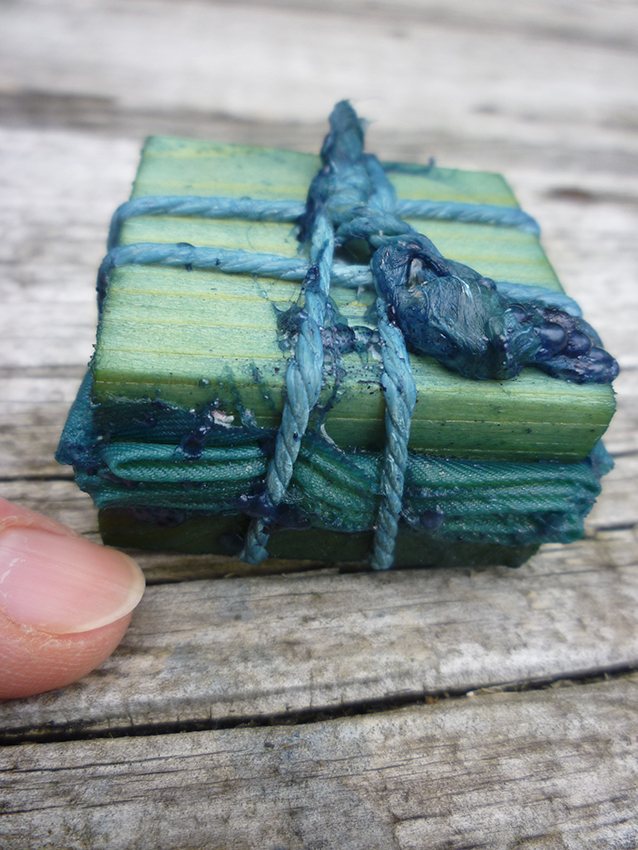
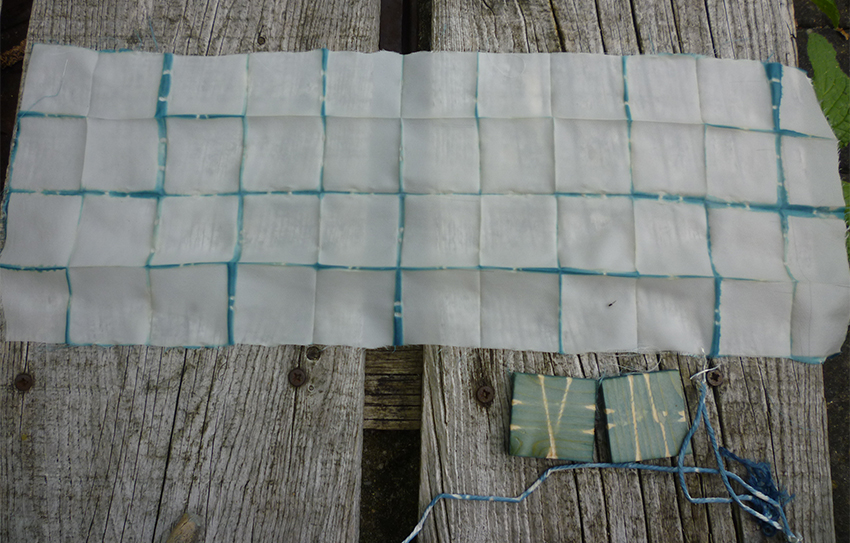
Fabric is an obvious choice; it would be impossible to dye garment lengths in my relatively small jars, but I can play with techniques I haven’t used before, such as shibori. Well, used seriously. Like anyone growing up in the 1960s and 70s I did my fair share of mad tie-dyeing, but there are many other, more disciplined techniques. I have a thing about grids, regular patterning, so itajime (shibori patterning created by pressure) with squares of wood caught my eye. Two 1.5″ squares of board, some string and a strip of silk were easy to assemble… on reflection, for my first attempt, I should have tried larger squares and cotton, because ironing the slippery silk into the necessary neat square packet was exceedingly difficult. Tightly tied between the squares, the folded silk was thoroughly soaked in tap water with a drop of detergent as wetting agent before spending about 10 minutes in the fructose vat, reheated to 50°C and revived with 5g indigo, 10g, calcium hydroxide and 15g fructose.

SilkSq.Itajime

Opening it was my reward for doing the ironing; an hour later and a rinse in vinegar later, I had this:

SilkSq.Itajime2

Lots of room for improvement, but proof of principle nonetheless!

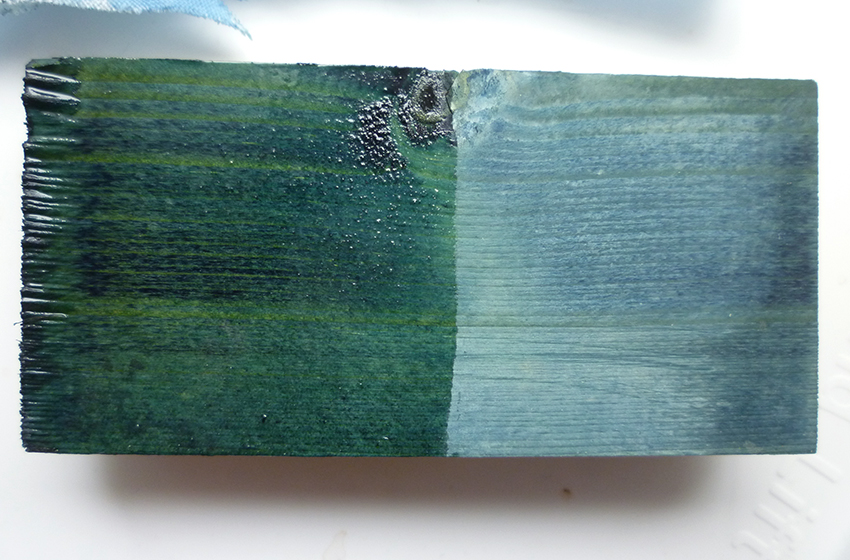
Note the rather pretty patterns on the wood squares. Indigo will dye anything that has roughness to trap the particles. Tokushima Prefecture in Japan is trying to find new products for its traditional indigo vats, including wood for speaker cabinets and mug mats as well as fabulous flooring. I moved the fructose vat into a jar in the greenhouse after dyeing the silk in it last weekend; although it was not heated, I noticed there was a thin flor on the surface, so I dropped a scrap of wood into it for a day, removed it for a couple of hours to dry, then put it back for another day.

Fresh from the vat it was a beautiful green blue. Note that the dense wood associated with the knot has absorbed less of the indigo.

WoodTwodips2 days

Almost dry and it’s definitely blue.

WoodTwodipsDryish

Three days later, fully dry, I’ve given half of it a single coat of yacht varnish, the only glossy thing I have to hand. Sadly it’s slightly yellowing, whereas I think those floors are protected by a thick layer of perfectly clear polyurethane.

WoodTwodipsVarnish

But still, pretty. Worth a few more coats, I think.

The Fructose 1-2-3 vat: an indigo vat for the 21st century?

Using only urine (ammonia) and natural indigo, the sig vat is perhaps the least polluting, most environmentally-sound of all the indigo vat recipes, but the need to collect and store urine, the smell, and the need for multiple dips to obtain darker blues meant the dyeing industry welcomed development of new methods of dyeing with indigo. By the late 20th century the (extremely convenient) sodium dithionite/hydrosulphite vat (the zinc-lime vat developed in 1845 is a type of hydrosulphite vat) was responsible for the bulk of indigo blue on textiles, but concerns about pollution associated with the process – toxic sulphites, sulphates, and sulphides are produced as degradation products – was increasing. In the late 1970s thiourea dioxide (effective at only 10–12% the usual concentration of sodium hydrosulphite), was being proposed as a more environmentally-sound reducing agent. Now, reducing sugars are under investigation.

Reducing sugars contain or generate aldehyde groups that, activated by alkalinity and heat, will absorb oxygen from a solution. Fructose and glucose found in ripe fruit are reducing sugars; ordinary sugar – sucrose – is not a reducing sugar. So it’s possible to create an vat from indigo, lime (calcium hydroxide) and over-ripe fruit such as bananas, or dates that relies on the chemistry of the sugars rather than fermentation of the fruit. (There’s a blog post about a banana vat here.) But it’s easier to prove the principle using fructose from the supermarket shelf in Michel Garcia’s 1-2-3 recipe. It’s very simple: One Part indigo to Two Parts lime to Three Parts fructose, plus warmth.

I warmed roughly 1 litre tap water (for the record our tap water is alkaline, roughly pH8.4) to 50–60°C in a saucepan. I dissolved 15g indigo – for this I used Tamil Nadu indigo – in warm water, added it to the saucepan, then did the same to 30g lime, then gently stirred in 45g fructose. The Tamil Nadu indigo is markedly ‘blue-er’ in solution than the ordinary indigo I’ve used up to now; the solution was a vivid deep blue.

Start

I left this to work for about an hour, at the end of which it showed all the signs that indigo had been reduced and the vat was ready.

ReadyFlor

Vat ready for use. Note the flor, the metallic copper/purple/blue skin of indigo that forms where the reduced indigo oxidised on contact with air. In this vat there were metallic bubbles, too. Beautiful! Scrape the flor to one side with a spoon before adding materials to the vat, or remove it altogether and replace when you’ve finished.

Beautiful, but the strong reduction is an indication of high pH and indeed, the pH paper read 11 or higher. I added a skein of handspun silk, DRY, because I wanted to see what happened if I did so. The silk instantly went blue, as did the vat; wearing rubber gloves I squeezed air out of the silk until it sank, then reheated the vat to 50°C and left it to work, theorising that there was sufficent fructose to re-reduce the solution.

45 minutes later I removed the silk. Beautiful!

Silk45minsFructose

I thought about a second dip, but worried about the effect of longer exposure to high pH and decided to wait to see what colour this became. After all, I have all summer to make things blue.

IndigoThreeShades

Three silks for comparison: on the left, 45 mins in the fructose vat; in the middle, about 12 hours (two dips) in the sig vat; on the right, 90 minutes in the sig vat. Interesting!