Author Archives: sarahw

Unknown's avatar

About sarahw

A spinner who weaves, a person who thinks.

Ethel Mairet’s natural dyeing II: Extract of Indigo

As I described in part I, Highland Blue, the Ditchling Museum of Art & Craft is celebrating the centenary of the publication of Ethel Mairet’s A Book On Vegetable Dyes by asking dyers to replicate the recipes. Because I have a thing for blue I volunteered for two of the indigo recipes; this is the second.

p66. 2). To MAKE EXTRACT OF INDIGO.
4 oz. sulphuric acid, 1 oz. finely ground Indigo. Mix like mustard,  and leave to stand over-night. Prepare the wool  by mordanting with 5 oz. alum to 1 Ib. wool. Boil for 1 hour and dye without drying.

This is the dye also known as Saxon Blue, Chemie, Indigo Carmine, sulfonated indigo, indigo sulphonate, and indigo sulphate, which according to JN Liles in The Art and Craft of Natural Dyeing, was discovered in 1740 not long after concentrated sulphuric acid was first made. In my mind’s eye I see a chemistry lab with in which people in lab coats pour this new acid on everything they can think of, just to see what happens, but I suspect it was much more directed. New colours and methods of dyeing textiles were much in demand, so perhaps it was logical to experiment on indigo. It’s completely different from the ‘Saxon Vat’ of the peasants of Saxony in which the fermentation of matter in unscoured fleece drives an indigo fermentation vat.  Although indigo sulphonate is said to have first been used in Saxony. Clearly a hotbed of inventive dyeing, Saxony.

Anyway. In short: the addition of sulphuric acid to indigo converts the indigo into an acid dye, with the sulphuric acid content of the dye bath acting as the acid to fix it to the dyestuffs.

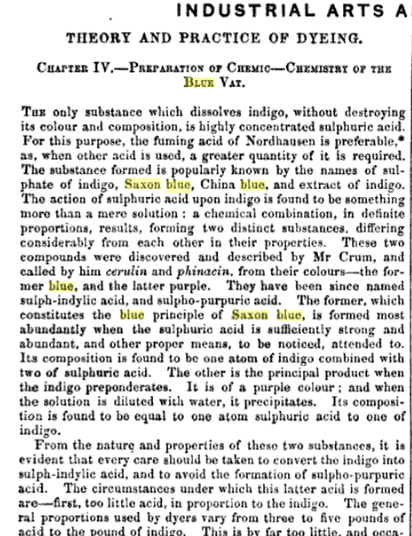
I’d been wondering about trying a sulphuric acid indigo blue long before the Ditchling Mairet project. Blue and smelly is good, blue and DANGEROUS is just as attractive to my inner 5-year-old. But as with ‘ordinary’ indigo, I needed to understand the process before I started. There’s a lot of information on the internet. I was charmed by p255 of ‘The Practical Mechanic and Engineer’s Magazine’ for 1843

p243

An excerpt from this delightful publication.

which explains quite simply the basic problem I faced: as a private individual in 2016 I can’t buy strong enough acid. 98% as sold on Amazon *sounds* strong, but it’s not: ‘fuming acid of Nordhausen’ is in fact 102% by volume. I will not take you down the by-ways and cul-de-sacs I explored online investigating the solubility of indigo (it’s remarkably recalcitrant stuff) or the phone calls and plaintive emails sent to various chemical suppliers begging them to send me the good stuff. I offered to come and collect it so they could assess my harmless middle-agedness themselves. The answer was always No, Sorry, We’re not allowed to. So I ordered what I could get (which is sold as drain cleaner),  an assortment of lab glassware, and some safety kit.

CAUTION: DO NOT even think about trying this unless you have experience working with strong acid and are fully aware of the hazards and precautions necessary. 98% Sulphuric Acid might be weak for my purposes, but it’s strong enough for the fumes to damage your lungs and eyes. The liquid will burn holes in most things including human flesh.

sulfindigostart

I faffed a bit about the quantities because clearly, given I had 98% acid, this would be as much art as science. In the end I used 15g of my most expensive indigo powder to 113 ml sulphuric acid. Mixing the Extract of Indigo was quite straightforward. It does mix ‘like mustard’ – it takes a lot of stirring to thoroughly wet the indigo powder. Better to start with a very little acid and work into a paste before adding the full volume. There was no visible reaction when I added acid to the indigo powder but the reagent flask gradually became gently warm to the touch so heat evolved.

Some recipes for Saxon Blue suggest adding chalk to the mix; Mairet doesn’t, and Liles says there’s no need, so I didn’t.

‘leave to stand over-night’
It’s clear from much that I’ve read (including Liles) that this extract in fact benefits from a longer reaction time – if it is well-sealed so the acid can’t absorb water from the atmosphere – so I wasn’t concerned when I couldn’t use it exactly 24 hours after mixing.

The books agree that Saxon Blue is a dye for wool and silk, which makes sense because acid dyes require an acid (low) pH. Acid conditions render cellulose fibres (cotton, linen, ramie) less able to absorb dye; a friend familiar with the chemistry of paper (also cellulose) says “Higher pH on cotton produces very strong covalent bonds. Less pH value, weaker, if any, bonding.” (thanks, Terry!) So the dye particles simply don’t stick to cotton and linen under acid conditions. I had samples of wool, silk, cotton and linen to test this. I mordanted the wool and silk with alum and cream of tartar, one skein each of cotton and linen with alum and washing soda, and left the spare pair of cotton and silk unmordanted out of curiosity.

Mairet instructs readers on the use of the extract in various other recipes.
3) To Dye Wool With Indigo Extract: For 4-6lb of wool. Stir 2 to 3 oz of Indigo extract into the water of the dye bath. The amount is determined by the depth of shade required. When warm, enter the wool, and bring slowly to the boiling point (about 1/2 hour) and continue boiling for another 1/2 hour. By keeping it below boiling point while dyeing, better colours are got, but it is apt to be uneven. Boiling levels the colour but makes the shade greener…

Given that this is basically ‘add what you think looks right’ I worked from Liles’ recipe, reducing the quantity of extract for my 3litre pan.

saxonbluevat

The colours are not quite right in this, thanks to weird light from both cooker and room lights. It was a little more turquoise than it looks, visibly different from ‘ordinary’ indigo blue. Also, as the dye heated, it developed the chemical odour I associate with rooms full of weaving yarns: not wool, nothing to do with wool or lanolin, a rather sharp indeed acid chemical smell. Very interesting. I opted for a gentle simmer rather than a boil as I wanted ‘better colours’. After 1/2 hour at about 85°C I put the yarns in the sink to cool and ran the dye bath to waste with copious water. And then kicked myself, almost literally, because I forgot to check the dye bath pH at any point. Next time.

yarns-in-sink-steaming

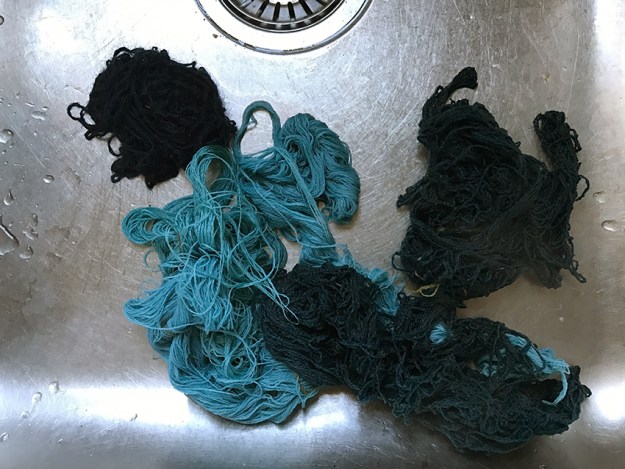
On my machine those colours are about right. The pale yarns are the cotton and linen, as might be expected; note there’s no obvious difference between mordanted and unmordanted. The dark are one wool and two silk. Again, no difference in shade between mordanted and unmordanted silk. Once they’d cooled, I began rinsing, and things became interesting because the silk lost a lot of dye. A LOT of dye. I tried to hurry it along by washing a second time with dishwashing liquid rather than gentle soap, but I left it in the water to soak out the detergent and the water turned dark blue again. I put the yarns in clean water and left them overnight: in the morning the water was dark blue. Something interestingly chemical was happening to strip the dye, I think. But I’m not a chemist-dyer, I’m fermenting organic smelly sludge dyer so I need to do some reading.

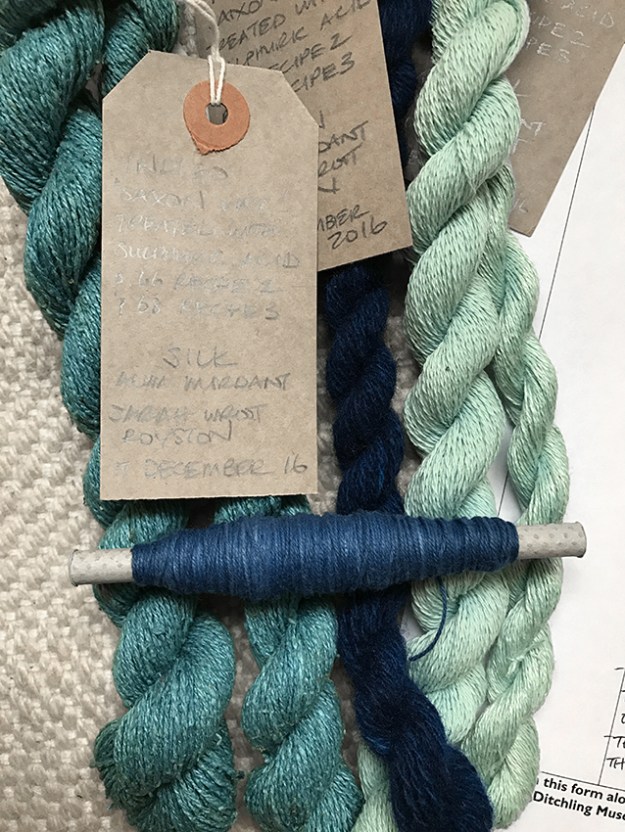
saxonskeinsAnd here is the result, reskeined with the Ditchling Museum Project Record. I’ve added a bobbin of cotton dyed with with an ‘ordinary’ indigo vat for comparison: it’s clear to my eyes at least that the Saxon Blue is more teal, somewhat greener than the ordinary. But sadly not nearly as green as the example I saw produced by a friend with access to Fuming Sulphuric: the stronger the acid, the higher the proportion of green ‘sulph-indylic’ dye formed by the reaction. But still, it is very pretty.
saxonskeinsdet

Now I’m thinking of offering an Indigo Dye workshop next summer, working with fresh leaf indigo and/or woad, plus at least two vats. If I do I’ll happily accept 100ml lab grade fuming sulphuric acid as part payment from one attendee!

Spinning for weaving: workshop at Letchworth Settlement on April 1 2017

24 February 2017: I have had to cancel the Fibre East workshop for personal reasons, but was able to re-schedule it earlier in the year: April 1, 2017, at the Letchworth Settlement. This workshop is also fully subscribed.


Spinning For Weaving
The workshop will cover as many aspects of this as possible (no limits!), so I expect we’ll cover more than the subjects listed below.
Topics will include wheel set-up** and spinning techniques, including ‘production’ spinning; faults and flaws to avoid in your weaving yarns; preparing your handspun yarns for weaving (with special reference to singles, including the use of sizes). We will discuss how the intended purpose of a yarn should influence choice of fibre and spinning technique. We will examine a selection of historic or handspun, handwoven textiles from the UK and elsewhere in order to learn from times and places with strong traditions of handmade fabrics. Having looked at handspun textiles we will at least discuss how to approach the task of replicating the yarn needed to weave a particular textile.

Although the focus is on spinning for weaving, this workshop may be of interest to anyone who’d like to learn to think mindfully about their spinning projects. It is NOT suitable for beginning spinners: attendees must already be able to produce a continuous yarn using a spinning wheel or spindle. Although we will look at some cotton fabrics, the workshop is primarily about spinning wool.
It is a full-day workshop on Saturday 1 from 1000 until 1700. Hot water, tea and coffee will be available, but you’ll need to bring your own lunch.

Note: some of my historic fabrics are stored with sandalwood, cedar wood and lavender soaps or essential oils to deter pests. I will air the fabrics before the workshop but if you’re sensitive to any of these please let me know ASAP so I can air them longer and more thoroughly.

This workshop is limited to 10 students: I need to be sure that everyone has a good chance to try everything, and that I can spend time with those who need it. Cost is £80 per person including materials, of which £20 is a non-refundable deposit to cover room hire and ensure your place in the class. ‘Non-refundable’ means I promise to return your money only if I have to cancel the class.

** In answer to the question in the comments about using a spindle:
People were spinning for weaving with spindles long before wheels existed, so if you’re comfortable spinning medium to fine singles on a spindle you will be fine. You might want to park-and-draft to experiment with true woollen long draw.

The full workshop description and registration forms can be downloaded here:

spintoweave2017desc

spintoweave2017reg


Ethel Mairet’s natural dyeing I: Highland Blue

The hand weaver and dyer Ethel Mairet was a significant member of the British Arts and Crafts movement in the early 20th century. Wikipedia has a summary of her life and work here. (“Ethel went away alone and built a house near Barnstaple complete with studios for textile dyeing and weaving” seems such a bald summary of what must have been a terribly difficult time.)

Ethel Mairet is one of my weaving ‘ancestors’, in that my mentors were taught by people who were themselves taught or inspired by Mairet’s work. I had the pleasure of seeing some of her weaving in the flesh at the National Portrait Galleries ‘Anarchy & Beauty’ exhibition, including a jacket woven from handspun eri silk dyed with natural dyes, here shown in A Weaver’s Life: Ethel Mairet, 1872–1952.

image_medium

Mairet moved to Ditchling, Sussex, in 1916 to join a group of crafts persons including Eric Gill. In the same year (Wikipedia is wrong) she published A Book On Vegetable Dyes (free download from archive.org at that link). Now, a century later, Ditchling Museum of Art & Craft is celebrating Mairet’s work, asking dyers to recreate her recipes for display today.

How could I resist?

I volunteered to work with two of her recipes*, the first being Recipe 8, p69: BLUE FOR WOOL (Highlands), which begins
‘Take a sufficiency of Indigo. (For medium shade about 1 oz. to every pound of wool).  Dissolve it in about as much stale urine (about a fortnight old) as will make a bath for the wool …’
At heart I am about 5 years old: I cannot resist making blue using a smelly technique that other people find revolting. But more importantly, the indigo urine vat is one of the oldest methods of dyeing. I wrote about its history and chemistry here as part of my Summer of Blue. That vat suffered as a result of my inability to keep it warm, but I’ve since found a way to maintain the necessary temperature.

I put the ‘donations accepted’ container in the bathroom and a couple of weeks later the experiment began.

sigstart

All natural indigo powder contains some non-indigo vegetable matter, the proportion of which is reflected in the cost per gram. The vegetable matter is undesirable not only because it isn’t indigo (and hence doesn’t dye), but also because it adds to sediment at the bottom of the vat that can stain things that contact it. I know from experience that bacterial breakdown of the urine creates sediment anyway, so I used a cheaper grade for this vat, adding about 15g of powder to the 2.5l of the stale urine in a 3litre jar on the 27 November. At this point – having been stored at cold room temperature – the urine was at pH8 and smelled largely of stale urine with very little ammonia.

‘Make it lukewarm.’ 
The first time I made a sig vat, I tried everything I could think of to keep it warm, from black plastic bins in full sun (or what passes for full sun in a British summer) to an insulated box and a hot water bottle and finally a heating pad. Nothing worked consistently: slow/occasional fermentation would bring the vat into condition, I could dye a small quantity of fibre – and then it would stubbornly remain blue and miserable for days. That failure – when the instructions seemed so straightforward! – drove me to find out how and why indigo vats work. Now I know temperature was probably only one of several failures, and I have the tools to check and correct the performance of the vat.

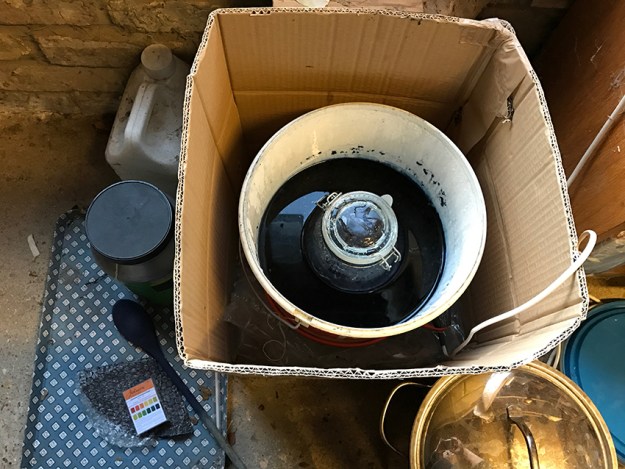
Last summer I built a den in the garage for my indigo fermentation vats: a sturdy cardboard box floored with a thick layer of insulation, with a tray acting as lid. The cord running into the box powers a home-brew ‘brew band’ that keeps a vat at blood heat. During the summer I used it to heat a large volume of liquid in that plastic bin, but here the bin is a waterbath for the urine vat in the glass jar. I put the jar in the bath to warm overnight while I wetted the yarns from the Ditchling Museum.

sigden

‘Put in the wool and keep it at the same temperature till the dyeing is done.’
The plastic screw-top bottle hiding shyly to the left of the box is my ‘spare’ urine supply. Fermentation vats rely on the nutrients in the urine, so I soak dyestuffs in urine to wet them: wetting with tap water will only dilute the urine and weaken the fermentation.

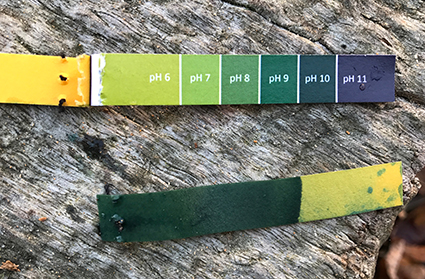
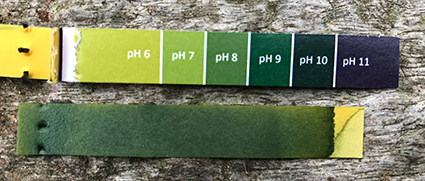
On 28 November, after only 24 hours of warmth, the vat was alkaline, at or near pH10 and smelled noticeably of ammonia. HURRAH, bacteria are digesting the urea in the urine, consuming oxygen and creating ammonia to raise the pH: in other words, this vat is working!sig30nov-addfibre

I added the four yarns, each skein suspended by a string to prevent it falling into the sediment that would develop at the bottom of the vat. This wasn’t entirely successful, alas. Better to use a deeper vat with a lot more urine.

‘For a deep navy blue it will take a month, but a pale blue will be done in 3 or 4 days. Every morning and evening the wool must be taken out of the dye bath, wrung out and put back again. The bath must be kept covered and the temperature carefully attended to.’
[I checked the pH as well.]

sig30nov-fibre

Taking photos one-handed with an iPhone when also handling something with a pungent, penetrating and lingering odour proved tricky, so I don’t have many photos of the process. Here you can see the characteristic yellow-green of an active indigo vat turning blue before my eyes.

By 10 December the vat was at pH8-9: regular opening and airing allows ammonia to escape as gas, so the liquid became less alkaline, while moving the yarns about added oxygen. Both of these mean more indigo in the vat was returning to its blue non-soluble form.

sig9decremove

‘Some add a decoction of dock roots the last day, which is said to fix the blue.’
I didn’t, and I wouldn’t say it. All my research suggests indigo isn’t fixed in that way: once the colourless soluble form oxidises, the particles are either wedged firmly in place or they aren’t. I suppose dock root decoction might act like a glue to coat the yarn and hold the particles in place, but that’s only going to last until the glue is washed out.

I called it a day, removed the yarns for the last time and left them to fully oxidise, slightly thankful that the cold weather means the smell is somewhat less all-pervasive than it was in the summer, when my husband claimed the odour was killing birds as they flew past.

sigyarnsoxidising

‘The wool must then be thoroughly washed. This is a fast dye.’
Well, for some meanings of the word ‘fast’. Slow in terms of time, but fast in the sense that it’s generally regarded as wash- and lightfast once any unattached particles of indigo are removed. Jeans and other items dyed with indigo lose colour as the surface of the fabric erodes to reveal undyed material.

I handwashed the skeins in a non-bio detergent for delicate fabrics and rinsed thoroughly in cold water. Given the alkalinity of the vat and our extremely hard water I finished the wool and silk in a final rinse acidified with vinegar.

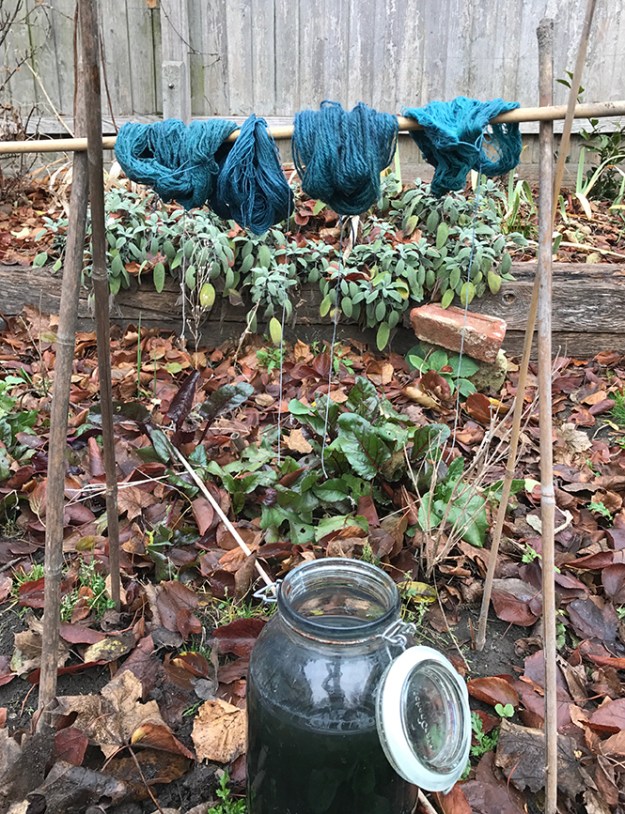
sigyarnsfinish

The yarns and process summary, about to be packed off to Ditchling. I am pleased to report they not only demonstrate one of Mairet’s dye recipes, but also the classic ‘vat odour’ that once indicated the finest and fastest shades of blue.

*my work on the second recipe, ‘Extract of Indigo’ (treated with sulphuric acid!) can be read here.

This blog is changing its spots

Blogs can do that, unlike leopards.

This blog (carpe diem, which can now also be found at wroot.blog) will focus on spinning, weaving, dyeing, and other textile projects.

All the existing content and new travel stories and will now appear in a new blog titled ‘A&S on the road’ at this URL:

https://colddraketravels.wordpress.com

I’ll try to remember to copy interesting fibre projects to the travel blog because I know some of my readers enjoy All The Things.

And now I have some deleting to do …


A handspun, handwoven, mostly hand sewn jacket: almost finished!

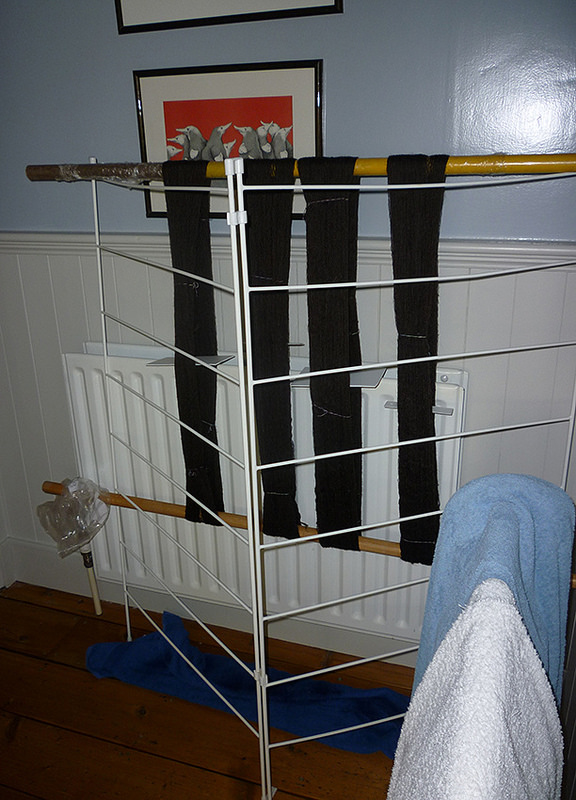
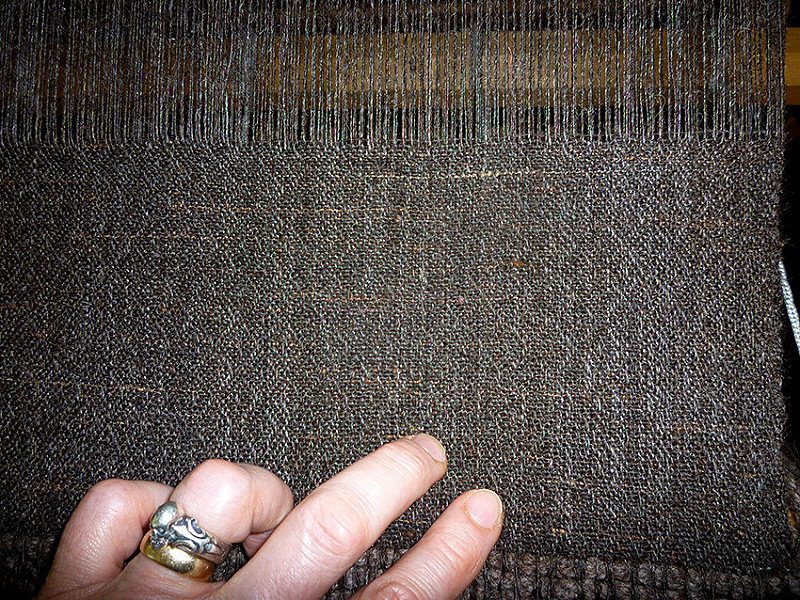
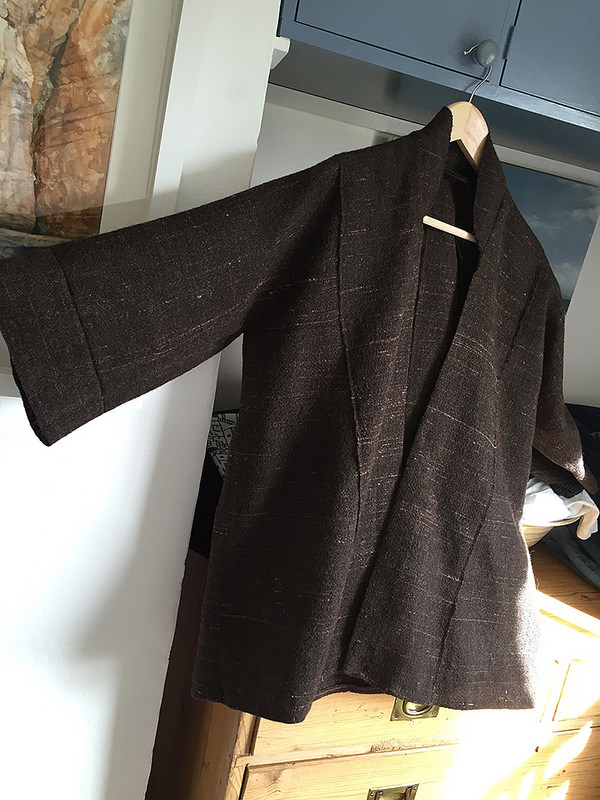
In April 2014 I decided to spin and weave fabric a fabric from singles (unplied yarn) for my first planned garment. I bought black (‘black’ in this context means very dark brown) Shetland for the weft, above top left. It was a bit boring when spun from the top, so I carded bats including some slivers of multi-coloured silk. I thought Black Massam (the other two images) would make a good warp. Massam being the offspring of a Teeswater ram put to Dalebred or Swaledale ewes, the fibres should be longer, a bit coarser, and have more sheen than the Shetland. In the event neither of the tops were quite as I expected: the Shetland had a lot of kemp (very coarse flattened hairs) and more hair mixed in with the wool, and the Massam was shorter and very variable in thickness. Nonetheless I persevered. Once spun the warp was steamed to set the twist then sized to make it easier to manage; the weft was steamed (otherwise it can twist into little pigtails after the shuttle is thrown and before it’s locked into place by the changed shed).

30001485335_1bb50924af_c
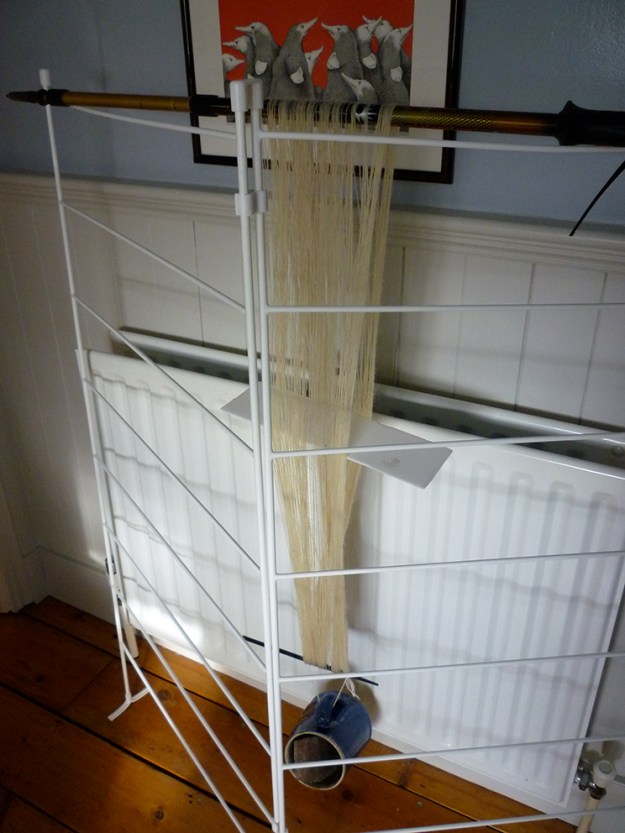
The sized warp dries under light tension.

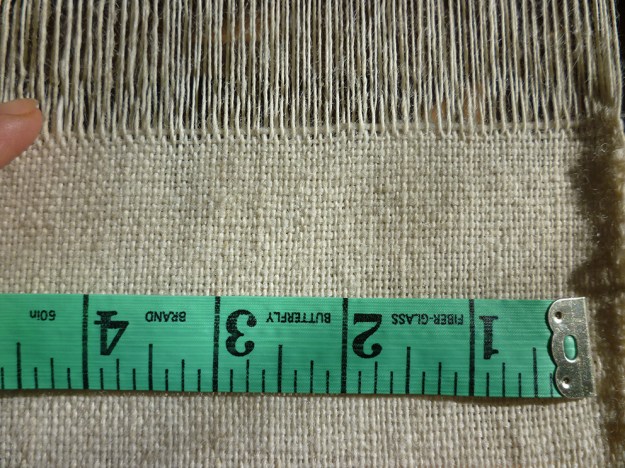
I warped and threaded my Baby Wolf loom for an 8-shaft broken diamond twill at 30 epi. The yarns behaved reasonably well on the loom although I had more breakages than I like, mainly where I’d made quick-and-dirty joins while spinning, laying the spun end from the orifice onto the fibre instead of opening up the spun end to join fuzz-to-fuzz. I wasted far more time protecting fraying joins with hair gel than I’d have done making them properly in the first place! The quick joins are fine for yarn to be plied, but they’re disasters waiting to happen if you’re weaving singles.14410873262_a0ab954361_c

I can’t remember how much fabric I had when I finished, but I do remember the wonderful feel of it washed (zig-zag stitch the ends, throw in the washing machine wool wash cycle, remember to clean the filter afterward!) finished (hot iron both sides, no cloth) and the satisfying weight of the roll. But what should I make? Laying out modern pattern pieces on my narrow fabric would be wasteful, and I’m not a tailored jacket sort of person. I decided on a jacket based on Pattern 23, ‘Man’s coat, Afghanistan’ from Dorothy Burnham’s extremely useful Cut My Cote. Never having made anything other than commercial patterns, and never having made anything that actually FIT me, I wasn’t sure how to work from Burnham’s sketches of the pattern pieces laid out on the fabric width.

29918301781_0c8a3dee92_c

I enrolled in one of Alison Smith‘s ‘Three Day Own Choice’ workshops and – amazingly – emerged having learned to translate the sketch to paper pattern pieces, use these to make a toile, adjust the pattern, cut my fabric, overlock/serger all the edges, sew the jacket AND insert a mandarin collar into the existing collar band. I can’t recommend Alison too highly! I returned home with a lightweight unlined jacket, on which my exposed selvedges are a decorative detail. (Alison’s suggestion, she liked them. All weavers may now pick their jaws off the ground and replace them.)

16000784954_d314845ca9_c

The lack of internal seam finish annoyed me. I decided to weave lengths of inkle band to cover the seam allowances but, several months and about 8m of band later, concluded this was a bad idea: the decorative bands were too bright and, worse, made the seams too stiff. The jacket went into time out (also known as a plastic bag in the closet).

Imagine the flickering calendar pages of time passing…

After seeing one of the reconstructed Herjolfsnes garments at the Ship Museum in Roskilde in 2016, I started thinking about making some of the dresses for myself, first in a commercial fabric and then in handspun handwoven. Reading about the garments and sewing techniques in Woven into the Earth: Textile Finds in Norse Greenland and its companion Medieval Garments Reconstructed, I remembered the abandoned jacket: I could rip off the inkle bands and practice medieval sewing techniques!

In order to sew, I had to have thread. Handspun thread. Not being able to carefully select the best hairs from my fleeces after washing and shearing my double-coated sheep, I dug through my stash to find the remaining twist of Shetland from the weft. The mix of kemp, hair and wool means it’s far from perfect, but it works.

Top left, singles spun on a light spindle; Below, my plying spindle and mugs;
Right, the final 2-ply thread.

I take pride in my ability to wind fine spun singles into balls without using a core but it is easier to ply from the balls if they don’t bounce around: using a pebble as a core adds weight, and putting each ball into a mug and wrapping the singles around the handle before taking it to the spindle makes it much easier to control. The plied yarn is well within the parameters of those used on the Herjolfsnes originals.

The book mentions the possibility that the threads were finished with something, perhaps beeswax, before sewing. I found quite a lot of information about thread finishes, something that I – a non-sewer – knew nothing about, on the internet. I decided to try running the thread across beeswax before using it, and now I’m a convert, at least for handspun wool thread.

29967316896_06a8b7b467_z

The wax stiffens the thread, making it easier to thread the needle. Being slightly sticky it pulls off some of the fuzz from the thread (see the hairs left in the wax), which makes the thread much easier to work with. And it smells lovely.

Three or four inches at a time, I’m trimming the overlocked finish off the raw edges and binding them down to the garment.

29918300041_dc623a3d3e_c

Pebbles from California on which to wind thread, the snips I use to trim the fabric, and the bowl from Dawn P.  in which for some reason I kept ALL the edges I’d trimmed off the seam allowances.
I think it’s time I threw that lot away.

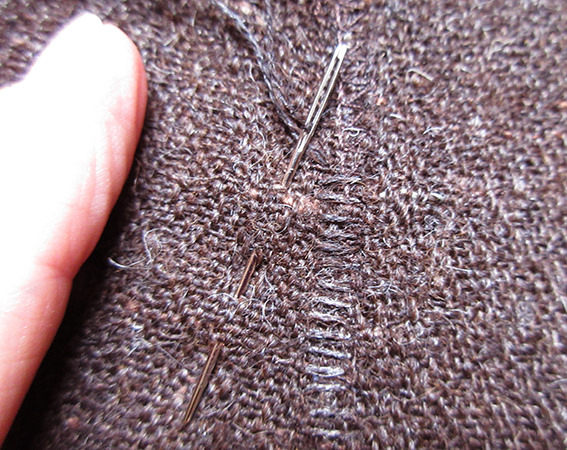
Before sewing, the raw edges on the Herjolfsnes garments were stabilised by ‘singling’: a fine thread was sewn to and fro into the thickness of the fabric, in from the edge, not stabbed up and down through the fabric. I haven’t enough raw edge on the seam allowances to do that, so I’m taking pains to run the needle in and out of the fabric for additional stabilising as I sew one way, then I take it back over the fabric to the starting point. A picture is worth a thousand words:

30001260165_7bbd1bb8c1_c29707495680_197ace097b_z

I’m trying to stitch every 2mm or a little less. You can see the waxy whiteness of the beeswax on those recent stitches, but it soon disappears as the garment is handled.

I think the end result looks good, is appropriate for a handspun, handwoven fabric, and will allow me to tell people about the astonishing finds at Herjolfsnes.

29887748732_dc92f20c17_z

Some of the internal seams. The stitches are not generally this visible: I chose the light angle to highlight them.

29373713994_59e0ffcbdb_z

Seams as they appear on the outside of the garment. The stitches pick up a thread or two of the fabric at both ends, so create a subtle and decorative ridge.

Once I finish all the internal seams (as you can see from the pattern, there are more than a few), I will try my hand (and foot) at fut-slyinging, incorporating a foot-tensioned tablet-woven decorative band along the hems. I think all this handspun thread, hand sewn and woven really should outweigh the fact that the garment seams are machine-sewn!

Also, some of those seams were even sewn with an appropriate needle. Bone.

29918308991_84df1accc9_z

In January 2020 I realised that I should tell the story of the jacket that stars in my article on seam techniques from Norse Greenland in Piecework Magazine Summer 2020. And then 2020 went a bit pear-shaped for the entire world. As I begin to pick up the juggling balls where I left them, I can start by clearing out my Blog drafts folder!

A tiny piece of velveteen

In March a friend asked me what I knew about fustian weaves. I’m fascinated by European textiles from the Medieval period through the Middle Ages, so I started talking about fabrics woven from mixed materials. Linsey-woolsey is a well-known example, wool weft on a linen warp, but there were cotton wefts on linen warp and wool weft on cotton warp too. But she was interested in the fustians of the late 19th and early 20th century, by which time it had come to mean a pile fabric.

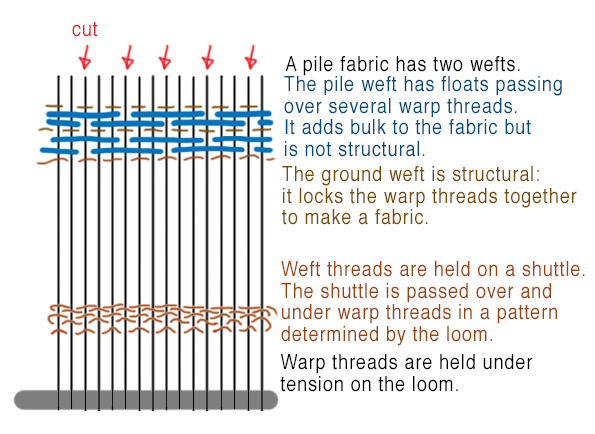
Pile fabrics are interesting. The pile is created by weaving a fabric with floats: where normally the threads might interlace over-under-over-under-over-under, in a pile fabric either the warp (the threads held on the loom) or the weft (the thread held on a shuttle and passed through the warp threads) will float over several threads before it is locked down again. If warp threads float, the fabric is a velvet; if weft threads float, the fabric is a velveteen. This will make more sense if you read it again, looking at the diagram of a velveteen. Start at the bottom and work up:
PileStructure

Rough diagram of a velveteen, a weft pile fabric. I have completely ignored the structure of the selvedges (the edges of the fabric); these are often different from the main fabric.

Because the pile weft is not structural – it’s not needed to hold the warp threads together because the ground weft does that – the floats can be cut, taking great care not to cut the ground weft or the warp thread. The red arrows mark the most obvious cut lines, straight down the middle of the floats. When the floats are cut, the cut ends rise up to form pile. If all the floats are cut, the entire fabric is covered in velveteen pile. If vertical groups of floats are cut and uncut, there will be ridges of pile alternating with furrows of smooth fabric: corduroy!

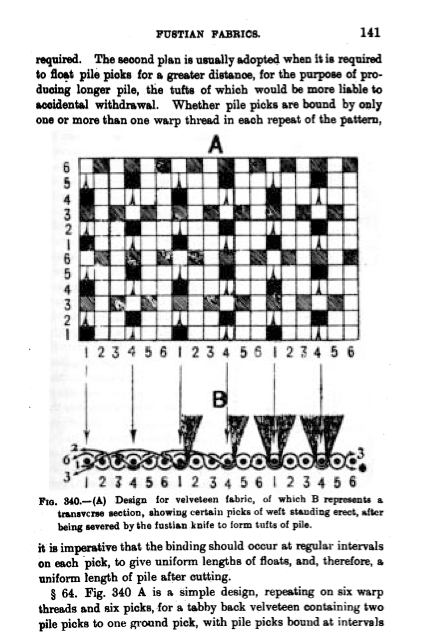
My friend and I searched for pattern drafts – diagrams of how to set up the loom and weave the fabric – of fustian weaves from this time, and found H. (‘Harry’) Nisbet’s Grammar of Textile Design, third edition (with 669 illustrations!) published in Bombay, as a PDF on the invaluable cs.arizona.edu weaving archive. Chapter II is Fustians, from Imperial or Swansdown through Corduroy and Corduroy Cutting Machines. Nisbet gives a good if somewhat … Victorian … description of the structures of these and many other fabrics. If you want more information about fustians or are interested in fabric, it’s a decent free book.

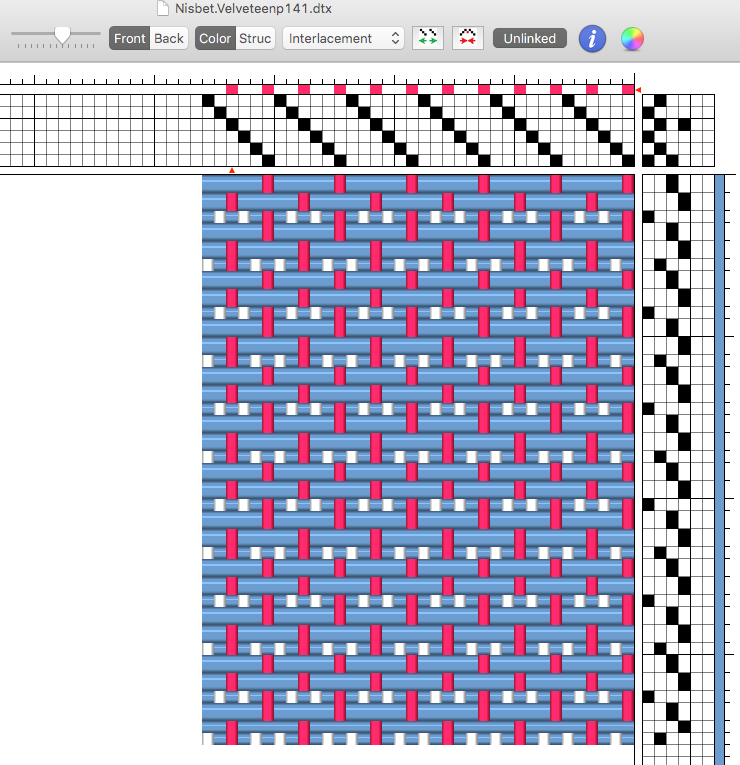
On page 141 there’s a velveteen draft/diagram, together with a useful illustration of the way that the cut floats form pile.
Screen Shot 2016-09-01 at 09.41.46

I redrew the ‘design for velveteen fabric’ as a modern weaving draft. The bright pink threads mark the centre of the floats.25549370302_66b9bf3e15_o

By now I was entranced by the idea of weaving velveteen. Not a lot of it, as I suspected cutting the pile was going to be very tricky without a fustian cutter’s table and knives, or even full-fledged mechanisation, but still. Worth a try. Handwoven velvety stuff. Cool!

From what I could find about sett (the density of threads on the loom) and the velvets and velveteens I remembered seeing in shops, I thought sewing thread might be a reasonable warp. I assumed there must be a good reason that most silk velvets I looked at online had cotton warp and ground weft, so I bought a bargain bag of variously coloured cotton thread on eBay. I had some odd cones of 20/2 silk in the weaving stash. It occurred to me that the ground weft should not show in the areas of cut pile – the pile expands to conceal it – but would be visible on the back of the fabric, so I chose three (red, orange, gold) that looked good together and wound a 2m warp. The three spools gave me 200 ends; set 60 ends per inch (6/6/6 in a 10-dent reed), that’s only 3″ wide. Still, proof of principle and all that.

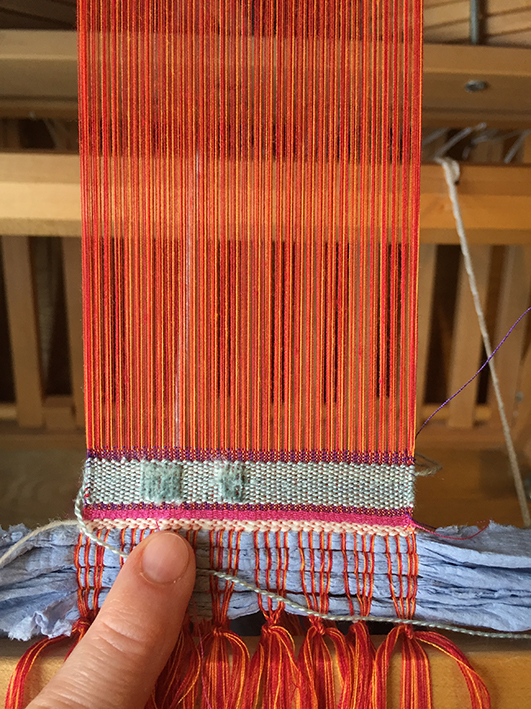
This gives some idea of the warp colours and the scale. I used some ugly silk for my first pile weft and purple cotton for the ground weft. Note that there’s a band of plain weave (the ground weft weave, over-under-over-under) before and after the strip of velveteen floats in greyish silk.
velveteen

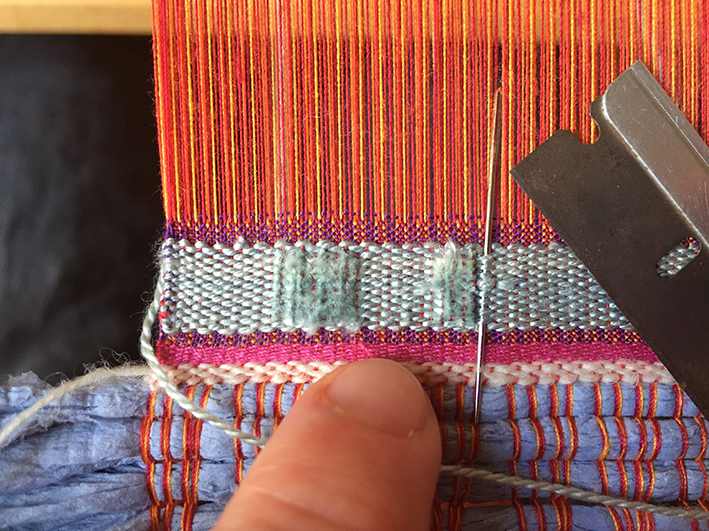
Cutting the pile floats was indeed tricky. When this sort of thing is woven commercially, the equipment includes long grooved rods to be inserted down the cutting lines. The rods lift the floats and protect the warp and ground weft threads; the grooves guide the cutting blades. I used a medium-fine darning needle and a single-edge razor blade instead. Wearing strongly magnifying reading glasses I ran the needle under a line of floats, then ran the razor blade down the needle. It worked. The finest (Clover) chenille cutter I could find  didn’t work, it was far too coarse for this.velveteen1

As one might expect of something sharp running against steel, the razor blade required regular sharpening. I kept my fine whetstone next to the loom and re-touched the edge after every strip of velveteen.

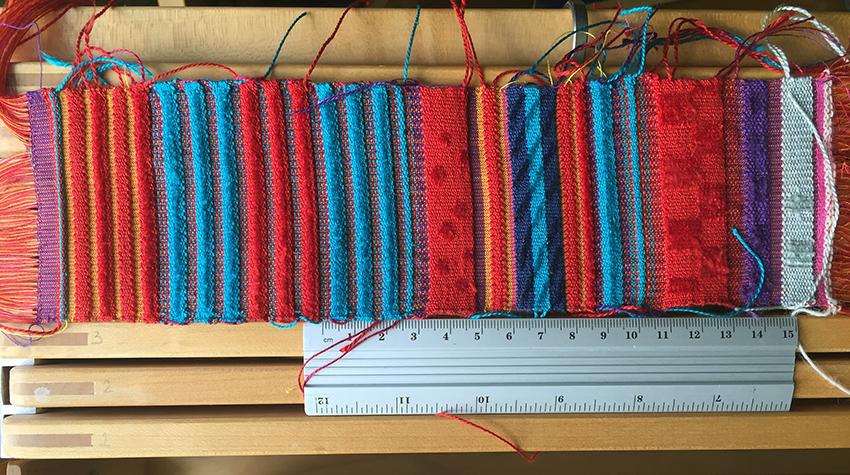
But it was a phenomenally slow process. Each group of three red or blue velveteen stripes (at left, below) separated by bands of plain weave (the ground weft alone) took 3 hours to weave and cut.
VVteenStrip

The truly horrible uneven selvedges are a result of alternating plain weave (the ground weave stripes) with the velveteen float weave. The silk weft is much thicker than the sewing thread weft of the plain weave stripes, so the velveteen stripes are wider. Note that the shiny uncut pile floats contrast beautifully with the pile, and that the pile can be cut in patterns. Lots of scope for fabric design here.

I was right; the reverse/back of the fabric was beautiful! The stripes are different colours of cotton thread ground weft – purple, yellow, pink – plus the red and turquoise silks I used as a pile weft. The pale vertical line is a repaired warp thread.
VVteenBack

I learned a lot from this.

  • Even weft tension is important, otherwise loose loops of ground weft may be caught by the needle and cut.
  • Contrasting ground weft helps the weaver to spot this.
  • 100% silk velvet is unusual and expensive because slippery silk warp and ground weft wouldn’t grip the silk pile weft as firmly as cotton does. Of course silk is more expensive than cotton, too. Mercerised cotton is shiny enough and works well for warp and ground weft.
  • While inserting something down a line of floats in order to cut them, keep an eye on the adjacent cut edges: if your needle/whatever you’re inserting is too thick, or you lift it too high, you may pull the adjacent cut edge under the locking thread. I found it better to cut long lines of floats in two tranches because one long one required lifting the needle too high.
  • If you want nice, even pile, try hard to run the cutting blade down the middle of the needle. It’s easier to cut down the side of the needle, but this means one side of the cut float is shorter than the other. The uneven pile doesn’t reflect the light as evenly, and the shorter ends are more likely to pull out when you cut the next float.

I now had a tiny gemlike strip of precious fabric, too pretty and too interesting not to be used for something. Obviously it had to be a hussif or housewife, a little needle case that I could use when travelling with embroidery.

While I was sewing it, wearing magnifying glasses and swearing under my breath, A. asked if I honestly enjoyed making tiny things, as I make so many. Why don’t I make bigger things to work out the details? Well, I only had enough fabric to make one of these, and it wasn’t so complicated (except for the scissors-keeper) that I felt I needed to make a tester. The scissors-keeper I made twice to check the details. The final version is sewn from scraps of sari silk; the snap is off-centre to fit neatly inside one of the finger loops of my cherished Bohin scissors. The felt is handmade; the thimbles are sitting on top of their tiny pocket.

And I do like making small things. I enjoy pernickety attention to detail, I do it well, which is why I was a good technical illustrator and a very bad landscape painter (I wanted to show every leaf, accurately). Of course I enjoy making things even more if I know what I’m doing, but it’s fun even when I haven’t a clue and am working it out as I go along.


Copenhagen drain covers: gotta catch ’em all!

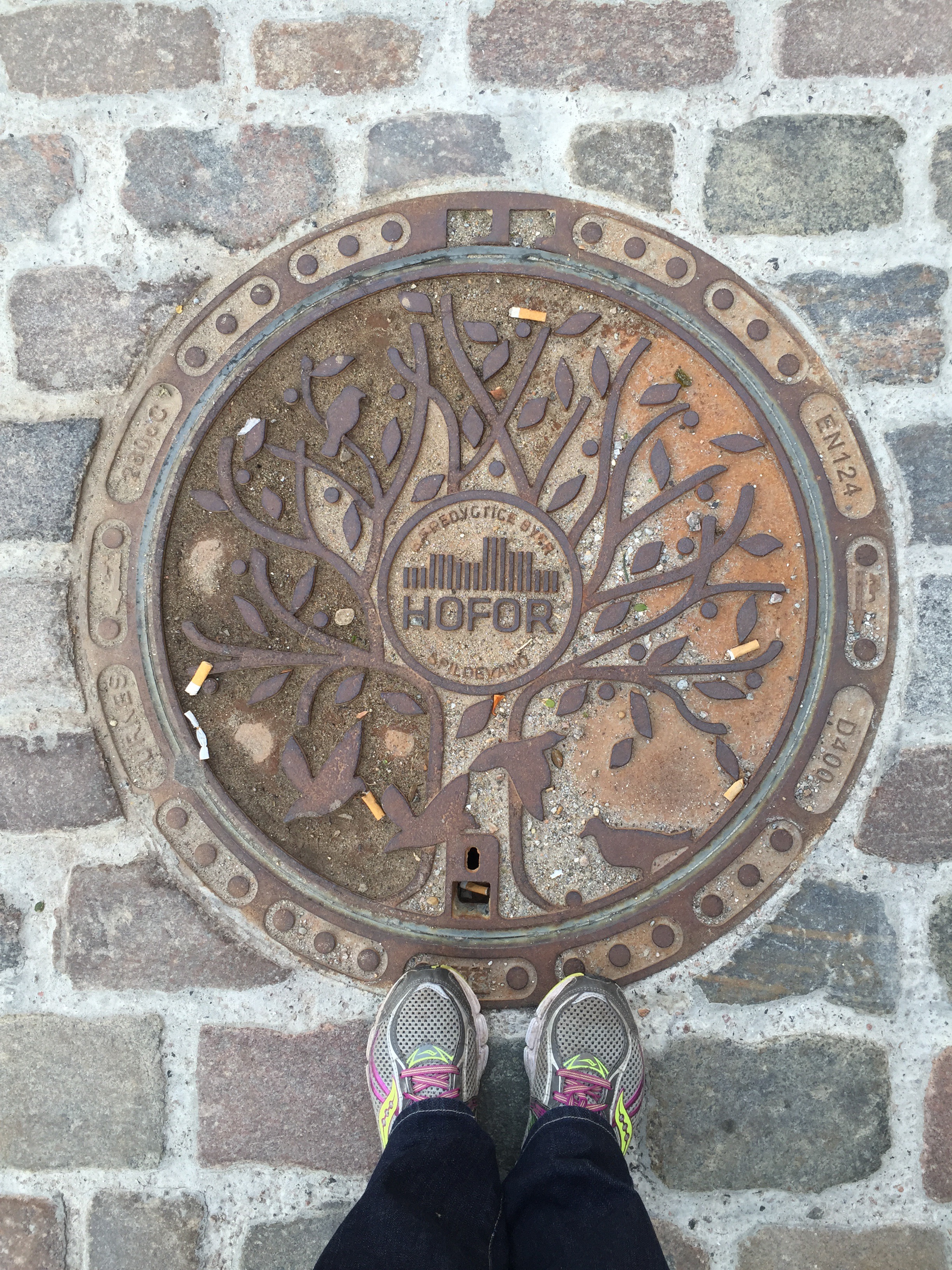
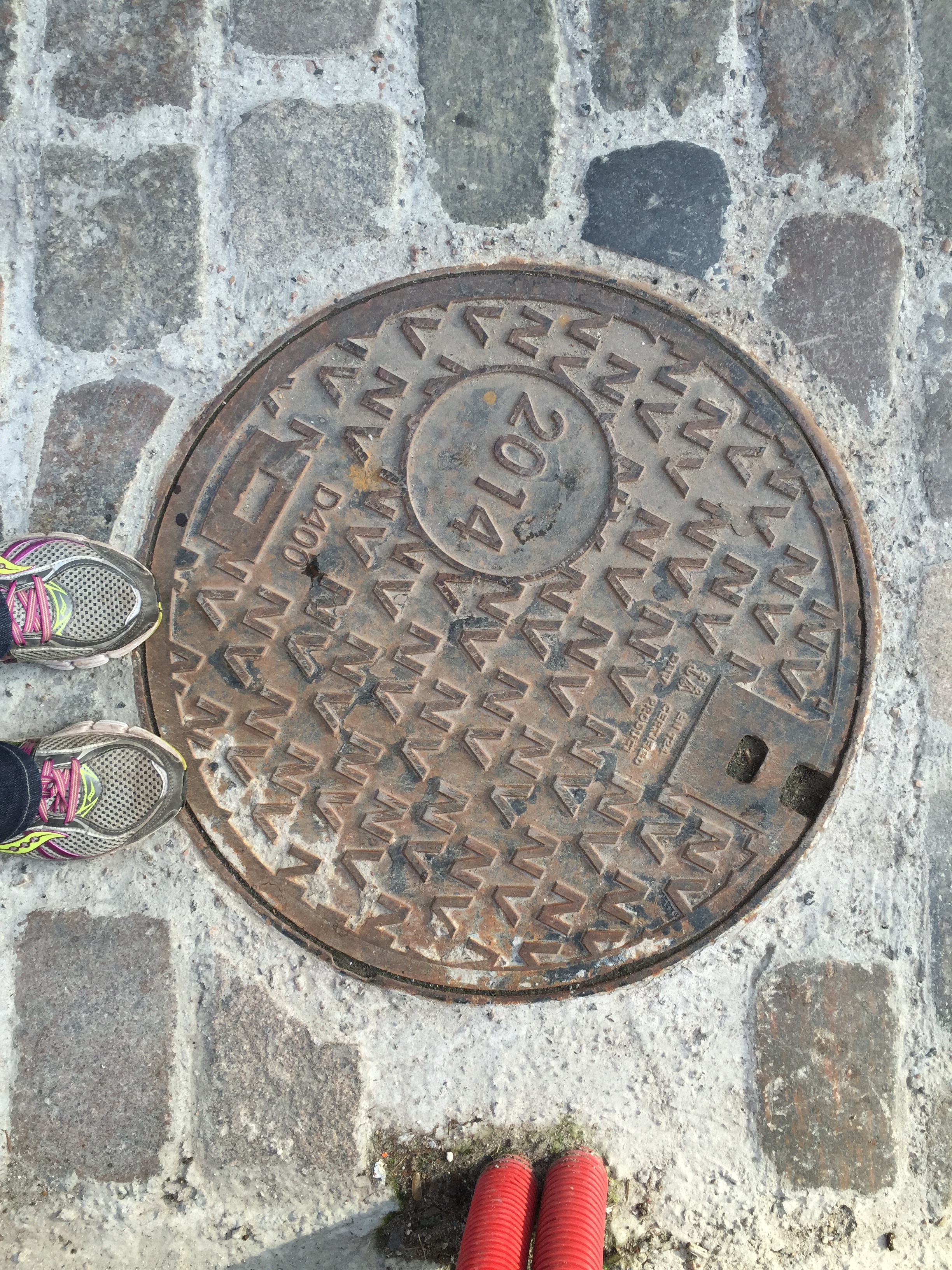
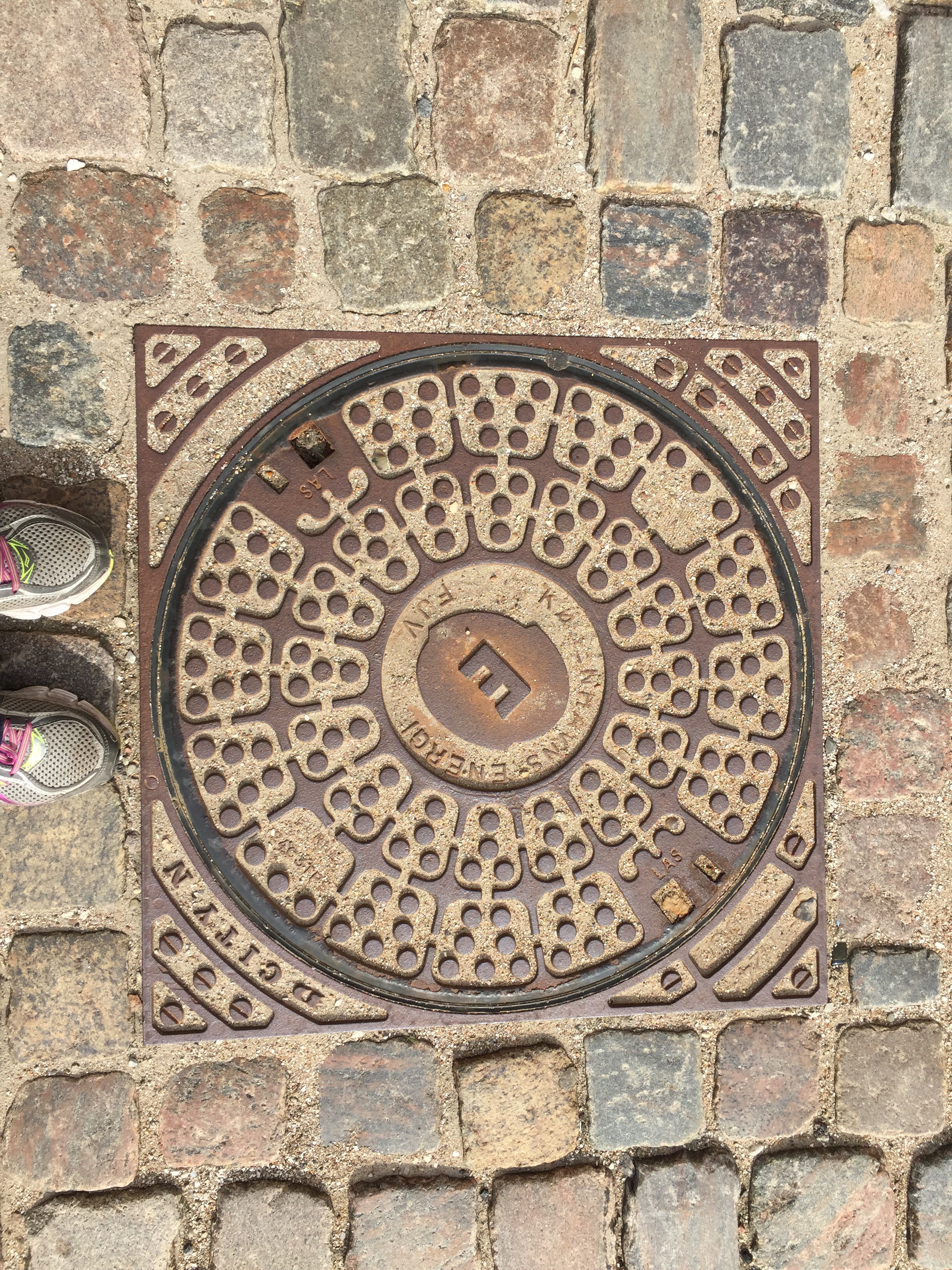
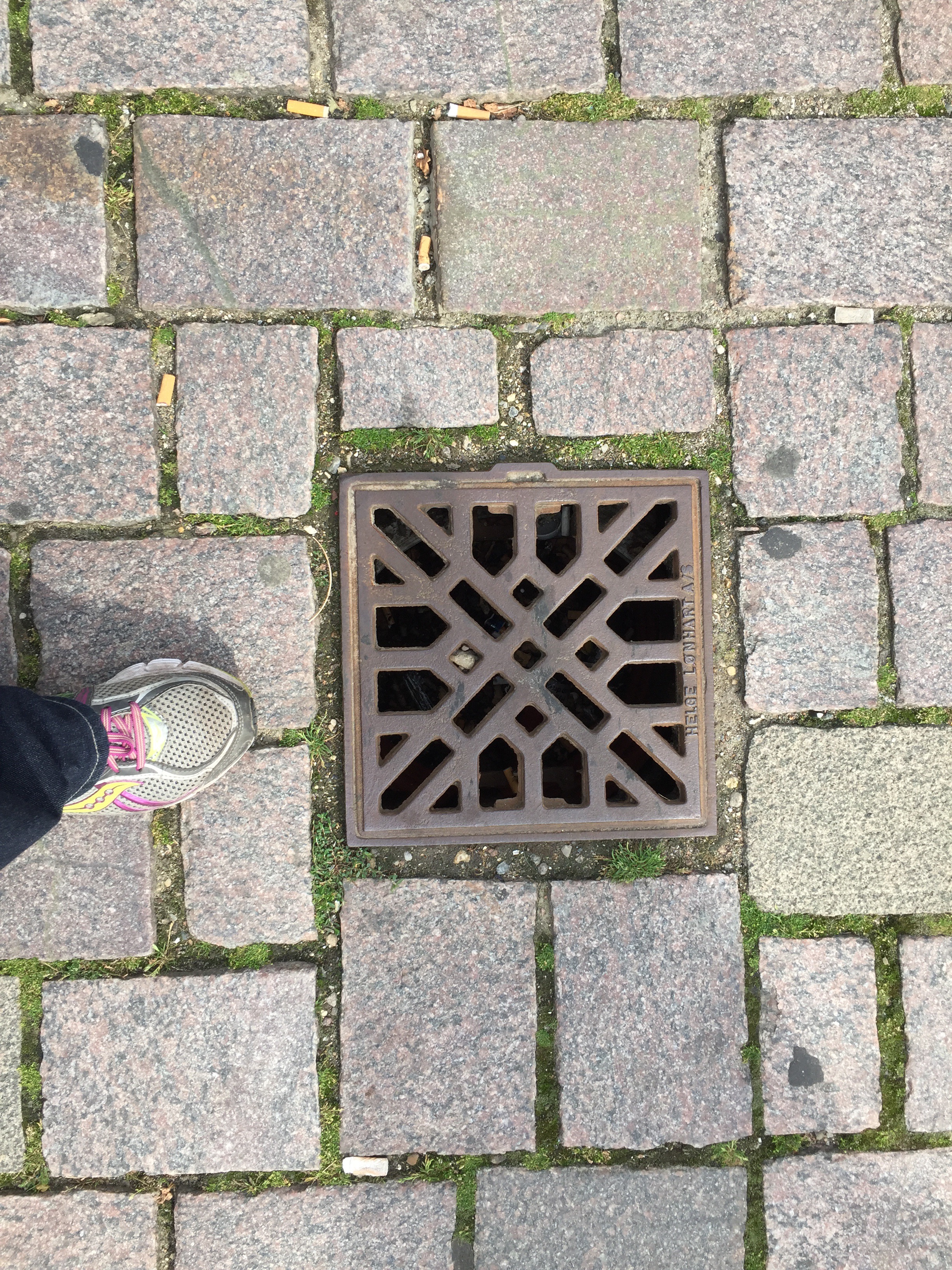
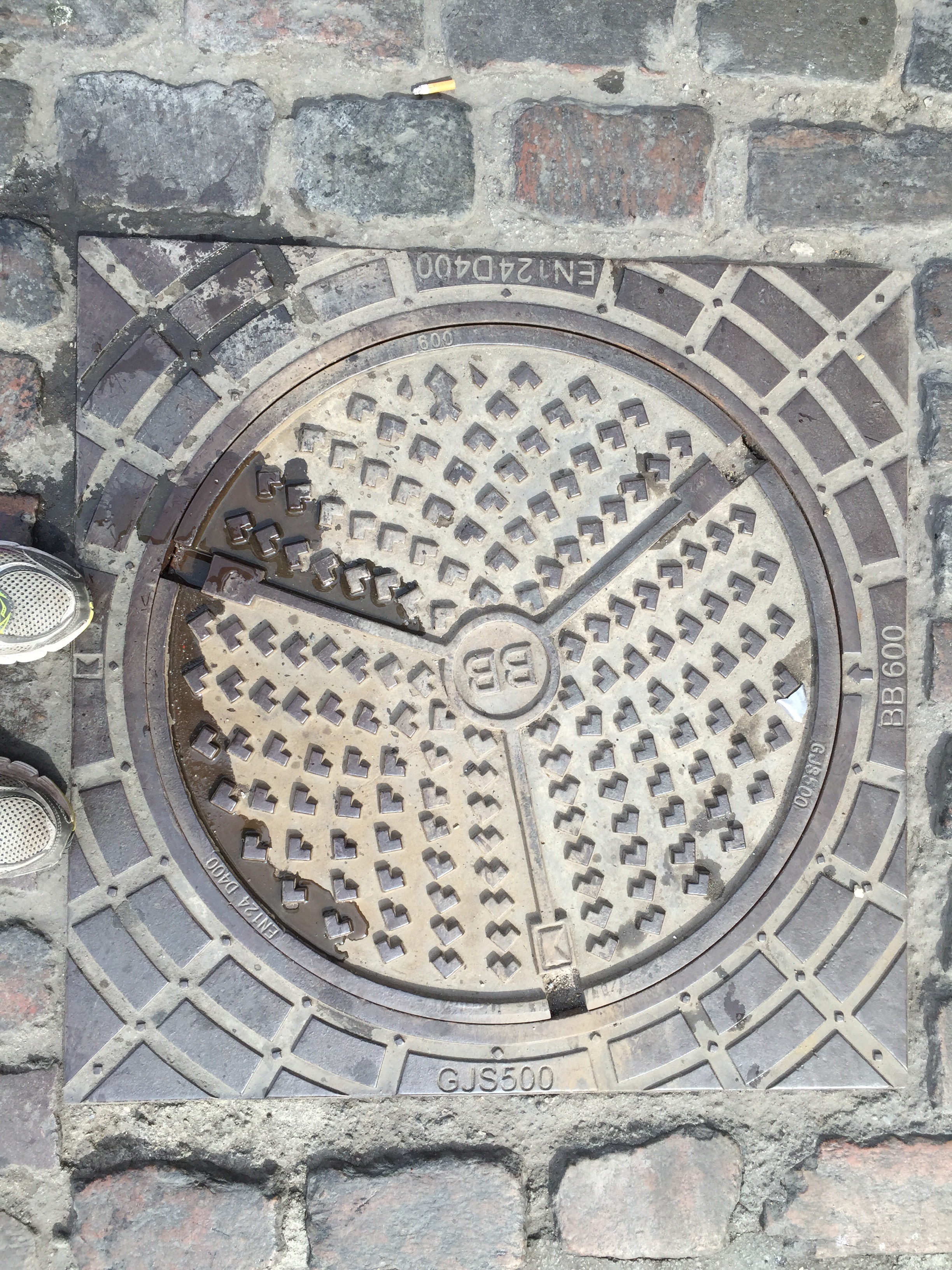
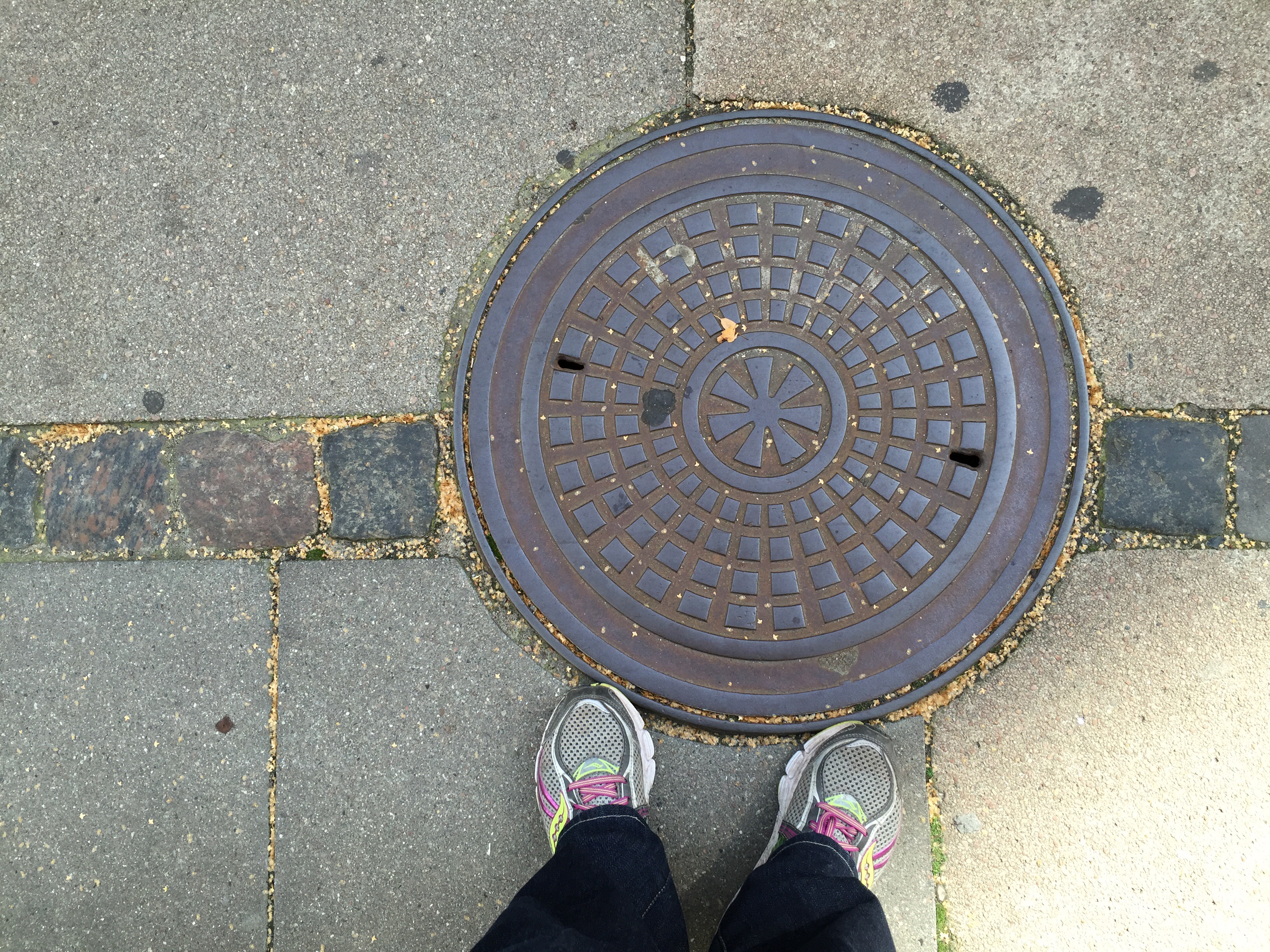
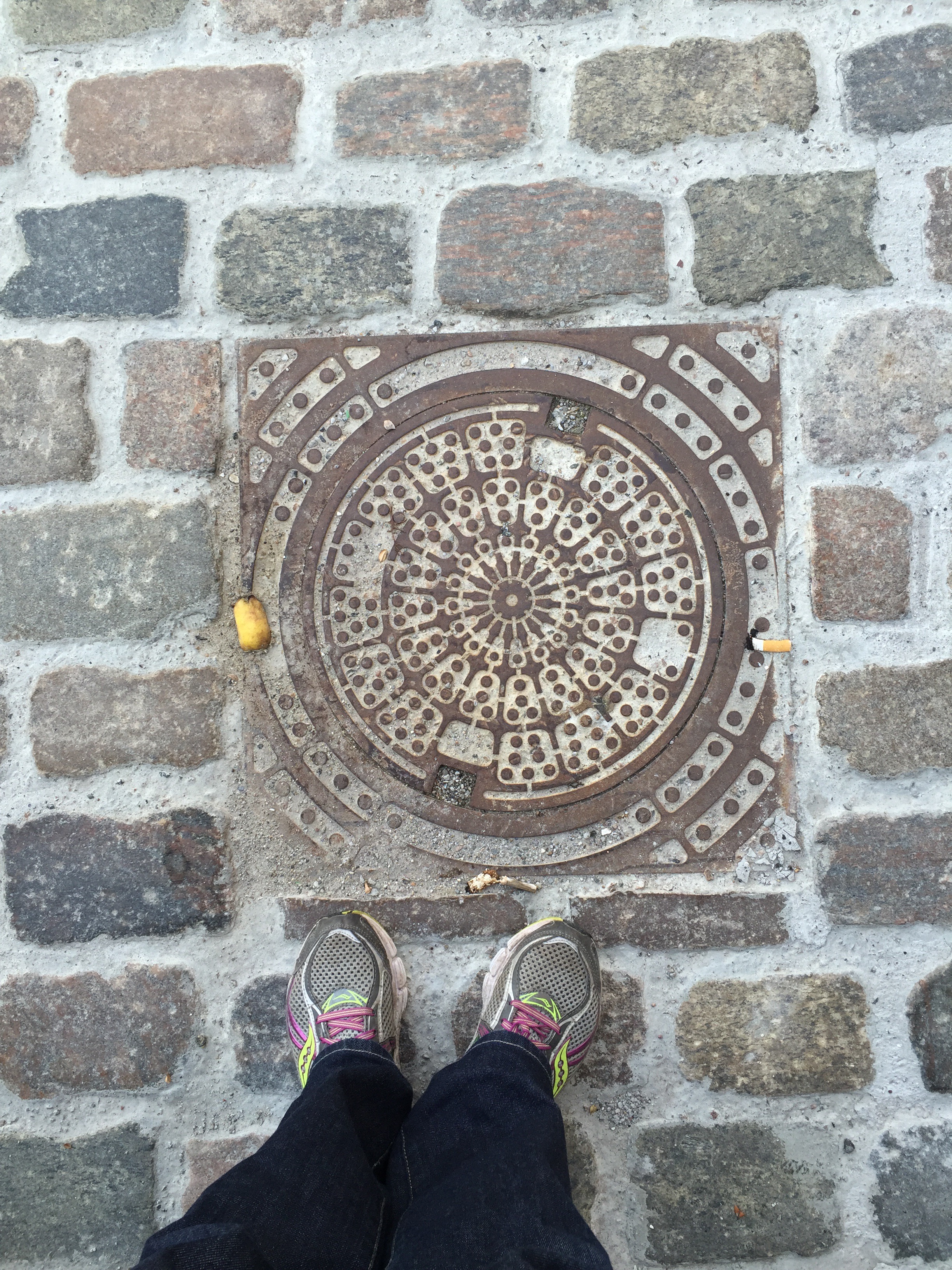
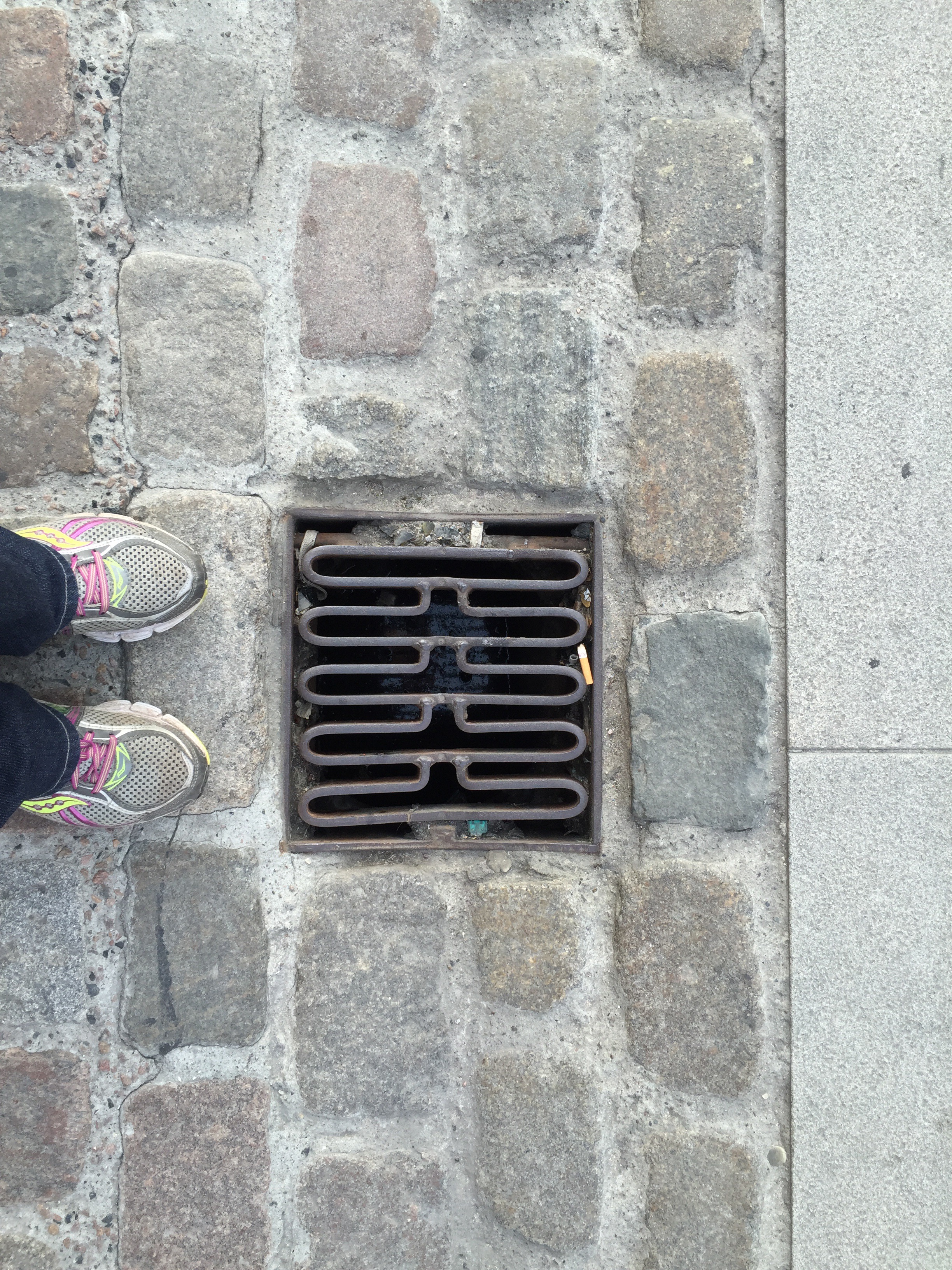
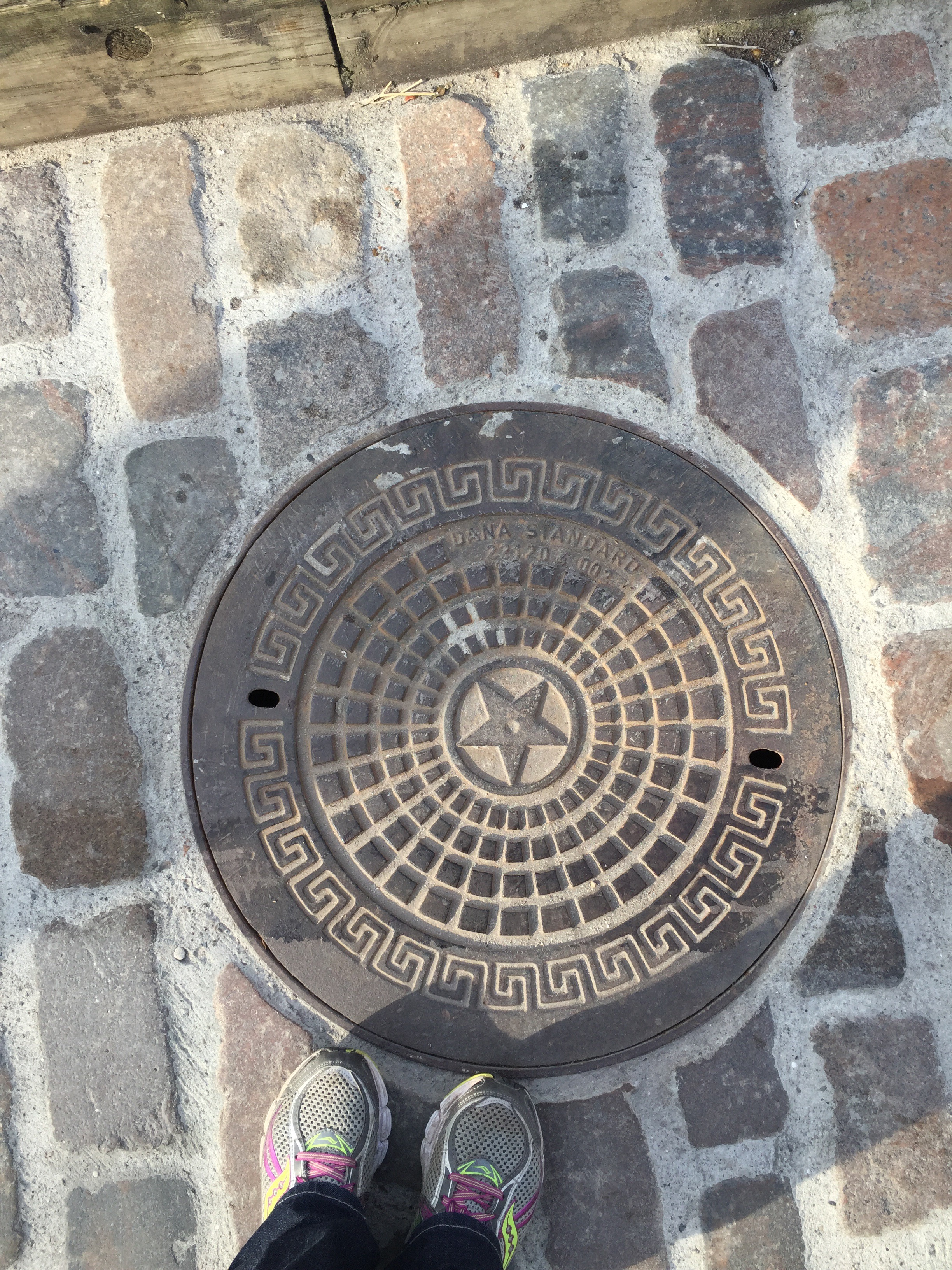
Well, maybe not ALL of them. I noticed some days ago that many of the street access covers are much more attractive than those in London. Like New Orleans’ ‘Crescent City’ water company meter covers, they add interest to the street. Also note that most of the pavements/sidewalks are cobbled. And despite frequent street sweepers, there are lots of cigarette butts: it’s surprising how many people smoke in a city full of organic food shops!


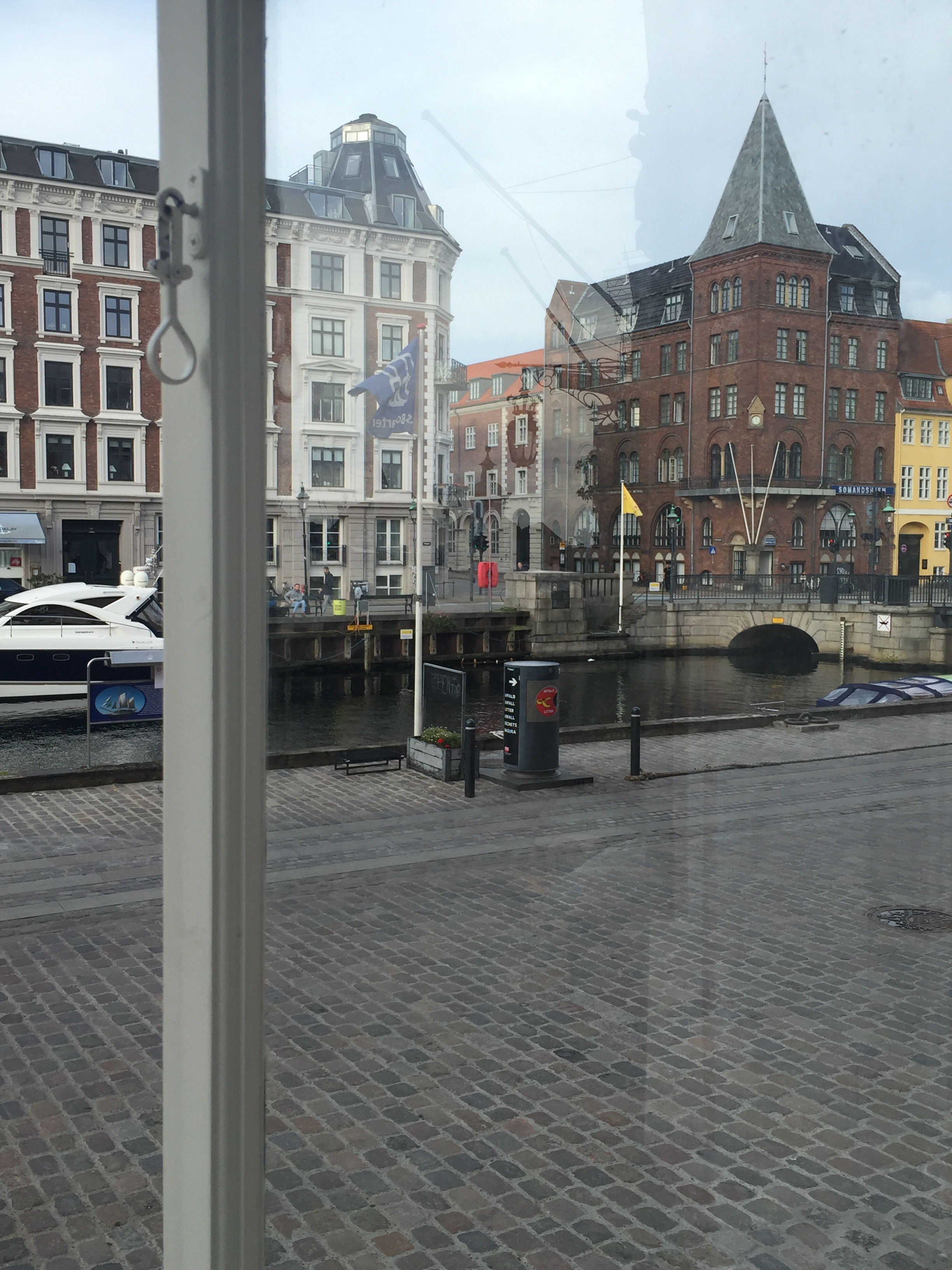
We were puzzled by a frequent but irregular ‘whoosh’ sound outside the flat. It wasn’t the lift bridge, the rumble of car tires over the wide pavement. Nothing was moving, but still there was The Noise. Yesterday morning we worked out what it was:

Nyhavn has so many tourists, so much garbage, that these bins are self-emptying: the whoosh was the vacuum sucking the waste to a central, more accessible collection point.


Another indication of just how many people visit the bars (and drink Copenhagen’s own beer): the beer is delivered by tanker. This one holds 9000 litres.

Copenhagen Day Four: Roskilde and the Vikingeskibsmuseet

Are you sitting comfortably? Then I’ll begin.

A long time ago, at a Medieval Textiles conference in London in 2011, I was held spellbound by Anna Nørgård talking about spinning and weaving sails for the reconstructed Viking Age ships at Roskilde. I took copious notes – I still have them on file – and clearly remember purposefully forging through the crowd to handle the samples of yarn and sailcloth, as it came off the loom and after waterproofing with fat from whatever animals had died recently. I promised myself that one day I would go to the Roskilde Vikingeskibsmuseet and see the woollen sails on the ships. 

The timing of this entire holiday was determined about 6 months ago by the availability of evening cruises on the fjord (in reality a large brackish waterbody, no cliffs. This is Denmark, not Norway) in vessels built at the Skibsmuseet, plus A Birthday date. 

The twin pointy things visible over the rooftops are two spires of Roskilde Cathedral.

So at long last on Thursday morning we walked north to Nørreport for the train to Roskilde.There is more to see here:  Roskilde Cathedral is a UNESCO World Heritage Site, the first Gothic cathedral in Scandinavia, the first Gothic cathedral built of brick, and the burial place of Danish monarchs since the 15th century. 

It’s impressive. Very impressive. Strangely approachable, almost homely in warm red brick by comparison with the   more usual cold grey stone. Someone was practising on the organ (the oldest parts of which date from 1555).

Medieval wall paintings cover some of the chapels. Those in St Birgitta’s chapel date from the early 1500s.

The main theme, though, is the death of Danish monarchs. There’s a good summary here with photos, albeit not English text.

The chapel containing the monuments to Christian 9 and Louise, Christian 10 and Alexandrine, and Frederik 9 and Ingrid is stunning in its relative simplicity. Tombs of grey granites and marbles and white marble statues (the ‘three sisters of the Little Mermaid’: Grief, Memory and Love. The sculptor Edvard Eriksen’s wife was the model for all four) are bathed in light from the dome, reflecting off the white walls. It’s Northern and beautiful, and too busy for a photo while we were there. 
The chapel of Frederic 5 has a similar feel but the neo-classicist style is more ornate.

I was rather taken by the use of dead blacke velvet to cover some of the coffins. Intending no disrespect to Juliana Maria, my eye was caught by some of the gold trim … It looks very like brocaded tablet weaving.

Christian 1’s chapel is also richly painted with frescoes from the second half of the 1400s.

It’s worth several hours.

Follow the signs, walk down the hill to the harbor, and we’re there.

The café serves good food and information

While we waited for our lunch (it had been a long morning and would be a longer evening), i bounced around the workshops in the yard. Especially this one: the rope maker. He was at lunch, but the materials – and a counter covered with sample ropes were there to be admired. Look closely at the cones of hemp yarn visible at right: that’s the last stock of hemp yarn tight-spun for  ropemaking in the world. If they want more they’ll have to commission it, and the minimum order is enough to rig an entire ship larger than any Roskilde have.

In addition to the ‘Viking’ boats, the ship museum builds and maintains a collection of traditional working boats. They’re building another take of the Gislinge boat, a working boat from c. 1130. She should be ready for the water some time in November 2016.

Early log boats (hollowed trees) were enlarged by adding boards to raise the side, sewn together with fir or spruce roots, or lime bast.

The rope maker was back! We talked about lime bast vs seal hide, and he showed me how to make rope from bast. I’ve studied Youtube to no avail, but now I think i understand.

It’s more wrap than twist, although there is twist. The winder is used to add a little more twist.Starting the loop at one end of the rope. Each piece of bast rope is made to order, a specific length, with the ends finished in a specific way.
I spent ages watching and asking questions before i took my leave and we headed into what is for most people the main event: the building housing the restored original Viking boats.
A 1:10 model of one of the boats, used to work out the principles before planning the full-size replica.

Down the far end, in good light, we saw a warp-weighted loom of linen yarn and someone sewing: Anna making linen ‘summer’ sails for the 2016 Gislinge boat.

We talked about nettle and linen and the Must Farm finds, and then it was time to go and wait for the evening cruise. Not in fact one of the big and rather temperamental Viking boats, but a replica Norwegian working boat – with a hand-woven, hand-sewn greased woollen sail. Not hand-spun: it would take too long for one spinner who also has to weave! Anna spun samples that were sent to the mill. I don’t have many photos: I was a little reluctant to have my phone out while we were on the water. 

Apparently this is an old sail, wearing thin, so the wind goes through it more than it should. It catches more wind when freshly dressed, but people in the boat object to melted grease dripping from the sail in hot weather. 


We rowed out of the harbour (i like rowing, except for the person behind me who couldn’t keep stroke) until we caught the wind and could raise the sail. We sailed out, around the island and back; tacking was required. A. had the tiller for most of the journey back and was told he’d done very well fir someone who’d never sailed before. It’s not easy trying to keep the wind in the sail AND the boat making progress to the harbour. Then we rowed back into the harbour and i still liked it, except for the same person behind me.

And then we walked to the station and caught the train back to Copenhagen. 2300 hours was a long day of fun.

Copenhagen Day Three (most of it, anyway)

For at least the last week our weather app has said this will be the wettest day, so we declared it Museum Day, just in case the app was right. 

So, after breakfast at the Lagkagehuset on Torvegade in Christianshavn – where we ate yesterday, and they remembered me as the English person with the skulls – we walked to the National Museum of Denmark. And then around the block because it wasn’t open yet. A, poor man, was following me, and I had one goal: Danish Pre-history (which is to say Danish history before anyone wrote it in words). 

I have, therefore, A Lot of pictures. Well over 100, in fact. Here are some of the highlights…

The skeleton of an elk that died in a bog nearly 9000 years ago.Probably not of natural causes: the small bone point was amongst the bones, the harpoon and shafts nearby.

A fragment of fish spear stll bound to its shaft with BAST FIBRES(!! my emphasis), 8000 years ago.

The skull of Porsmose man, bone arrow through his face and another through his sternum. It was striking (ha, not funny) how many weapons were on display in the Prehistory section. Admittedly they survive when other organics might not, but still: imbalance.)

This is so amazing I have trouble finding the words to explain its significance: an ard. The first, the earliest plough. Probably pulled by one human, guided by another. An agricultural revolution before the concept existed.

Crops and domesticated animals: a strainer for making cheese.

And then the main event, at least for me. The tour groups clustered  around Egtved Girland her reconstructed garments

but I looked into the hollows where Skrydstrup Woman‘s eyes should be, and was lost.

There were other graves at Skrydstrup, with textiles, but as I looked at her I felt she could be looking back. Are we answers to her unasked questions?

Then I learned new things about sun symbols,and something I’d never heard about before, the Bronze Age concept of the Journey of the Sun across the sky. Their webpage has the diagram, but not the explanation: the sun travels around and across the flat earth. At sunrise a Fish pulls the sun up over the horizon from the Night Ship to the Morning Ship, and is then eaten by a Bird. At noon the Sun Horse takes the sun from the ship -incidentally the stylised ‘s’ of the sun horse(s) looks exactly like other assumed sun symbols in the iconography of Near East rugs and embroidery! In the afternoon the Sun Horse delivers the sun to the deck of the Afternoon Ship. In the evening the Snake passes the extinguished sun to the night ship.Part of the totally engrossing Journey of the Sun display.

Ninth-century BC blankets found with the body of a woman in a bog in Jutland. Think of the woman, but also note that one blanket appears to be thoroughly fulled.Me leaving noseprints on the glass as I peer at said blankets.

As we walked through pre-history I counted spindle whorls and other mentions of ‘women’s work’. It wasn’t difficult: no discussion of spinning, weaving, cooking. (As opposed to weaponry, battles, injuries.) One Bronze Age spindle whorl (shale) and about 5 Viking age (pottery). Ninth-century AD gravegoods from women’s graves in Jutland, including tortoise (shaped like) brooches and spindle whorls.

Finally the display of Viking Age domestic finds from Trelleborg included spindles and loom weights.Huh. No wonder the ‘Viking!’ exhibition at the BM was all about shiny and killing people: it was telling the same story. 

But Skrydstrup Woman has forgotten more than we will ever know.

And then we went to the Glyptotek followed by Groms pizza and wine and ice cream. It’s raining, but tomorrow should be dry.Tomorrow is Roskilde and the Viking Ship Museum.

thoughts on seeing a piece of antique lace

I think I’ve mentioned somewhere that I’m a hand spinner. I use my hands and various tools such as spindles and spinning wheels to make what I’ll loosely term ‘yarn’  from loose fibres by twisting them together. It’s an ancient skill. Yarn and the cloth made from it doesn’t usually survive to be dated (it rots, especially the early yarns made from plant materials), but sometimes the impressions of texture and pattern made by cloth and string in mud or soft soil do survive. Fragments of clay found in the Czech Republic show the pattern of cloth thought to have been woven 27,000 years ago. Some of the ‘Venus’ figures found in Europe dating from 20,000 BC have carefully carved string skirts, some so detailed that they show the skirt string is plied. Left dangling loose, a single strand of twisted fibre rapidly untwists to become loose fibre. Only if two strands – known as singles – are plied, twisted together in the opposite direction, will the dangling string remain string. Given the skills demonstrated by the things that have survived, it’s been suggested that people – probably women, as men are traditionally hunters – have been spinning fibre into string/yarn for over 40,000 years.

That’s a long time.

That’s many, many generations of my female ancestors. Only for the last 300 or so of those 40,000 years have women not needed to spin, at least in western Europe, where I come from. I am descended from a long line of women who could spin, and spin well, because the yarn they spun was needed to cloth their families, to be sold for money to pay the rent or feed their families. In the early days the string they made would have been knotted into nets to catch fish and birds. If my ancestors hadn’t been good, productive spinners, they and their children wouldn’t have survived. I wouldn’t be here.

So, as I’m spinning, I think of my ancestors, spinning. I didn’t gain my skill directly from their hands – my mentors passed on their own skills from their hands to mine – but my hands are doing the same things, going through the same motions, as those of my ancestors. Spinning unites us, hand to hand, across nearly 40,000 years.

Lynn, I search out antique handspun textiles because handling those textiles, learning new skills by examining them, is a direct link with the people who made them. For me, it’s all about the people, not the finished piece. I don’t care if something is tattered, too badly damaged for a ‘serious collector’: the ragged edges and loose threads mean I can see how it was made, whether the yarns are plied or singles, estimate their grist. I can extract individual fibres (of wool) to estimate staple length and fineness of fleece. Knowing these things I can try to replicate the yarn. Spinning it, I remember with respect the person who spun the original.

AlençonLace

So. Here is a piece of linen lace in the style of Alençon, in northern France, dated by style and condition to the 18th century (1701–1799). Pre-Industrial Revolution, there’s no doubt the thread used for this was handspun and, for lace, of the finest quality at the time. Because in this condition it is of no value to a collector 48″ of this cost £5, but to me it’s beyond valuation. It’s 48″ of people’s lives: the skills of the flax grower, the processors, the spinners, the lacemakers.

AlençonLace2

Detail of the lace magnified 20x. The lens circle is 1cm in diameter.


AlençonLace1

The damage allows me to examine the individual strands of yarn more closely.

AlençonLace3

Above, a damaged area magnified 20x, showing what seems to be a single thread.

Below, the same area magnified 80x. 

AlençonLace4

The lustre of the individual threads and the ‘hand’ of the fabric, even after more than 200 years, suggests this is linen. I am awestruck by the fineness of the fibres in the yarn: having done some flax processing myself (this link shows the basic principles), I have some idea of just how tricky it would be to get fibres this fine. Having spun flax, I have some idea of what it takes to spin this fine. At this point I’m not even sure whether this is plied or a singles yarn. I did find a description of the spinning process in Cassell’s Illustrated Family Paper, Vol. 4 1865 on Google Books:

“Why, the flax of which the old Brussels and the point d’Alençon were made, was cultivated on purpose; it was chiefly grown in Brabant, Halle, and Courtrai, and had to be spun in underground cellars, because contact with external air made the thread brittle. The thread was so fine as almost to elude the sight; the spinner had to go by the sense of touch, examining every inch as it left the distaff, and at the slightest irregularity stopping the wheel. The room was kept in darkness, except for one single ray of light arranged to fall on the thread, which was thrown up by a background of dark paper … “No wonder,” said Goody, “that fine lace is so costly; why, I have read lately, that at the present moment, hand-spun thread is often sold at £240 sterling for one pound only.”

MeasuringWorth says £240 in 1865 would be between £20,690 and £471,100 in 2015 pounds. I am stunned.

I hold the lace and I respect the people who made it. I remember with respect the people who, generation upon generation, developed the skill to make things like this. They may not be my personal ancestors, but without them we wouldn’t be here.

All that from a piece of old lace.