Finishing this is what spurred me to post the other tapestries yesterday. (Well, finishing this plus the Facebook suspension. Easier to share there than here, but we are where we are, and you wouldn’t have a story time there. Are you sitting comfortably?)
I’ve been taking pictures of water and shorelines for about many years, first as memories, then as inspiration for colour palettes and colour blending: how would I combine a variety of coloured yarns to create a blend that brings a wave or ripple to life.
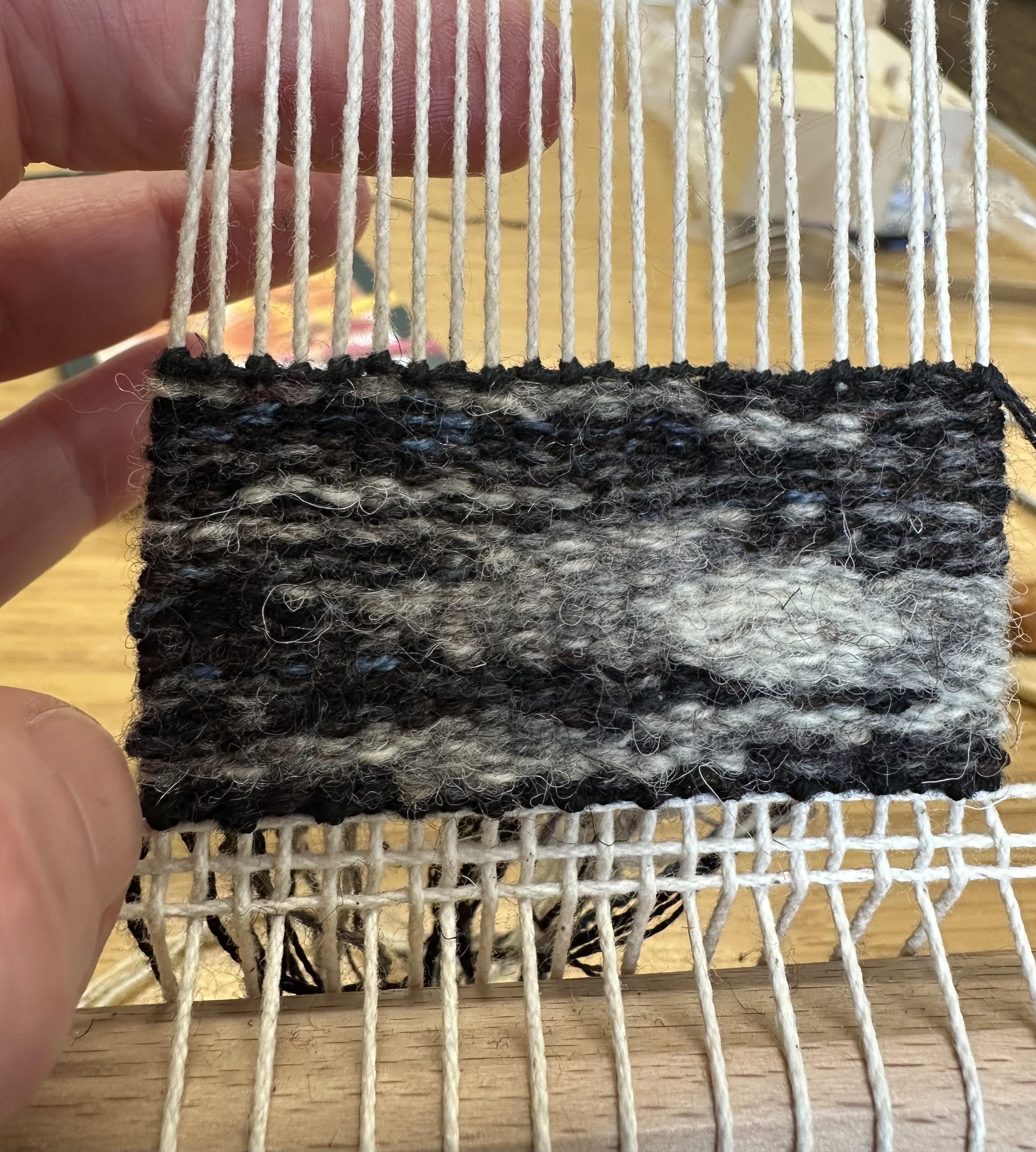
In 2023 I enjoyed a one-day tapestry workshop weaving water with Anna Wetherell at Farfield Mill, mostly because I needed a push to start tapestry weaving again. We took pictures of the river from the mill bridge as inspiration for tiny tapestries woven with Anna’s scrap yarns, advice, and encouragement. I can’t remember which bit of which photo I used for this, but I can still see the water.
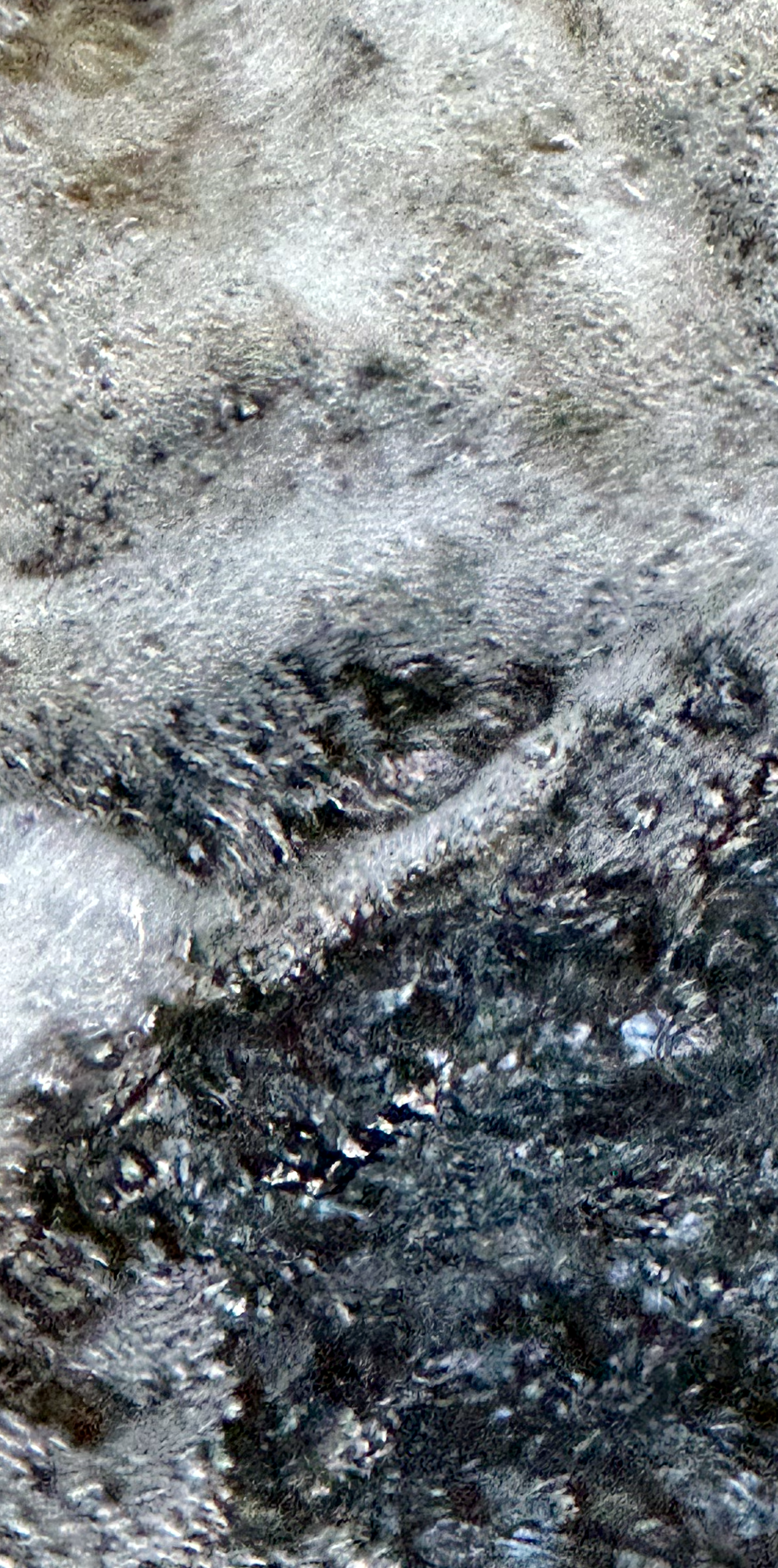
After that I tried to weave the gold birch leaves drifting in the peat-brown water at the Falls of Falloch, many years ago. It sort of worked, I liked the result even if the leaves are wonky. I took more photos of water. I don’t remember where we were in September this year but I have a photo of the water there.
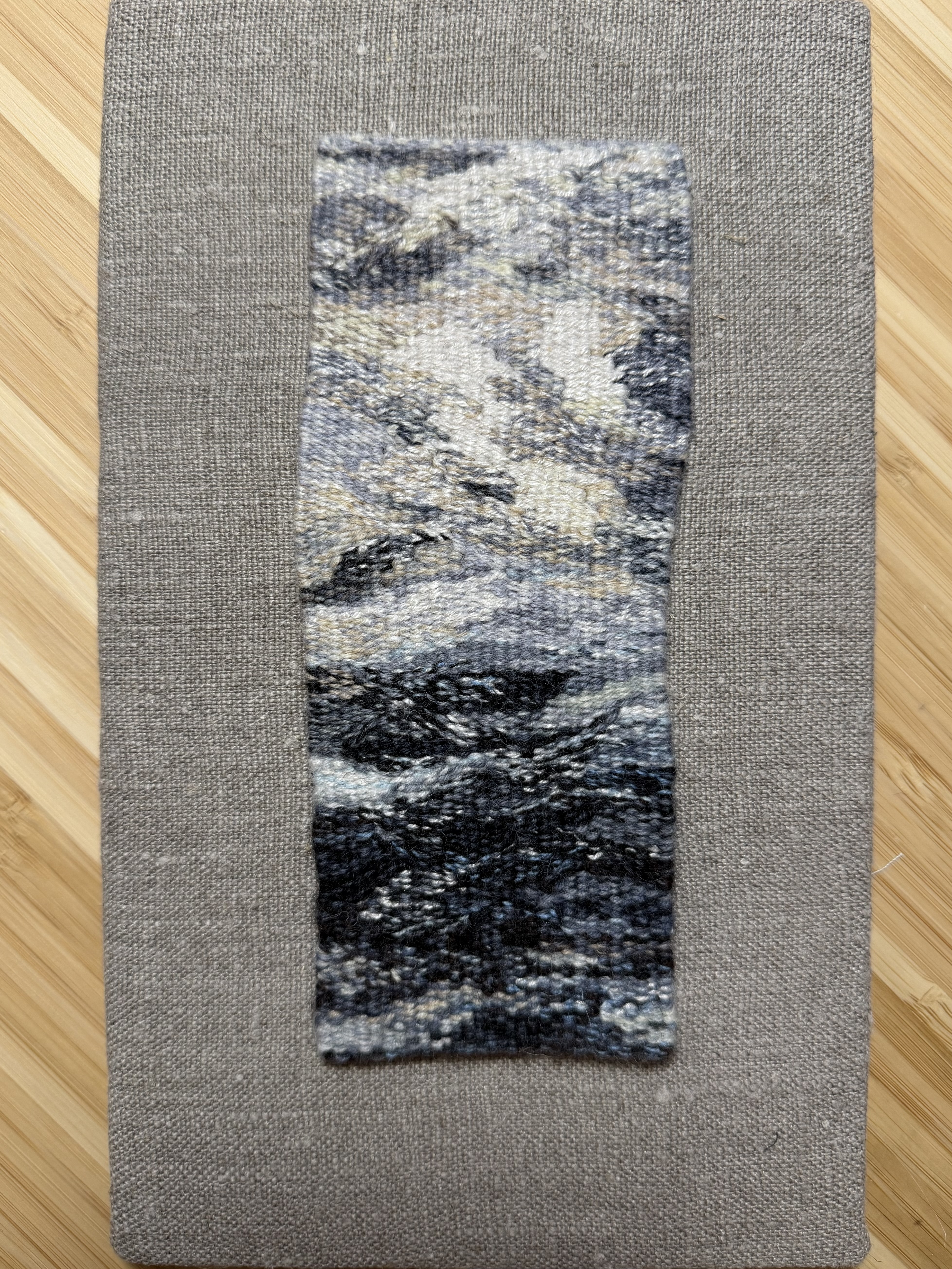
I warped the little loom, this time using ‘proper’ warp (Liina 12) and started pulling yarns from the tapestry stash. An inch or so up my niggling doubts brought weaving to a halt. Look at the water, look at the tapestry. In the picture the water is alive, it’s moving. The the tapestry is flat. Pretty water colours, but it’s flat. Boring. MOST unsatisfactory. I want it to speak of movement.
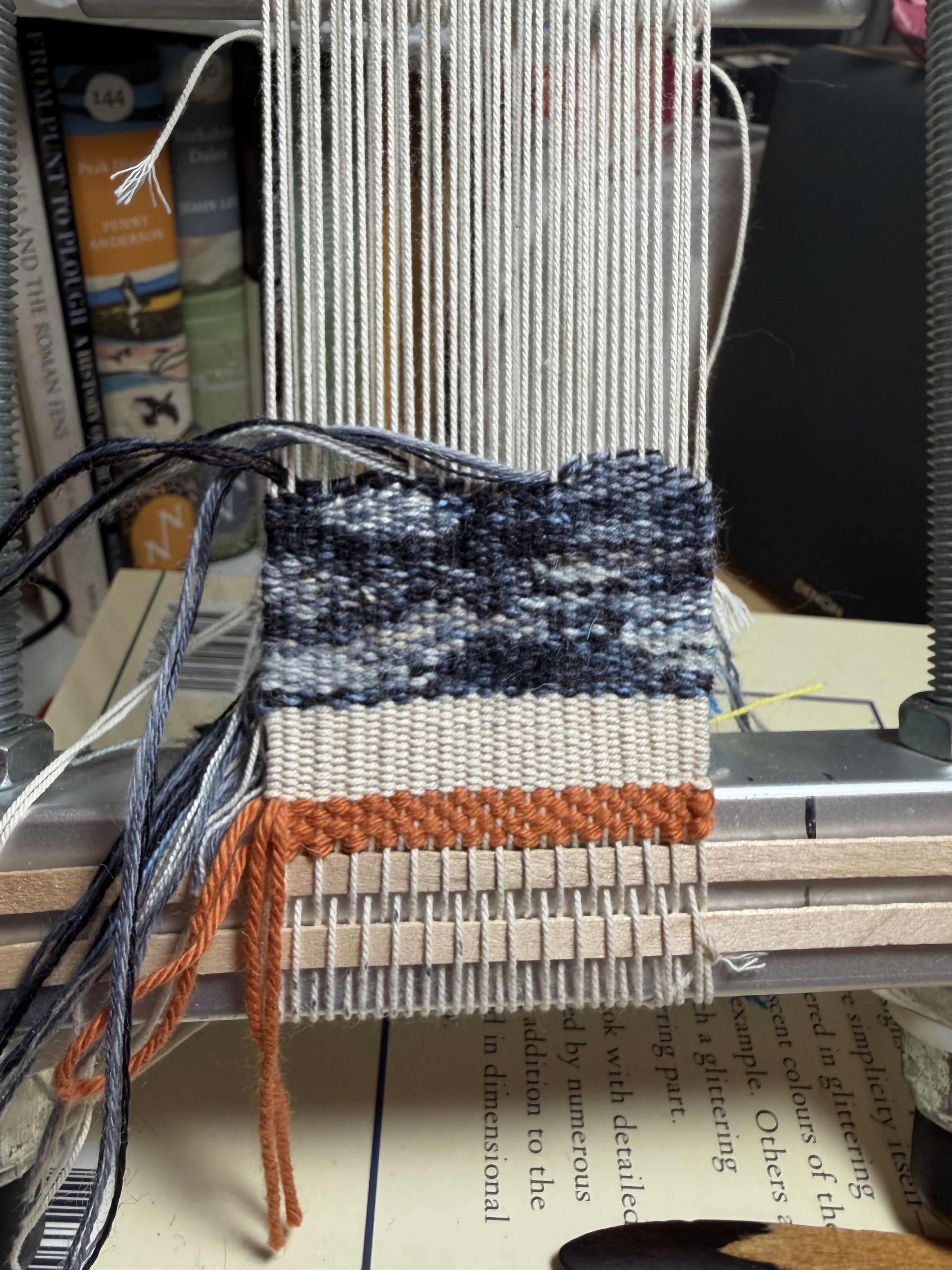
I read some books, I did some googling. Mostly I remembered Linda Wallace (probably slightly exasperated by the way I kept asking how things should be done) telling me that I should do whatever I need to do, there are no rules provided the woven structure holds. So… I can build angles into the weave like the angles of the wavelets. I can add nubbly handspun silk to catch the light and make the wavelets dance.
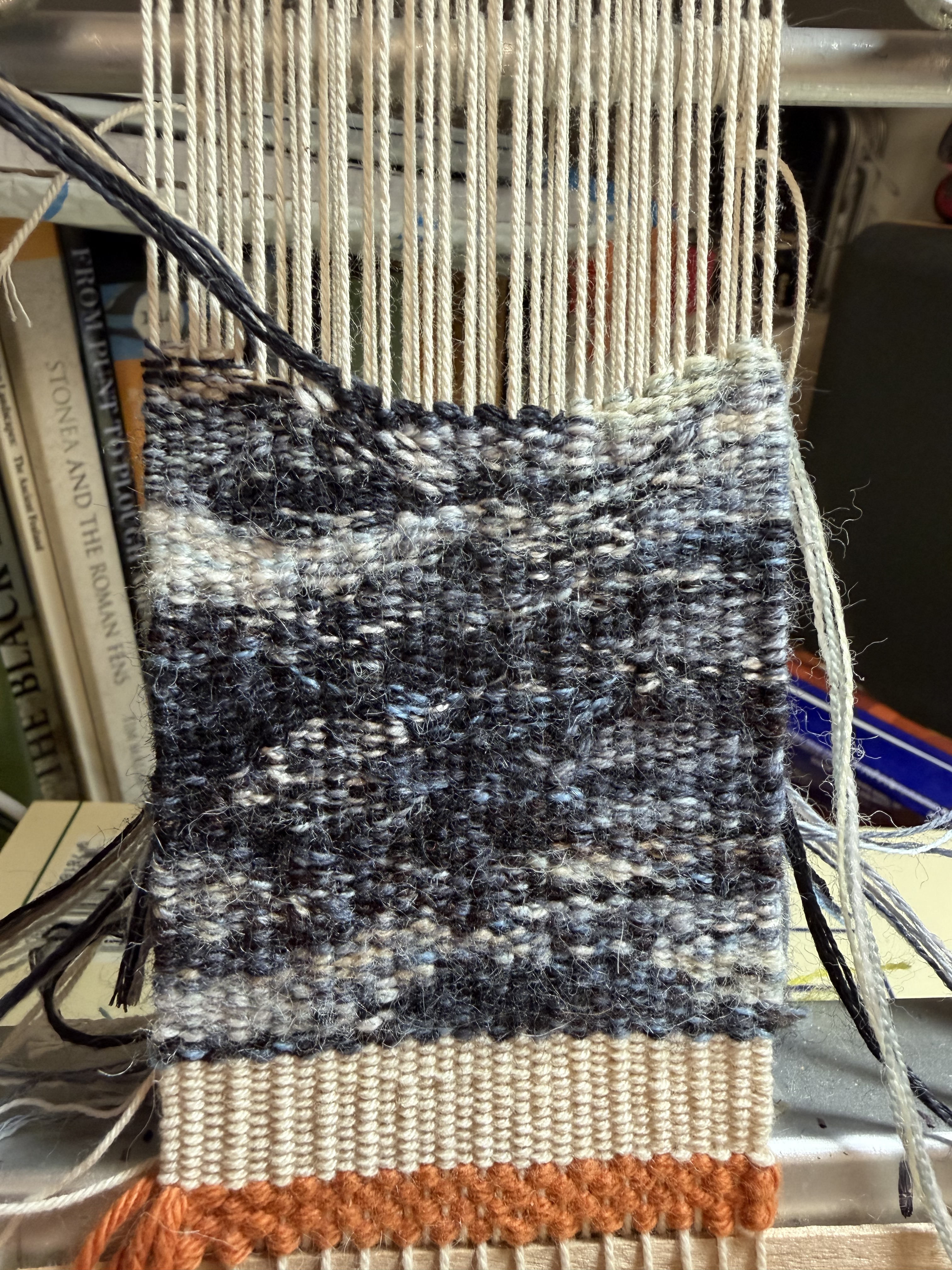
WHOA. Now it’s moving. This is exciting.
But OMG the back. Every one of those patches of colour is a group of four yarns with the start and finish of the bundle hanging out the back. There are many ways to deal with the ends. I tried several, but all of them left the front of the tapestry slightly uneven, with differences in light and shadow that interfered with perception of the movement. I wanted it as near dead flat as possible.
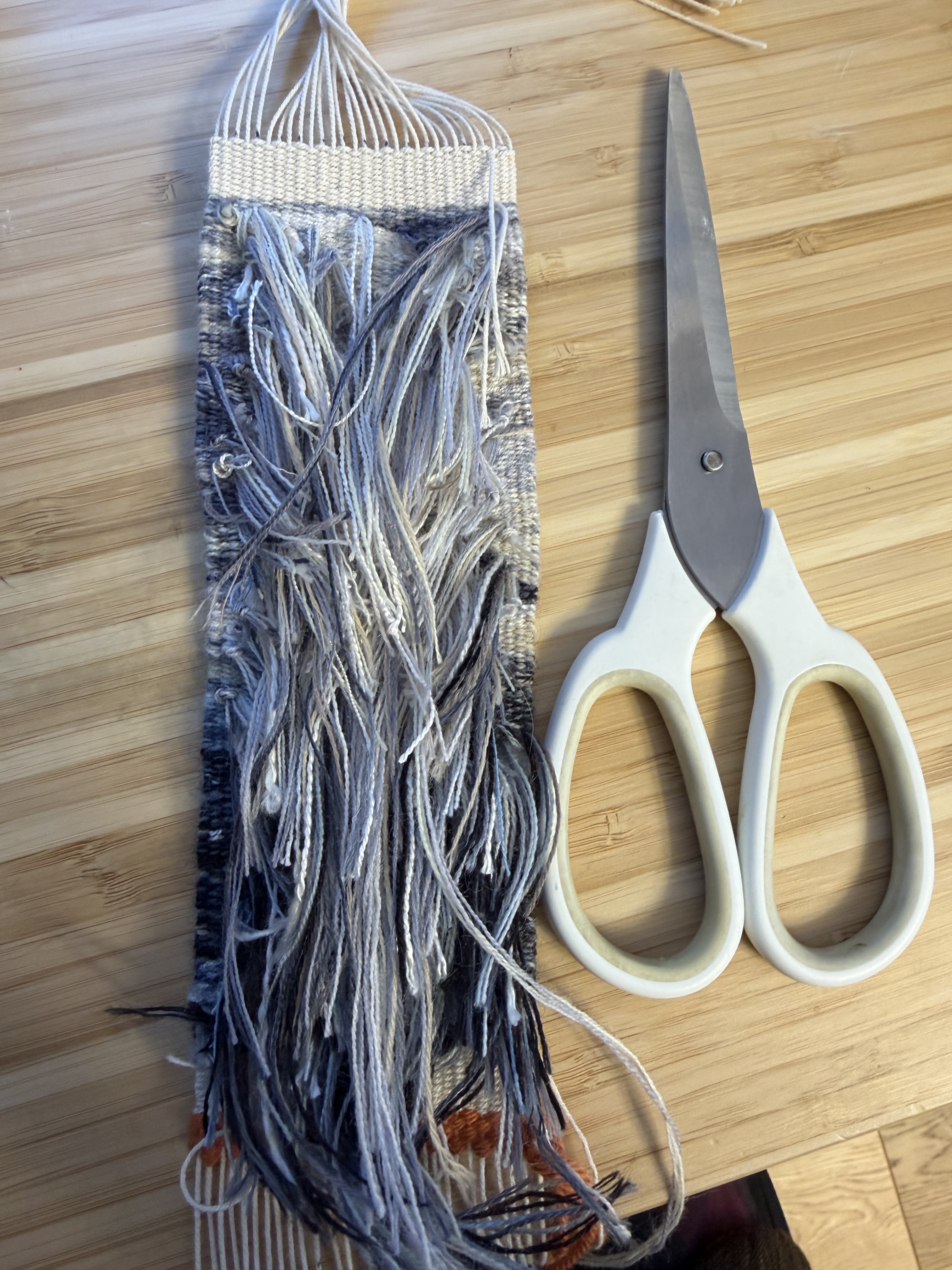
I had an idea. This is a tiny piece to be mounted, the woven structure will not have to cope with the stress and strain of hanging free. I stitched the individual weft bundles down to the surface of the back.
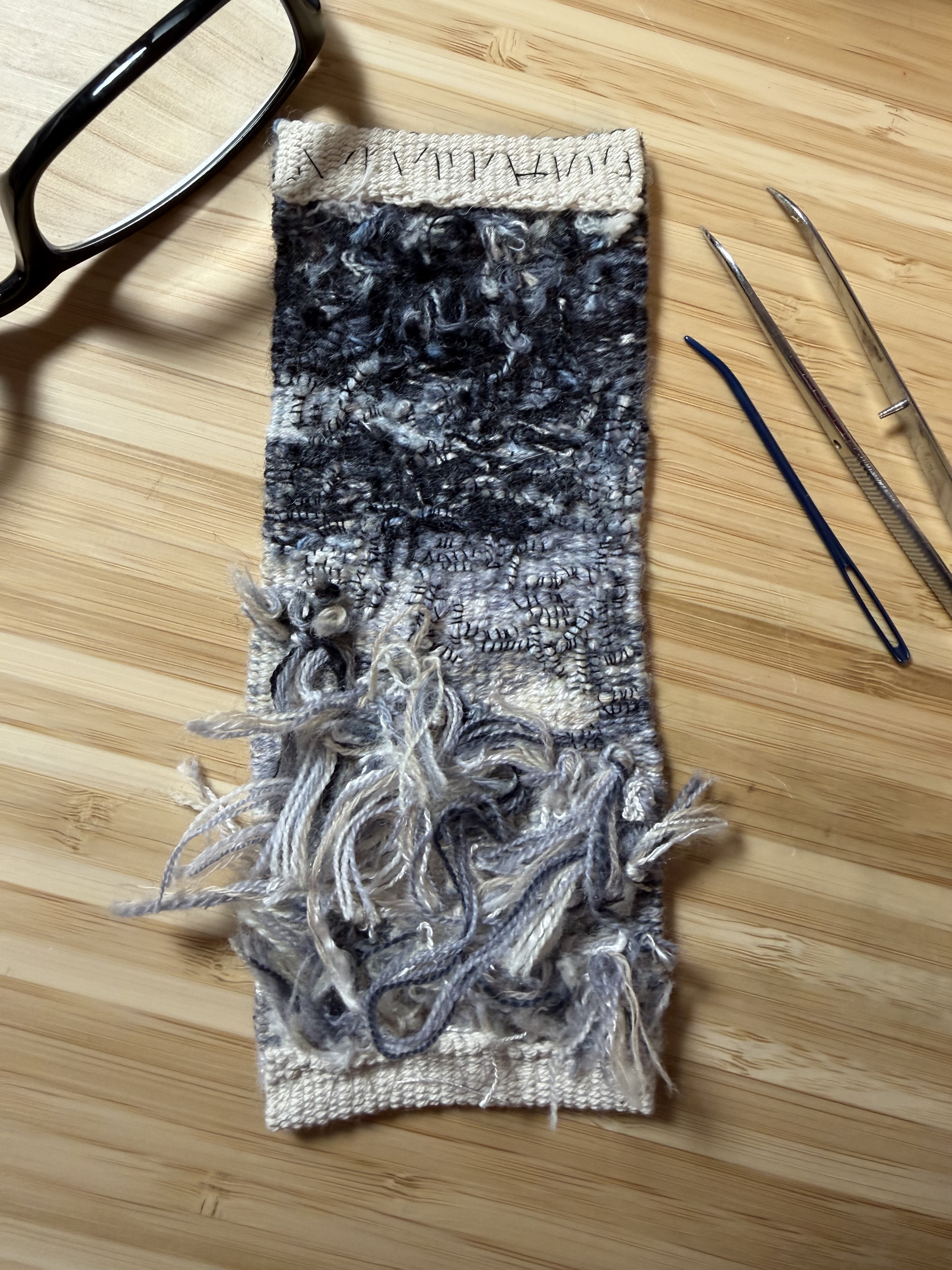
I assume this is a known technique (it is often said there is nothing new under the sun in textile crafts). It takes forever, or feels like it: 14 bundles stitched in 37 minutes one afternoon. But it works. After blocking, steaming and mounting, the tapestry lies flat.
Looking at it now I think the initial flat bit is a useful contrast to the areas of madness (it felt like madness) later on.
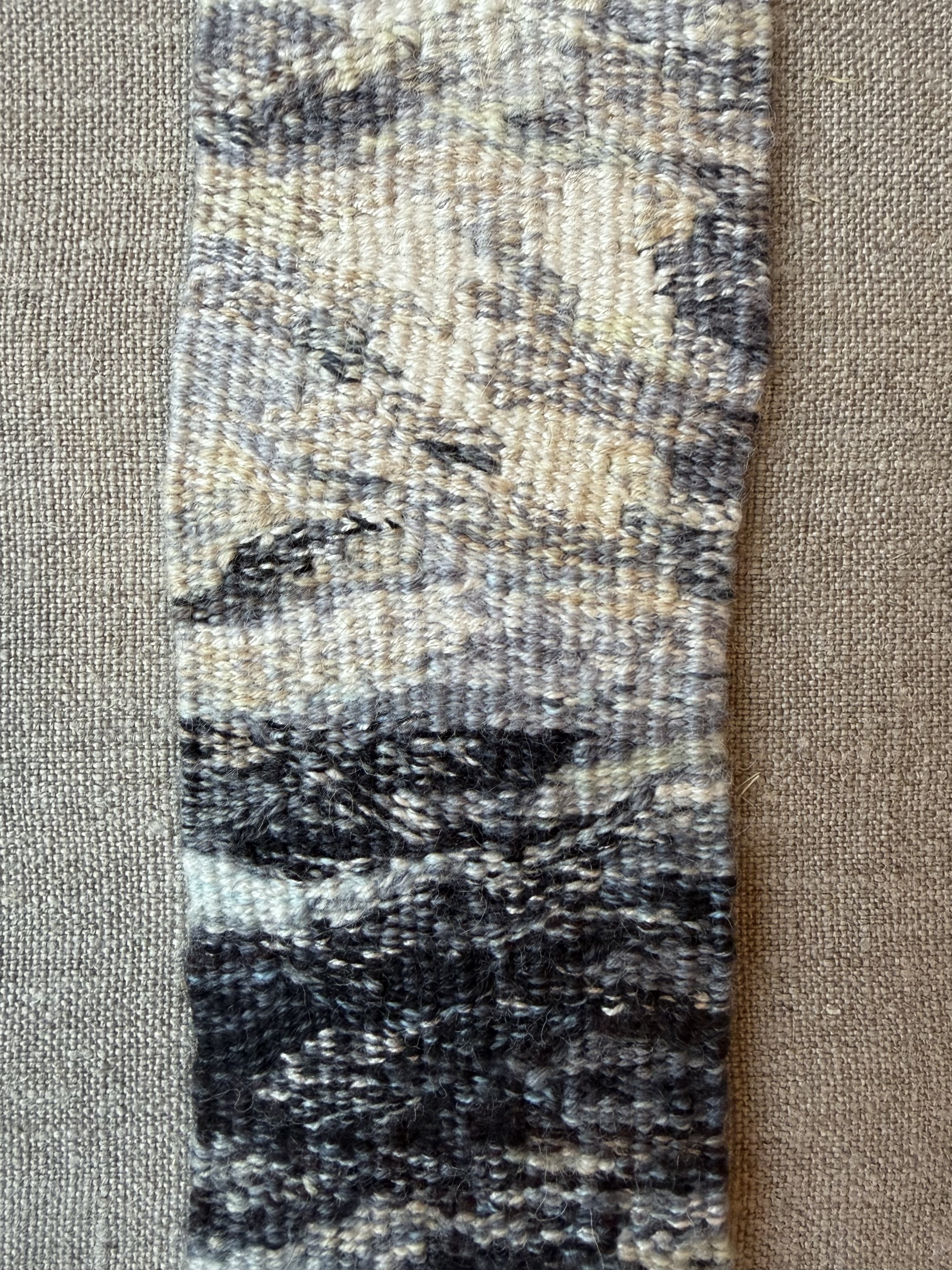
A recognised it as water before the halfway mark.
I love it. It’s another “I can’t believe I made this” moment.
I wish it was larger. Well, I know what to do about that. Use a bigger loom to wind a bigger warp. But first I’ll admire this again. I’m so much more fortunate than you, I can see it for real, not a bad photo in the bad light as Storm Chandra batters the house.
 carpe diem!