and my rubber gauntlets.
Searching my ‘Photos’ for something else that happened near the dawn of time, I found a set of videos from 2011 featuring an indigo fermentation vat built following the instructions in J. N. Liles’ The Art and Craft of Natural Dyeing: Traditional Recipes for Modern Use.
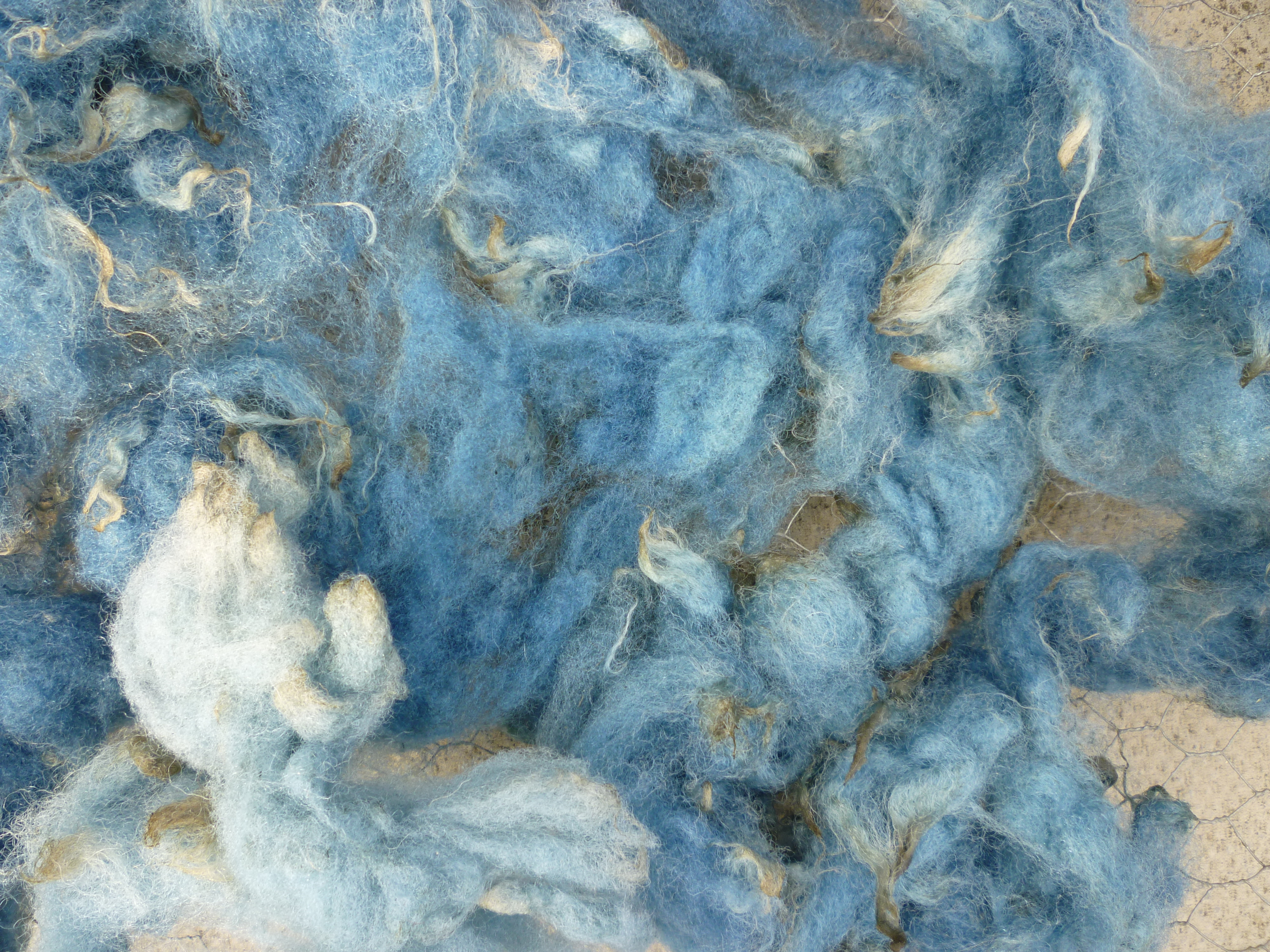
remnants of these dyed locks. I can’t even remember what I made from the rest of them.
Liles’ ‘Fermentation Vat No. 4: Saxon Vat’ (p.86 in my paperback copy) is based on his wife Dales’ theory that the organic matter (suint, skin flakes, manure, dust) in an unscoured fleece might be sufficient to support bacterial fermentation to reduce or eliminate oxygen in an indigo vat. Liles found confirmation of this in J M Matthews Application of Dyestuffs to Textile, Paper, Leather and Other Materials [link to archive.org copy, please donate to support them if you use it] “This is one of the earliest forms of Indigo dyeing in Europe, and is still practiced in the same primitive manner by the peasants of Saxony, where the celebrated Saxon blue is dyed.” [Note that this is not the ‘Saxon Blue’ dyed using sulphuric acid to make indigo sulfonate, which I wrote about here.]
Anyway. I was clearly so thrilled by the results (both smell and dye) of this Saxon vat that I filmed it. The sound is awful and one of the clips is short, but I’ve assembled them as a single video and put it up on Youtube. My first video upload!
Liles ‘Saxon’ Indigo Vat 2011 SD 480p
I have found another video showing how I boosted the vat for another use; I hope to put that up later this week.
Some cautions:
I recall at least one dismal failure of suint cleaning/ Saxon vat. Nothing happened, it just stank. Liles suggests this could be due to trace chemicals from sheep dip or anything else that the vat and its contents might have encountered. pH of the water might matter, too. If you try this, record more info than I scribbled into the margins of my copy of Liles.
Also, I do remember the smell of the natural fermentation vats, especially this one and the sig aka urine vats. It’s powerful. Also, it has to be warm room temperature for fermentation to work in a useful timescale if at all. I think this vat was snuggled up against the bathroom radiator, on the hot water circuit so it was always warm or hot. When I created later vats in the garage I put a ‘brewband’ heater for beer or other brewing on the vat, and put the whole thing in a cardboard box lined with styrofoam and bubble wrap to keep it warm. I think it worked best in the house, though, and it has been agreed that I can try one this year in the master ensuite. I’ve got a bit of dirty fleece and I’m going to order another brew band because this bathroom is much smaller –– and I might have to move the vat outside if it smells as I remember.
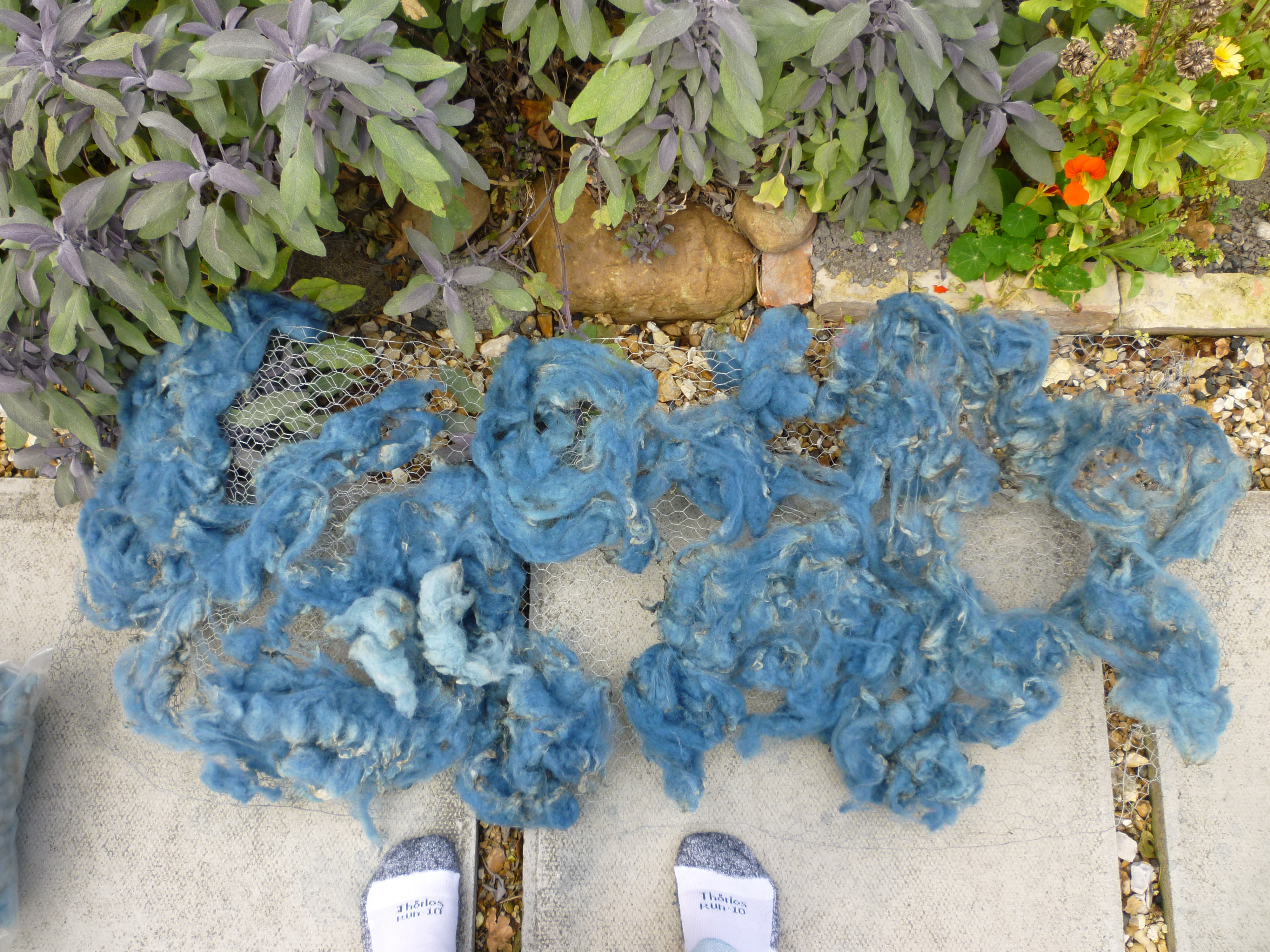
 carpe diem!