More foolishness

Silly things to do on a walk: No. 1


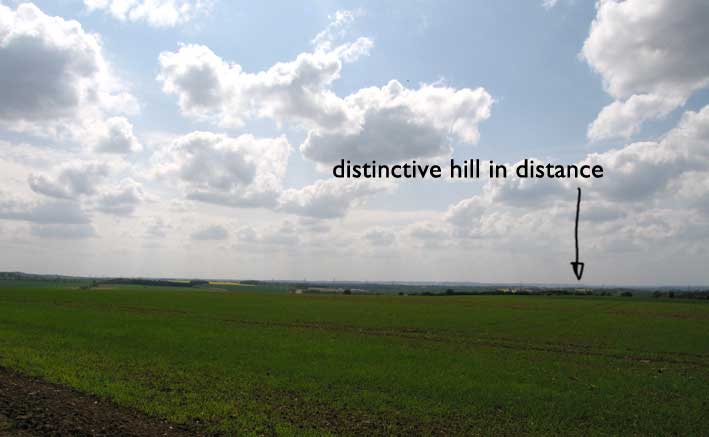
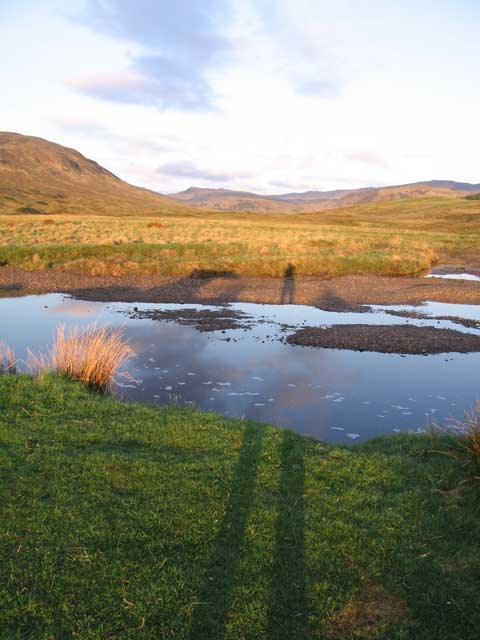
Imagine walking across this vast field on a lovely sunny afternoon. Be invisible (it’s your imagination, you can do it) so as not to disturb two people having an intense discussion, one waving something in its hand in the air. Drift closer and discover it’s us, me and him, trying to work out what/where that distinctive ‘lump’ on the horizon might be. Could it be the theoretically visible Sharpenhoe Clappers? We need a compass, but haven’t got one. So I pull out my iPhone, download and install GPS software from iTunes (the waving about was trying to get the best signal), then we waste 10 minutes trying to walk fast enough to get the GPS compass to pay attention to us. FAIL. Double FAIL, once for being sad enough to download and install software to use on my phone when we’re meant to be walking in the countryside, and again for enjoying the experience and thinking it perfectly justifiable.

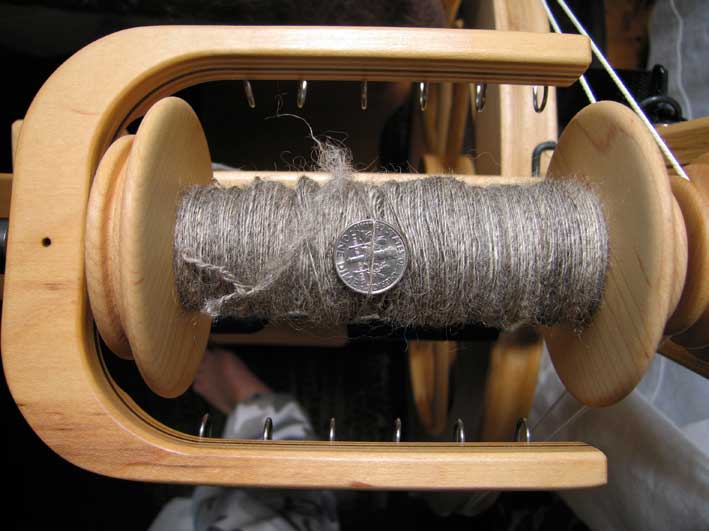
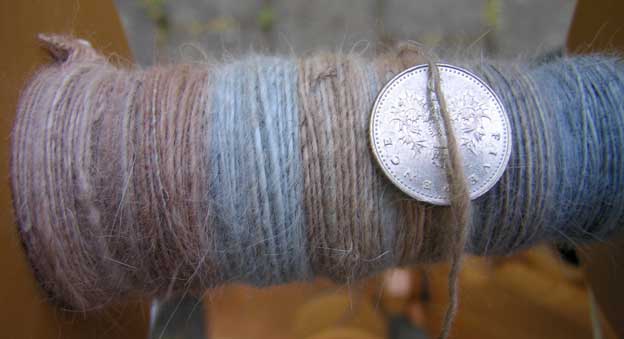
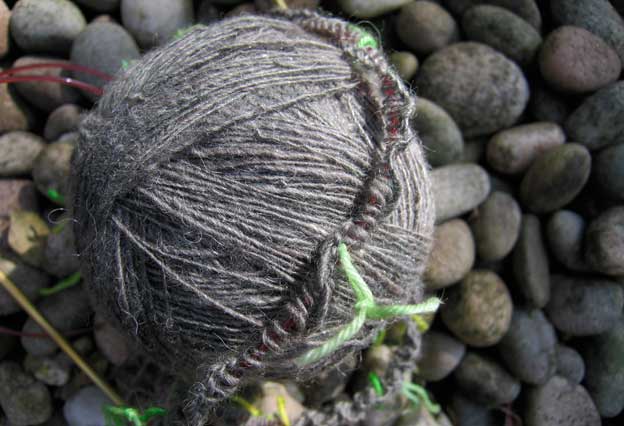
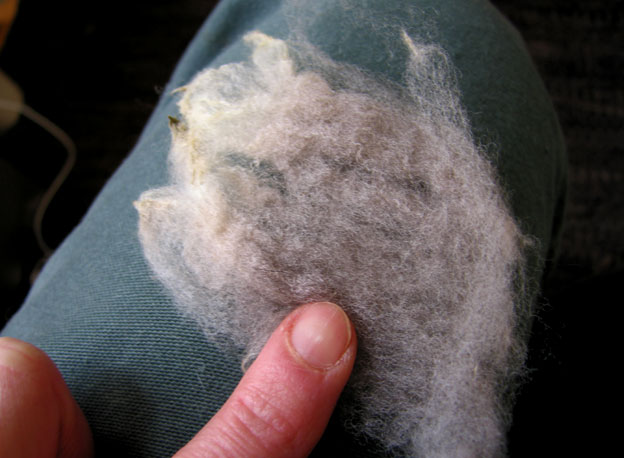
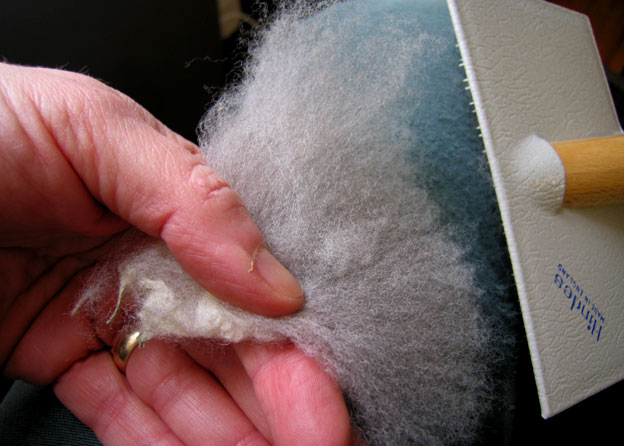
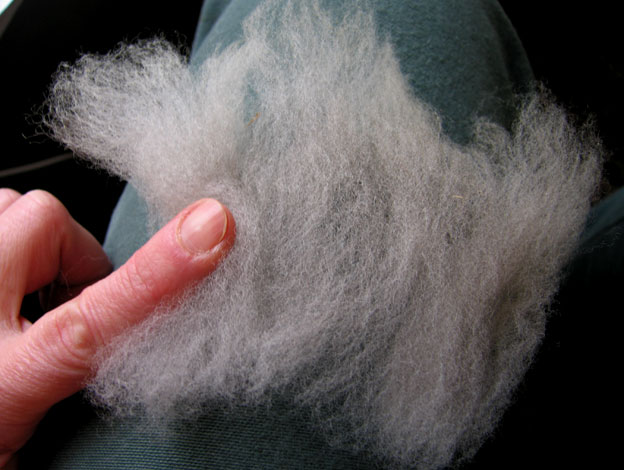
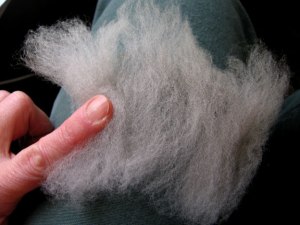
Here’s another kind of fail… I am rapidly concluding I don’t like spinning angora. The end result is soft (the Fetchings I knitted from a handspun Wooly Rabbit angora blend are lovely to wear), but the stuff sticks together even when it’s not felted. I find it very difficult to draft; even semi-longdraw is proving problematic. Which is a nuisance, as I’d planned to spin it from the fold. I need to practice that.
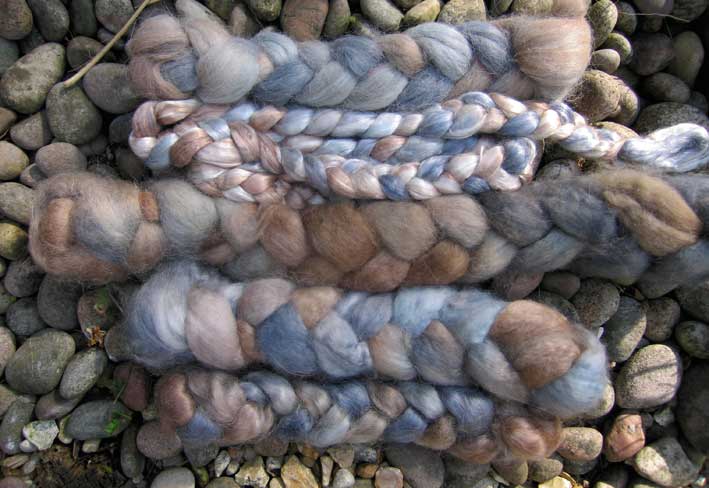
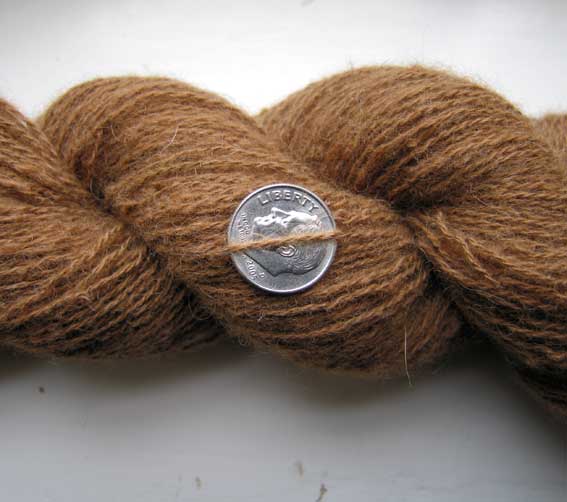
But isn’t it pretty? The brown is slightly pinker than I like, but it still reminds me of the sea washing over pebbles and sand. I just have to finish spinning it at home because two people at the spinning group are allergic to angora. It’s part of one of Spindlefrog‘s Spinner’s Sets, roughly 6 oz of luxury fibres dyed in the same colourway. Mine is angora, cashmere, silk, baby camel, baby alpaca, kid mohair. Here’s the rest of the fibres, all their potential as yet untapped.


More foolishness. I’m beginning to realise my handspun falls into two quite clearly defined categories. One is
WOW!! I can’t believe I made that. It’s far to beautiful to knit. No pattern does it justice. The second is
Ho Hum. Look at this, and that… nope. I can’t knit that, it’s not good enough for any pattern.

Which is really silly. I know it’s silly. I’m too new at this to expect perfection and yet, I hurt a bit when I don’t achieve it every time. Look at this:
That’s about 490m of singles spun from two ‘Spanish Moss’ Abby batts, part of a swap with Fernmonkey on Ravelry. It’s a lovely silvery grey-green, the singles are reasonably soft, not over-twisted. I think it will make a reasonable, perhaps even a nice shawl (I’m casting on for one from the Icelandic shawl book Thrihyrnur og langsjol: Three-cornered and long shawls). But I feel dissatisfied with every inch of yarn passing through my fingers; it’s too thin or too thick, there’s a slub of silk… I really do have to get over this. It’s MY OWN YARN, for pity’s sake. I made it. It’s a miraculous thing, the product of my own hands. I should love every inch of it.

Grrr. Perhaps I need chocolate?

No. I just need to remind myself that, barring accidents and other unpleasantnesses, I AM GOING TO SOAR!!


Anguish

RIP, Aeolian Shawl

Physical and mental. Let’s get the mental over first. In short, my cunning plan proved to be a turnip: yes, a hammer trumps a bead every time (ok, might take two or three careful blows) but, where my trial beads turned into glittering dust, those on the shawl shattered into shards. Sharp ones. After cheerfully demolishing about 20 beads I realised the fragments had cut the yarn in two places. I repaired them, but BMFA Silk Thread II is, well, silk: it doesn’t stick to itself, it’s thin and shiny and the repairs are visible). However, I was committed, so I continued much, much more carefully – the next c. 100 beads required only two more repairs. I sat in the sun with my heart sliding into my socks as I realised that, at this speed, I’d still be breaking beads in two weeks’ time, and the shawl would be a higgledy-piggledy mess of repairs. I looked at that beautiful silk gleaming in the light and realised that my selfishness had ruined that shawl and wasted weeks of my precious spare time. After all, if I didn’t like the glitter, I could have given it to someone who did. But no, I wanted that lovely yarn, that shawl sans beads for me. Therein lies the anguish: I was Stupid. And now I think no one will have it, even though after I announced that I’d binned it the Tsocksarina decided to attempt to salvage something from the wreck. As soon as its chaperones arrive (no knitting can travel unaccompanied) the mess will be on its way.

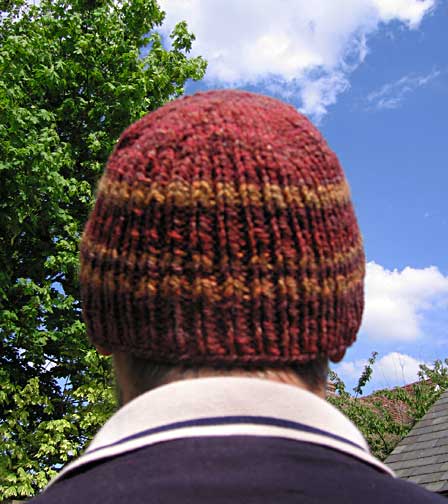
I distracted myself from the mess by casting on for a hat in my handspun. It’s still a novelty, knitting yarn I made myself. I used the ‘Come in Spinner’ Polwarth from the first installment of the Socktopus Fibre Academy, which I’d spun as a thick 3-ply. I’d known it was more worsted than I’d wanted, but only when I started to knit with it did I realise just how ‘solid’ it was. It’s made a very… sturdy… hat. Weighs about twice as much as any of our technical gear, so it will not come on long treks, but it’s pretty. And, alas, too big for me. Suits him, though:
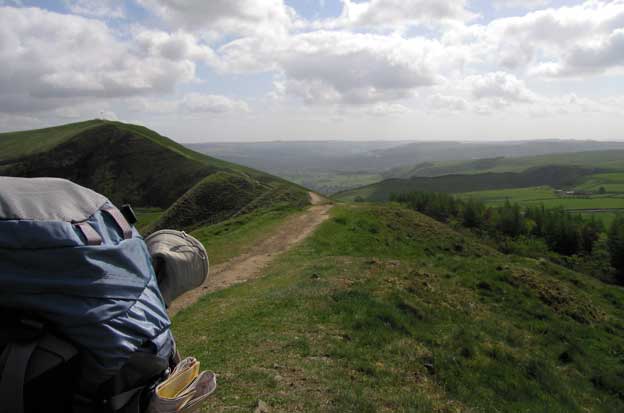
Then there’s the physical anguish. We did it to ourselves, too. The weather forecast was good, dry but cool, so on Friday evening we pulled the Big Packs out of the cupboard and packed them with almost all the stuff we’d be carrying in Scotland (mine weighed 15.5kg, about 35lb), and at 0630 yesterday morning we threw them (figuratively speaking; they’re far too heavy to throw!) with the rest of our walking gear in the back of the car and hammered up the M1 to our nearest hills in Derbyshire. Again. After discovering that the concentration needed to do Emily Ocker’s circular cast-on with two circular knitting needles instead of a crochet hook in a car travelling on a winding road left me feeling distinctly poorly, I didn’t get a lot of knitting done! But by the time we reached Chesterfield I had the map open and was formulating a plan. It went something like this: arrive Edale, park, start walking. Good one, eh? It expanded to: arrive Edale, walk up to path along Rushup Edge,

Above, the view east along Rushup Edge. Mam Tor on left above my pack, Castleton at right.
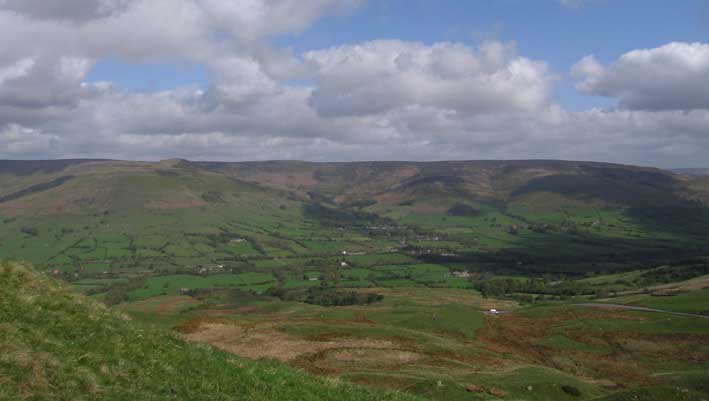
Below, the view north to Edale village and the Kinder plateau.

then northwest and north over the top of Colborne and Brown Knoll

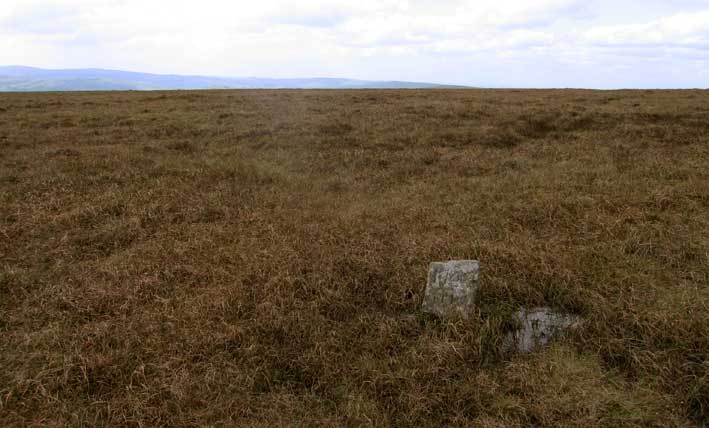
This Boundary Stone inscribed ‘1748’ lies on what fell-runners say is the driest line along the top of the moor. They’re probably right, but it was wet nonetheless. And I finally tested the depth of a bog hole: only 18″ or so in diameter, it was nearly 4′ deep!

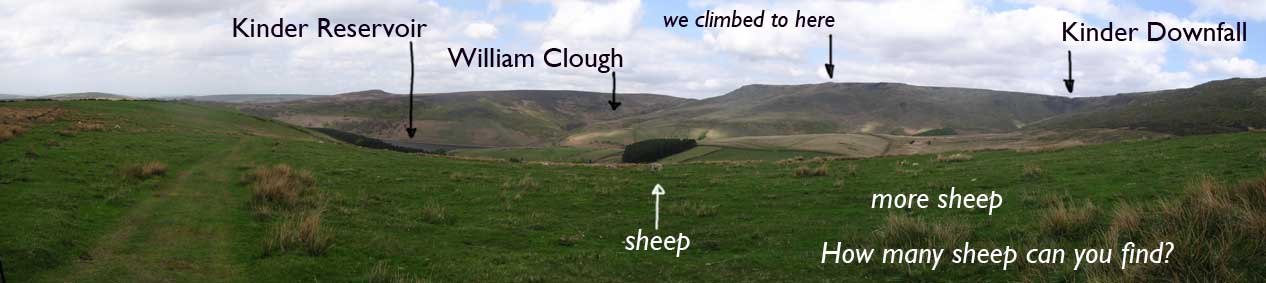
stop for lunch in the shelter of a quarry and stone wall (the wind was cold!), strike west along the flank of Kinder, then north until we had to decide: take the ‘easy, short’ path that slides up the western slope to the top of Kinder, or carry on around Kinder Reservoir and up William Clough to the far northwest corner of the plateau. For several minutes we fidgeted, thoughtfully shifting the packs on our shoulders, trying to balance time, pack weight, energy level, distance and knee condition, before basically saying ‘Sod it, we can eat at McDonald’s if the pub is full – let’s go!’ and committing to the lunacy of the longer route. Besides which, we were carrying tent, sleeping gear, water filter, stove, fuel, and food for 6 days. We could take our time.

click for bigger…

So we took the path in the left of that panorama over the lovely soft green dotted with sheep and lambs, down the hill to the reservoir, along the baking hot path on the other side to the start of William Clough, where we realised there was Another Choice: an unofficial path heading straight up the side of Kinder. It would be shorter, no question of it, but it was much steeper. Time was pressing… I’m really bad at uphill; given my pauses for breath (remember I’m carrying a 15kg pack!), would it be faster than the Clough? Nothing ventured, nothing gained: we headed up the hill. Unfortunately, while pausing allows me to catch my breath, it does little to persuade my duff knee to pull itself together and by the time we reached the top, I was hurting. But the view was… ok, no, it wasn’t worth the pain. Not by itself. Add the sense of achievement and the two together were worth it :-)

The view west from the top. Good but not quite good enough :-) The panorama was taken from the top of that long green hill above the dark trees on the left of the picture.

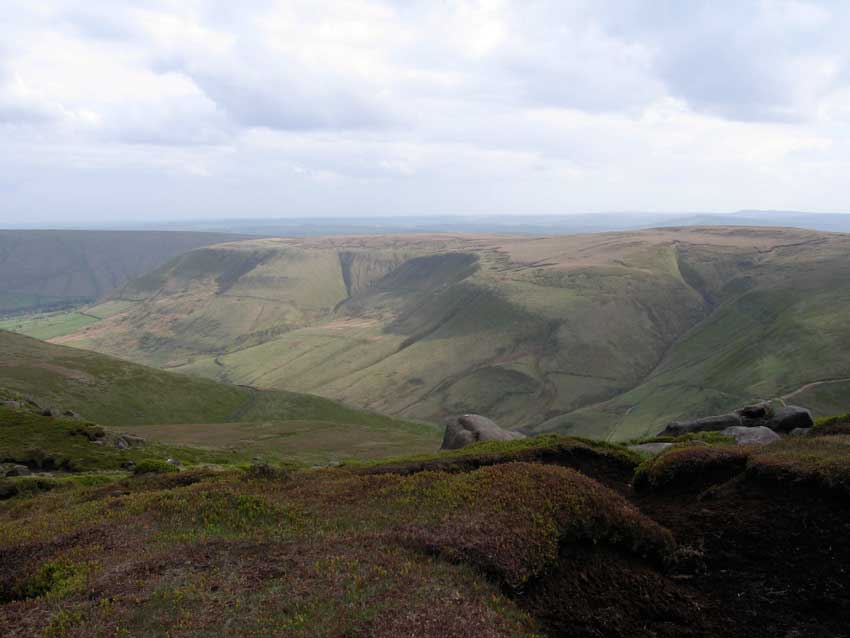
The familiar Pennine Way stretched ahead of us and we did our best to set a good pace past Kinder Downfall to Kinderlow, (but were scarcely able to stay ahead of the school groups. Oh, to be 16 again!) then left on a minor path to the main path running along the southern edge of the Plateau, high above Edale. The late afternoon sun revealed a wealth of detail on the hillside south and west of us;
The ridge in shadow to the left in the distance is Rushup Edge; in the middle distance is Brown Knoll. The blanket of peat on the flattish top of the hill is clearly visible, broken up at the edges by erosion and by old peat cuttings. You can also clearly see some of the post-glacial landslips for which Edale is famous.
As we strode, kneesore but determined, we discussed the best route down. The plateau stands about 300m above the floor of the valley; given the weight on our backs and the condition of our knees, were we better trying to lose height as quickly as possible (the c. 75° drop down the rockfall of Grindsbrook Clough), or more slowly (the unfamiliar path down Grindslow). We opted to get it over with and paused for an SIS isogel (those things work wonders when you need a quick boost of energy for a specific task) before carefully making our way down the rockfall. The energy ran out about halfway down the path to Edale, but it didn’t matter, we were down. End result: over 15 miles/24k, roughly estimated, including more ascent/descent than we’re likely to encounter on any day on the Sutherland Trail. Conclusion: we did it; we can do it again. Barring accidents, we’re up to the task, in every sense.

And this morning? We’re fine. If we had a hill, we’d be up it :-) In the interim, I will do some lace knitting!

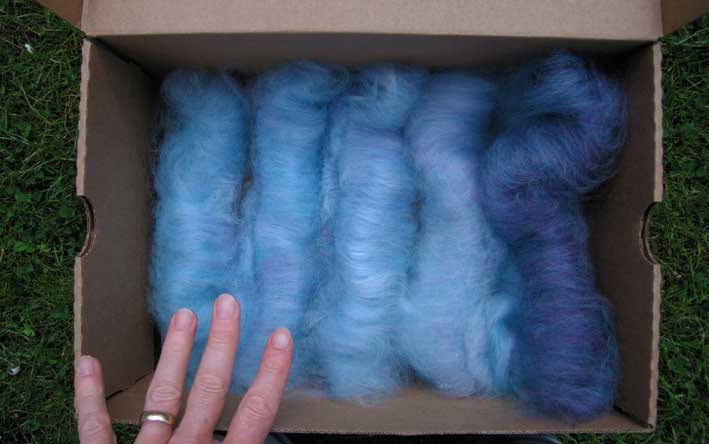
A box full of sky

That’s what this is. Remember that post about colour blending with handcards in which I mentioned the 2009 Rampton Project? I said I was going to make a bag for my head? I’ve made some decisions since then. (Well of course I have, that was weeks, er, months ago. Bother. Where has the time gone?)

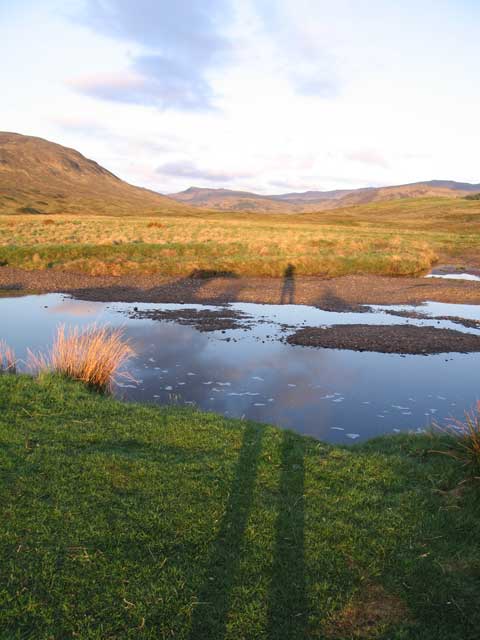
I’m going to make something based on Susette’s p-chullo pattern, a simply beautiful hat available free on Ravelry and from her blog, Knitting Letters: A to Z. If you’ve never heard of it, go and read the first entry now, then savour the rest slowly. I ration myself to one per week as I re-read them. The pattern requires 10 colours; I’m going to work from a photograph, as I did for ‘Hellebore’. This photo.
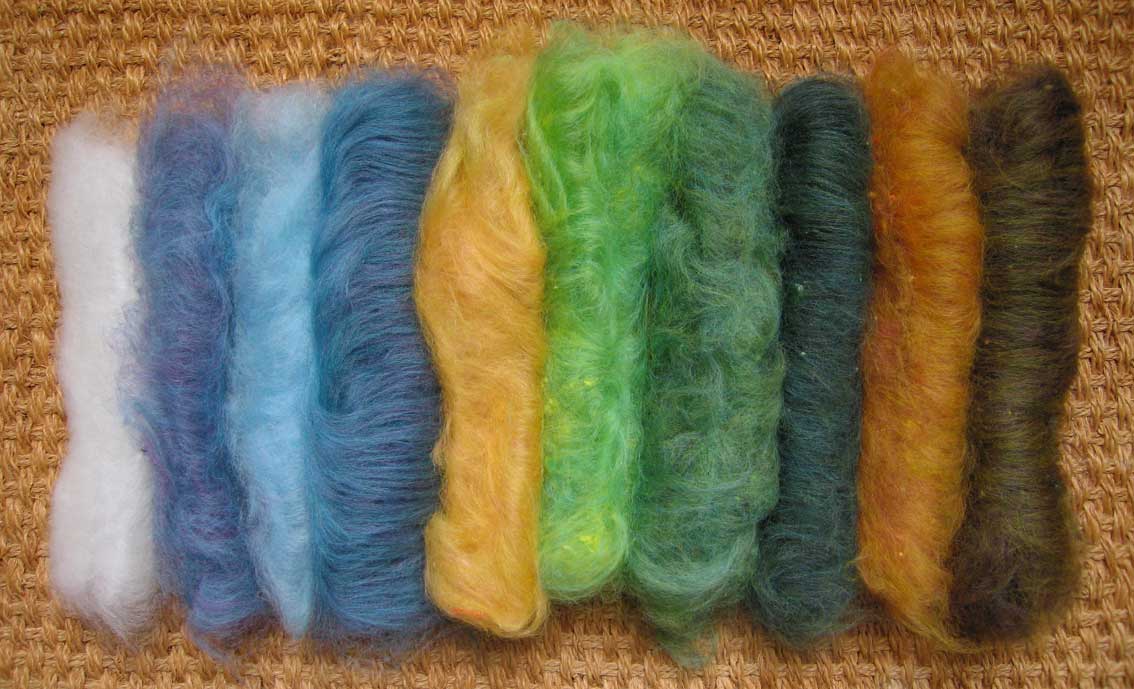
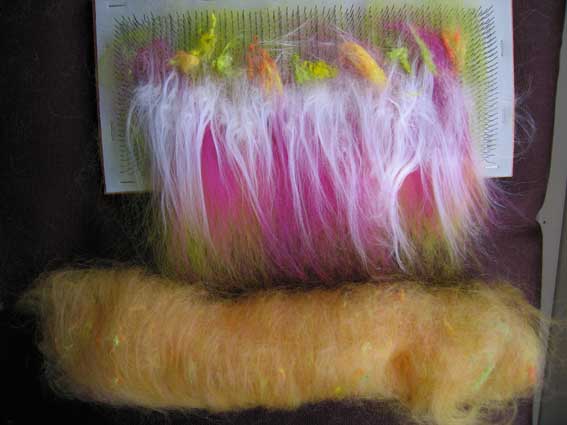
Taken just as the early morning sun rose above the hills east of Inveroran on the West Highland Way, it was the start of one of the best days of my life. What better way to commemorate it than by using those colours in a hat? In the margin of my colour laser hardcopy I’ve written: dawn sky; river/cloud; grassgold; beachbrown; islet brown; bright grass green; mid grass green; dark grass green; shadowblue; cloud. The list has been laughing at me for nearly a month while I tried to find both the time and the space in my head to make these colours from dyed wool and silk. This weekend is the beginning. I’ve got sky, river/cloud, and a start on grassgold, which looks like this on the handcard and as a rolag:
The white is filament silk cut to roughly the same length as the dyed merino. Note the dyed silk noil; I’m using dabs of bright yellow, an orange, and a few hints of bright green. I’ll use the same colours in the browns and in the greens, but the proportions of each will change. I might add some heather pink/purple to one of the browns. I haven’t started spinning this yet; I’ll save any rolags that end up the wrong colour (one so far) to practice. The pattern calls for Berroco Ultra Alpaca and, fortunately, I have some so I’ve made a control card from a small sample, including one of the singles (it’s a 3-ply). I want to roughly match the weight so I don’t have to fiddle overmuch if at all with the stitch count. I’ve got at least another two afternoons of carding before I deserve to spin any of this. Yes, spinning is the reward. I’m warning you, if you don’t spin, beware: it’s addictive. I had no difficulty kicking my trivial Geo Defense habit… I’d much rather be spinning :-)

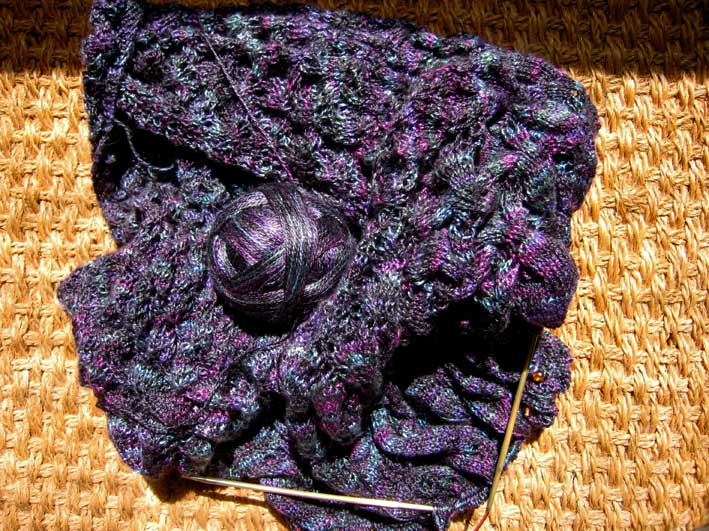
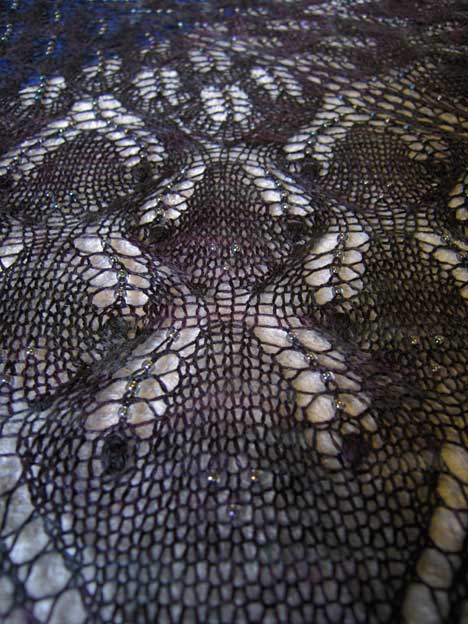
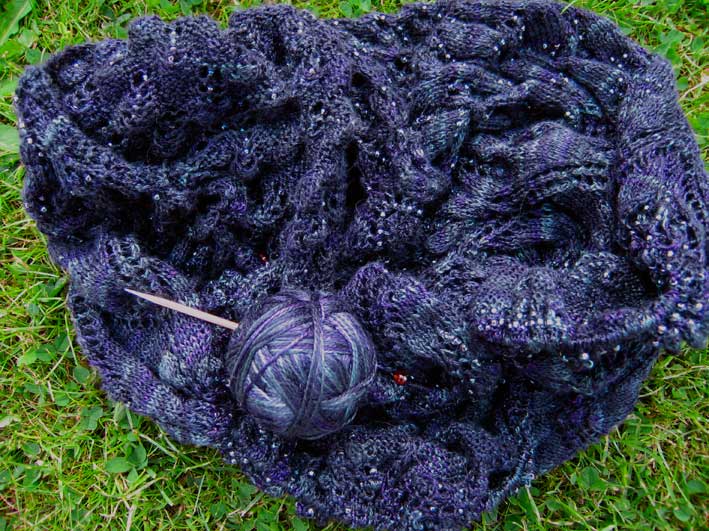
Let’s see, what else can I show off? I love to post pictures of a shawl blocking, but you’ll have to settle for Aeolian on the needles ready to bind off.
Once again I CANNOT get the photo to do justice to the yarn. That’s Blue Moon Fiber Arts silk thread II in Rook-y, and it’s simply, utterly gorgeous. The Raven Clan colours are striking on wool, but on silk they’re beyond beautiful. The shawl pattern is great fun, but I have serious reservations about the beads. There are a LOT of beads on this. The shawl is so heavy that I’ve wondered whether a heavily beaded shawl, say one with a border of real silver beads, could be used as a lethal weapon. Swing this thing by one corner and the entire length would wrap tightly around someone else’s throat like a bolas. Beading it added at least a third to the time needed to knit it and… I’m almost certain I don’t like it. Just too much glitter. So I’ll bind it off tonight, block it tomorrow and I might just attack it with a hammer on Tuesday. Beads are glass. In a contest with a hammer, they’ll lose.

No photos of any walks, though. Of course there have been walks! We broke out the big packs a fortnight ago for 13 miles there-and-back on the Monsal Trail, along the Wye in Derbyshire. Last weekend we took my sister and her husband to Ashopton and walked about 12 miles along Derwent Edge. Next weekend… who knows? But it’s no wonder I’ve had difficulty finding spare afternoons for the Rampton Project. Especially as there has been spinning.

Hullo, my name is Sarah, I have a problem… and I love it!

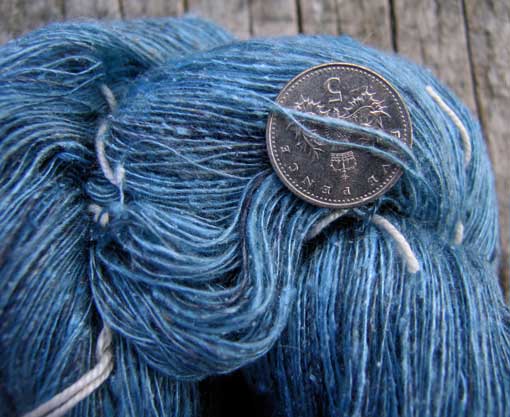
This is 640m of noiled silk singles, spun from Gnomespun‘s Surprise Sapphire (a custom blend). Dan’s got a really good eye for colour. This wanted to be a weaving yarn, so it’s gone to Lynn.

This was fun: 255m of 2-ply lace spun from a 50g (less a good handful given away as samples) cloud of dehaired guanaco from Heathylee in Derbyshire. Treated harshly in hot water, then thoroughly thwacked, it’s very soft. I’ve decided I really, really like spinning shortish fibres from clouds; it’s good fun and I just rather like the imagery :-)

What else… this is 88m of 3-ply ‘Jackaroo’, ‘Come in Spinner’ dyed Polwarth from the Socktopus Fibre Academy Club. I’ve decided this club will be an opportunity to challenge myself by spinning outside my comfort zone; for this I wanted something bouncy and warm and significantly thicker than my usual lace singles.
I think there’s enough to make a hat to replace the one I lost on Derwent Edge a month or so back. There’s more, but I have to go and deal with the hamburglar* buns for dinner tonight. Lesson for today: if you alternate making bread and making rolags, you might be able to avoid bits of dough in the rolags, but you will not be able to avoid bits of rolag in the dough. I picked the big lumps out, maybe he won’t be able to distinguish the rest from the usual cat hair.

A final thought. If you like being active outdoors, if you climb or ski or dream of whitewater kayaking, there’s a podcast for you at The Dirtbag Diaries. Good stories, well told, with well-chosen music and silence, as appropriate.

*Don’t mess with my stash. Srsly.*

*not really.

Before I forget what I did

Here’s a recipe for cinnamon-pecan-raisin sticky buns. With the dough rising at cool room temperature this batch took about 8 hours from start to finish; I made the dough at about 0900 and took the end result out of the oven at about 1700. I froze half, and we’re eating the rest for weekend breakfast reheated sticky-side-up in a 100°C oven for about 8–10 minutes. I used a pan 13″x8″x1.5″; if you can fit a pan that size in your refrigerator, then you could try starting the dough at about 1800, leave to rise 4 hours or a little less, make the rolls and arrange them in the pan, then leave them to rise in the refrigerator overnight (I suggest putting something to catch overflowing sugar syrup under the pan, just in case). The next morning, set an alarm for about an hour before you want to get up, stumble downstairs, take the pan out of the refrigerator, set the oven to 375°F, go back to bed. When you do get up, put the rolls in the oven before you start making coffee and they’ll come out of the oven hot, indigestible, and completely delicious about 30 minutes later.

The recipe started with Greenstein’s ‘Sweet Rolls’ in Secrets of a Jewish Baker. There are a lot of interesting breads in there, and it seems to be much cheaper now than when I bought it!

For the dough:
1 1/4 cup warm water
1 tsp ‘active’ dry yeast (the one intended for breadmakers)
1/2 cup sugar
4 tbsp butter
2 eggs
1/3 cup skim milk powder
4 cups bread flour
1 tsp salt
rum, at least 1 tbsp, but add up to another tbsp as you knead if you can manage the softer dough.

To make the sticky:
1/4 cup melted butter
at least one cup brown sugar
1 tsp water or 1 tbsp corn syrup
50g (2-ish oz) pecan halves

To make the rolls:
another 4tbsp or so of butter
2/3 cup brown sugar (light brown, not dark) mixed with 1/2tsp ground cinnamon
100g (3-and-a-bit oz?) pecans chopped to the size you’d like to find in a cinnamon bun
1 handful really nice raisins

To make the icing:
about 1 cup icing sugar
a drop of vanilla essence
a dribble of hot water to make a drizzleable paste.

Note: I lined the pan with non-stick teflon paper before doing anything. If you can, do, as this makes it much easier to get the buns out. If you haven’t got any you’ll need to pay some attention when you’re turning the buns out of the pan (more detail at the time).

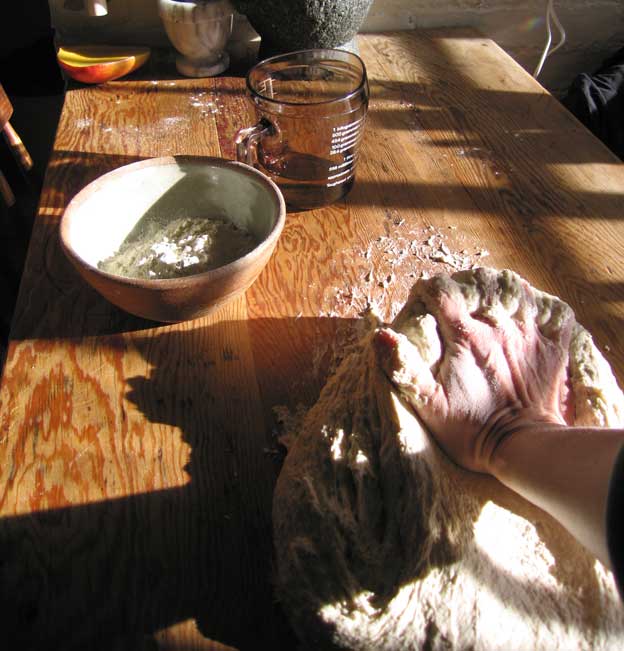
Mix all the dough ingredients together. If you’ve got a breadmixer, use it, but I knead by hand. Not the two-handed wrist-flexing method my mother used for bread and clay, but the technique I was taught by a professional baker. You’ll need a straight-edged dough scraper, ideally with a flexible blade (the stiff blades are a pain for this), or improvise with a piece of perspex, windshield ice-scraper… anything that will scrape the dough along the surface without cutting into the surface the way a knife blade might. With the scraper it’s simple: dump the dough on the surface and put the heel of your hand in/onto it, then drive the heel of your hand away across the table. Feel the dough stretching and breaking as it’s trapped between your hand and the table. Push from your shoulder, not your wrist or elbow; it’s a straight-arm power move. This photo isn’t bun dough, I didn’t think to take a picture. It’s sourdough bread dough from one I made earlier.
When you’ve gone as far as is comfortable, curl your fingers down to catch the ridge of dough in front of your hand and pull that back as you bring your hand/arm back. Use the dough scraper in your other hand to bring stray bits back into the lump, then push away again. Try to build a circular move that rotates the lump of dough as you knead to bring every bit of it into the kneading process. It feels awkward to start with, but persevere: it’s much kinder to your joints and is particularly good for handling sticky, wet doughs. When the gluten is reasonably well-developed I use the two-hand method to form a nice tidy ball to be put well-buttered bowl, covered with a towel and left to rise until doubled in bulk. This increase in volume is the key to a nice light bread, as opposed to the brick-like objects I insisted were bread when I first started baking. I mean, they were flour and salt and yeast… had to be edible, right? :-)

While the dough is rising, make the sticky: mix the sugar and butter together to make a thick gooey paste and put 12 big dollops of this in three rows of four down the pan, roughly where you plan to put each roll. Put a couple or three pecans on top of each lump.

When the dough is doubled, flour your work surface and pat/pull/spread the dough into a rectangle about 12″ wide, 16-18″ long and just under 1″ thick (those measurements are guesswork and memory, but the proportions are roughly right and the details really don’t matter too much as you’ll make 12 rolls regardless). Leaving about 1/4″ clear along one long edge, drizzle the melted butter evenly over the surface and spread with a brush/spoon. Sprinkle the cinnamon sugar, the chopped pecans on it. Dot the raisins as a surprise for raisin-lovers in your life. Work a little cold water gently into that clear strip to make it sticky, then roll up from the other long side. Press/pinch the join to hold it together. Press a sharp knife into the centre of the cylinder, then divide each half into half, then divide each quarter into three (feel free to use a measuring tape, I used to). The end rolls will be slightly smaller than the middle, which makes it easier to be slightly less self-indulgent, or subtly penalize someone who has offended you. Place one bun-to-be on top of each dollop of sticky, remembering to mix big and small in each row (if you cram all the centre buns in one place, they won’t have room and the little ones will be lost and sad). Leave to rise for another three to four hours, until the buns have joined at the edges and are looking puffy and, well, risen. Preheat the oven to 375°F over the last hour.
bake until the tops are really well-browned.

While the buns are in the pan it’s hard to check that the toffee base has worked so what I do is: remove the buns from the oven when the tops look done. Leave sit for about a minute, no more than three, to allow the toffee to set a little bit, then run a knife around the edge of the pan and turn the buns out as a slab, scrape any toffee left behind off the pan and apply to naked bun-bottoms. If you haven’t used teflon paper and you wait too long, the toffee will stick the buns to the pan; if that happens, carefully and evenly heat the bottom of the pan over a low burner to melt the toffee a bit, then turn out. Best to avoid this if you can. If, when you’ve turned the buns out, the toffee isn’t quite toffee enough, you can put the entire slab under the grill for a couple of minutes to properly melt the sugar and butter. Watch like a hawk to ensure nothing burns.

By this time the smell will be driving you mad, so as the toffee sets, turn the buns over, drizzle icing over the top and rip the slab apart like slavering wolves falling on a hapless caribou. Or hungry people on fresh cinnamon buns.

Plying balls are made of win.

Well, actually they’re made of singles and win. Simultaneously. Isn’t that clever? They are clever. I learned of them from Abby Franquemont and, just after Christmas 2008, when I decided I could not spin another millimetre on my Victoria, I wound the singles I’d created so far for a 2-ply project off the Louet bobbins into plying balls with the intention of trying the technique.
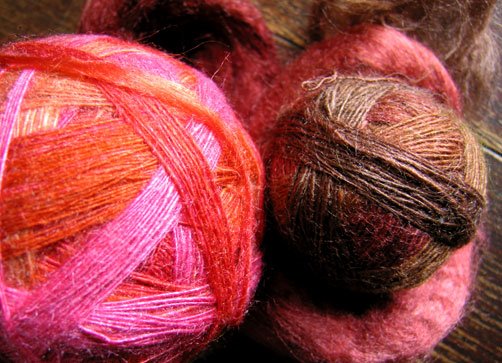
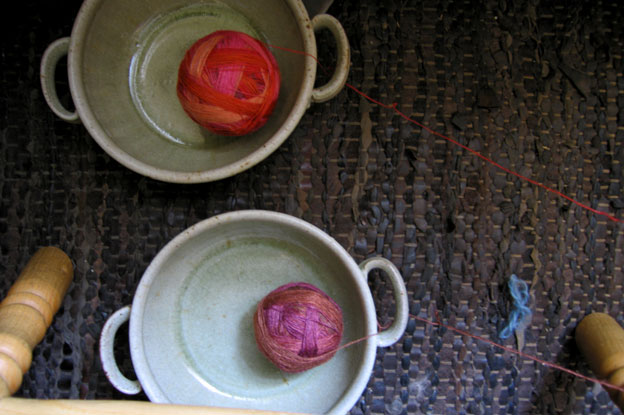
That’s Treenways Silks tussah silk in ‘Sunset Swing’ (left) and ‘Musgrave Medley’ (right and roving). Wind the balls very, very tightly – these are like those elastic-wound golfball centres, they bounce – because it’s essential to control the twist in the singles. That picture also explains the project. I passionately hate pink, but I’ve gradually begun to realise it actually does things for me when combined with bronze and orange. I think that ball on the left is gorgeous (you should have seen the roving) but I’d never wear it. Never, ever, ever. I had the notion that if those brilliant, bright colours were plied with similar but much darker colours, the end result would be toned down to the point that I could bear to look at them in sunlight. And maybe even wear them.
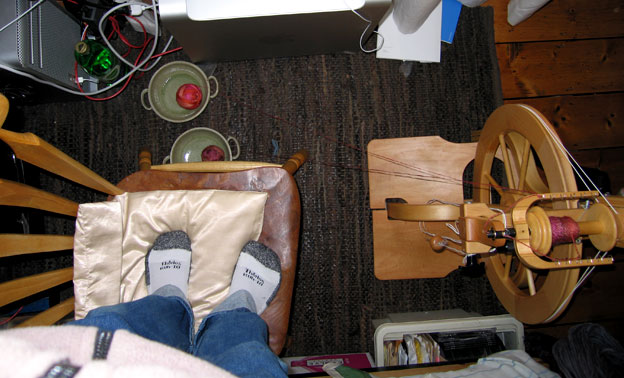
There’s my setup for using them. Looking down from my chair, you can see two ceramic bowls (the handles are important), one for each ball, and the singles running to the wheel. A closer shot shows the singles running from the ball UNDER the handle and away to the wheel. Under the handle is good because it stops me pulling the balls out of the bowls: the plying balls just sit nicely, each in its bowl, rotating to feed an otherwise very temperamental lively single to my left hand.

What do you think? Does it work?


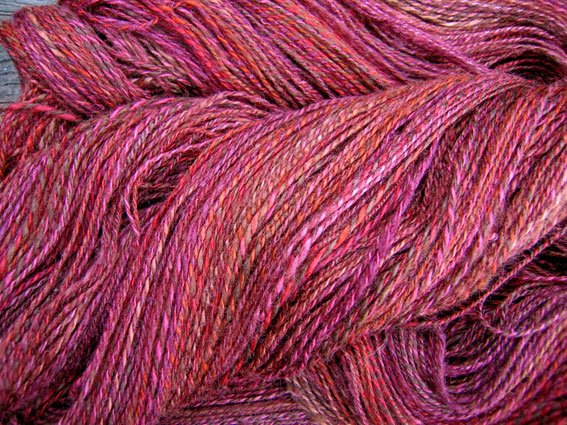
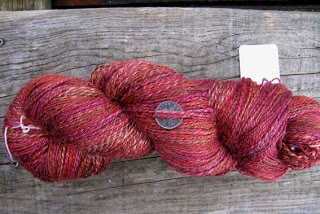
Despite Pshop, these photos does not do it justice. In sunlight that skein GLOWS. 460-odd metres of every shade of warm from the dying embers of a woodfire to the most beautiful sunset you’ve ever seen. I love it, and I love it even more because my guess was right and it’s taught me something. I want to wear it.

Last weekend was hectic. On Saturday we walked (3 hour drive each way); on Sunday I put both the Schacht Matchless and the Suzie Pro in the back seat of his car and carefully fastened their seatbelts (he said it looked as though I was taking my children out) and drove (an hour and a half) to Socktopus for Diane Mulholland’s ‘Spin Short’ class. Well worth the drive, both for Alice’s shop (full of beautiful, colourful, desirable sock and lace yarns) and to meet Diane, who is a very good teacher indeed. We started with fine merino to learn spinning from the fold, something that has previously eluded me, moving on to camel down (soft!) and cashmere (unbelievably soft!) spun from the fold and long-draw from the end of the top.
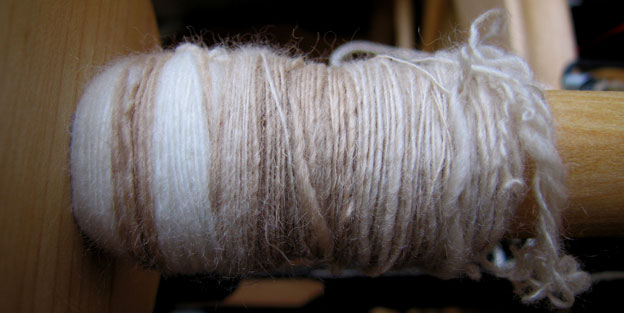
From left merino, camel, cashmere (the palest tan). We spun on featherweight spindles and on wheels; I started on the Schacht with the silly fast whorl (one size up from the tiny stupid fast whorl) while Diane used the SuzieP with the extra-fast whorl, then we swapped so she could try the Schacht. And then we moved to cotton. Wow. Just… wow. I am glad I had someone to tell me everyone who thinks they can spin will have problems when they first try cotton. It’s not like other fibres. Try for Beginner’s Mind. The fibres are short (we started with long cotton because the short-staple stuff is just ridiculous) and they tend to stick to each other: drafting requires both a knack and some effort.
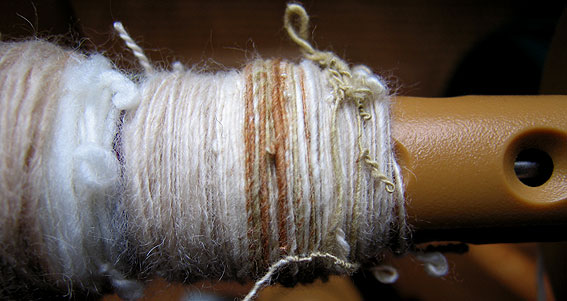
Nonetheless it is strangely compelling. Perhaps it’s the challenge? That’s the ‘easy’ long staple, spun from my own punis(!) followed by some sliver in natural colours, brown, cream and greenish. The class was such fun and Socktopus is such a delightful place (pretty cupcakes, cheerful Sunday knitters) that I will be back. I’ll find a reason. The drive home had added interest: the M25 Northbound was closed at J17. I left for the M40 at J16, left that at the first opportunity, and joined the horde of motorists flooding across Berkshire. It was absolutely hilarious. Main roads were 5mph, nose-to-tail at with drivers blindly following the instructions from their GPS systems, faces lit with blue light from the screens. The small roads were were alive with people like me, working from roadmap atlases, diving into laybys or onto verges to flick the interior light on and work out what to do next before the light goes off and we peel out again into the darkness. I was an hour or so late getting home and I haven’t had that much fun for ages!

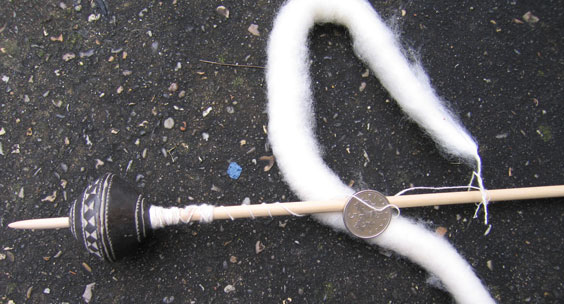
Look what I accidentally bought when I got home. That’s a traditional Mali bead spindle for supported spinning of cotton from Amanda Hannaford which meant I spent Tuesday lunchtime playing with cotton again. When I’ve spun enough I’ll try finishing some; I think it has to be tortured, boiled alive or something similar. I seem to remember washing soda might be involved.

Lastly, a quick glimpse of some extremely slow knitting. The Yarn Harlot recently posted about some issues with a shawl; this is the shawl that’s nearly defeated me.
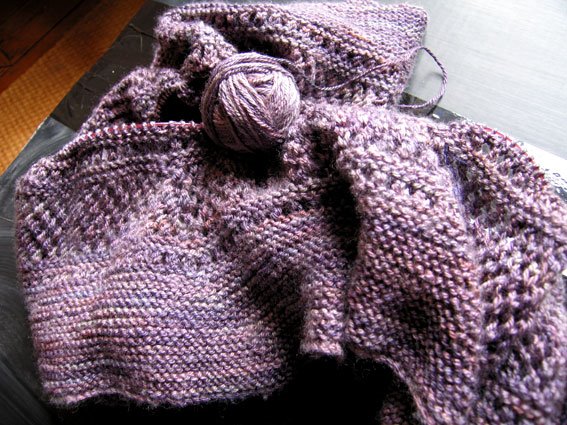
That will be (it will, I swear it) Sigga from Føroysk Bindingarmynstur/Faroese Knitting Patterns. How hard can it be? 601st cast on is a bit wearing, but with care and stitch markers every 25st, it’s bearable. Then there’s a lot of knitting (not even any purling). I can do that. The decreases that drive the shaping? no problem. Lace insertion? Come on, YO k2tog or ssk. Where’s the prob… ah. Try running the decrease lines in the other direction, just to be different, don’t like the result, rip back 6 rows (that’s 6x almost 601st), pick up the live stitches and try again. Realise you somehow missed the bit in the instructions about the additional decreases for the first 30-odd rows, decide to wing a solution and carry on knitting. Realise you’ve messed up the YO/decrease pattern in the central panel and, on the next round, drop every one of 21 stitches back 6 rows and remake the decreases in a different direction with a crochet hook. Finish the lace, breathe a sigh of relief, charge ahead and realise you’ve forgotten the final YO/decrease row *and* 15 garter ridges after that. Grit teeth, rip out 5 rows, pick up live stitches, carry on. I am learning lessons here about patience, and thinking before jumping. And that it’s next-to-impossible to face ripping 2000-odd stitches when you’ve just finished knitting them. Easier to do it first thing in the morning, fast. A bit like ripping a band-aid off.

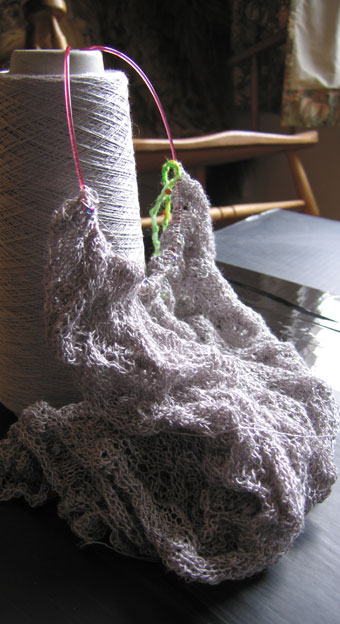
Here’s a lesson in slow-but-steady: my version of the Maikell Shawl from ‘Knitted Lace of Estonia‘. The cone is 2500m of loosely plied 2-ply silk from Colourmart, and the blob is about 8 repeats of the centre panel. The pattern calls for 12, but I’m using smaller needles and finer yarn, so to get something of decent size I think I’ll need at least 15, perhaps 18. This is what it looks like laid flat.

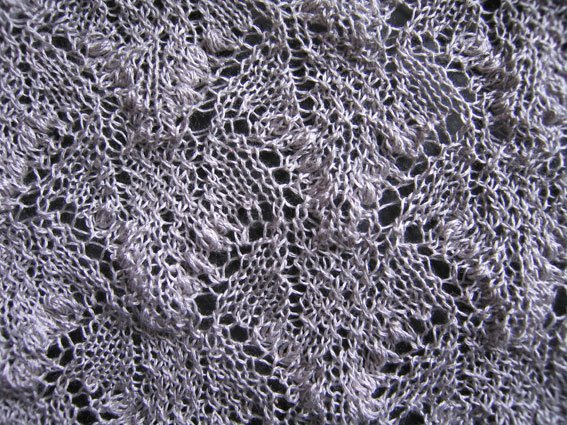
And this is pinned to show more detail. And the numerous nupps. This shawl is teaching me that choosing to knit 7-stitch nupps in fine, inelastic silk thread is NOT clever. Very not clever. But other knitting has taught me to persevere, so I shall.
Just not tomorrow. Tomorrow is for walking! Which also teaches perseverance. A useful lesson to learn.

Colour blending with handcards

I wish I could think of a better title, something that describes the fun and wonder. You’ll just have to try it for yourselves!

I’m starting to consider the details of the Rampton Spinners 2009 project, which is to blend and spin the coloured merino in the bag at bottom left
into yarn and knit that yarn into a multi-coloured bag. The rest of the bags are there because I’m feeling… inventive. Dangerously inventive. The amorphous black blob at top are bags of black merino and black tussah silk. On far right is a bag of silk noil, and below that, beside the coloured wool is a bag of undyed filament and tussah silk. How will this become yarn and what yarn will it become? Gentle reader, read on…

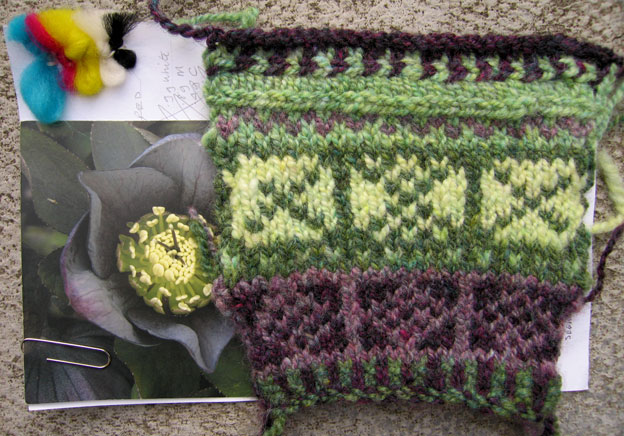
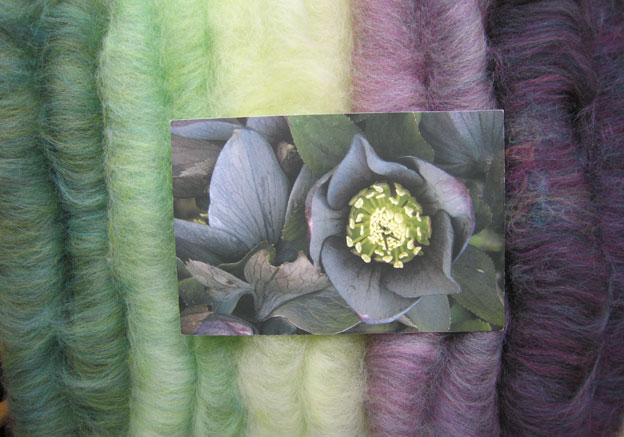
Here’s one I made earlier. This is my Hellebore swatch, of which I am inordinately, indecently proud. My first real carding triumph, my first colour matching, blending… so many firsts. I wish everyone something that gives them the sense of pride and satisfaction that swatch gives me. AND I did vikkel braid on it. Twice!
The colours in the knitted swatch were chosen from the card (from Sundara’s sock club a couple of years ago) and made by blending the colours of wool fastened to the paper at top left. No custom dyeing. To do this you need to have a basic understanding of colour theory as used by artists and printers and anyone else working with solid media such as paper: mix yellow and blue together to make green, white and blue make pale blue, black added to anything dulls it and makes it darker, and so forth. If all of this is news to you, websites here and here have some basic explanations (the second one includes black). Buy some coloured pencils or crayons and learn from play! As a reminder, here are the names and basic rules. Colours are Cyan (a clear bright blue), Magenta (clear bright pink/red), Yellow, and Black. The colour system based on these is known as CMYK, with black being ‘K’ for ‘key’, because the plate used to print black also contained the key lines needed to align items and other key information.

With wool that matches these colours, plus white to match paper, you can make all the colours you’ve ever seen on a printed page. How? By blending them on handcards. Like this.
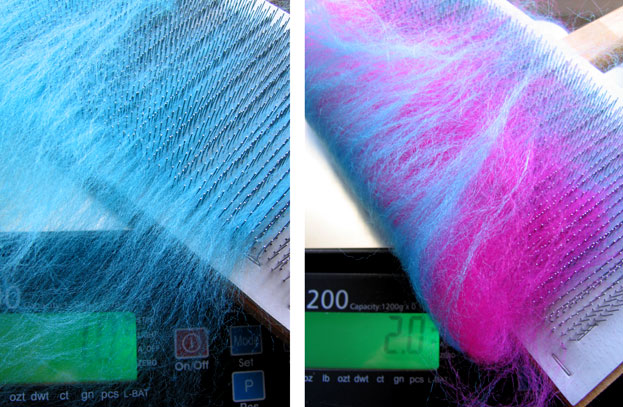
Note the digital scale. You can have fun without one, but if you want to be able to make more of the colours you blend, you need to know how much of each primary you used. These scales weigh in 0.1gm increments. When I’m blending for the first time by eye, I weigh each handcard and write that down. I started by writing the weights on the handcards, but they seem to vary according to humidity. So now I write it down each time. Then I consider the colour I’m trying to match. I put some fibre of the first colour I think I want on the card, calculate the weight as [card+fibre]-card, and write it down. I tried relying on the ‘zero’ facility, but my scales lose that if they turn themselves off while I’m thinking or making a cup of hot chocolate. Then I add what looks like the right amount of another colour to the same card, weigh the card with its two fibres and calculate the weight of the second fibre and write it down. And so forth. Later, when I’m duplicating a mix, I can just weigh out all the fibre, then card it. In that photo I’ve used 1gm of C and 1gm of M (in the second photo I’ve curled the fibre up so you can see the scale readout). Then card it and watch the two primaries magically become a secondary colour.
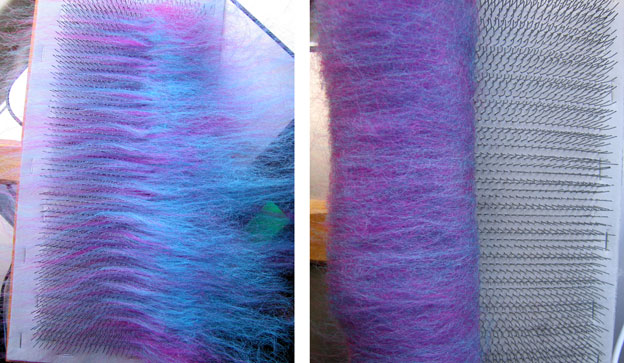
On the left is the fibre after a couple of passes. It’s clear there are two colours on the card (most of the M is still in a layer under the C); if you squint at it, it’s blue with pinkish streaks. On the left is the finished rolag. Look closely and you can see the individual C & M fibres but squint at it, or view it from a distance and… it’s purple. If I’d wanted a darker purple, I’d have added black. Lilac/lavender, I’d add white.
These are the rolags I carded for the Hellebore swatch. There are two of each colour: one was blended by eye, weighing as I did it, and the second was blended by weight alone from my notes. For example: to mix the dark petal-shadow purple, blend 1.0g K; 0.7g C; 0.7g M; and a wisp (well under 0.1g) of Y. That’s the advantage of all that weighing and writing down: I can repeat the colours time and again.

Anybody notice that the yellow in the Rampton ’09 bag is not quite the yellow of CMYK? This doesn’t matter if you’re just mixing pretty colours.
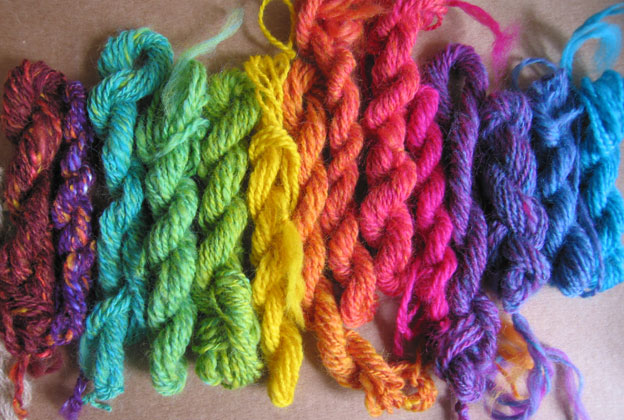
Ignoring the two tiny skeins at far left, here’s an array of colours made from C, M, and that ever-so-slightly orange yellow. That’s what that bag will make (plus white), and it’s still pretty. But what I have in mind will need the true Y, and fortunately I have some in the stash, if not in the photo. The blacks will be needed to make dark greens and browns. The tussah and filament silks will add a sheen to some blends and I might just try using silk content to define shapes. I might dye some of the tussah. I will certainly dye the noil: it can be used to add texture and colour interest to any blend. Here are those two skeins embiggened
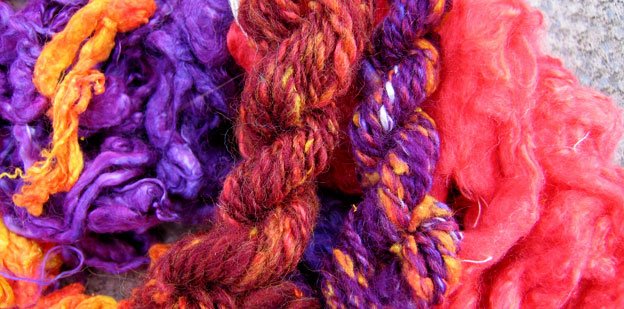
on a bed of the noil I used to create them. Each contains the same noil colours, which have completely different effects on the two different wool colour blends. The contrast between ‘cold’ blueish colours and ‘hot’ orange reds make the noils look like burning embers embedded in the cool purple skein, whereas they simply warm the brown even more.

What am I going to do with these treasures? I need to do more planning before I’m sufficiently confident to put it on record. But one thing I do know: I will be making a bag for my head aka a hat.

Other news…
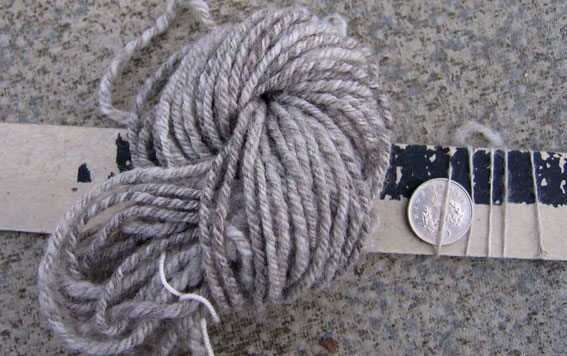
That polwarth I was flicking last post is now a yarn, spun from the end of the locks (butt or tip seemed to make no difference to it) in a sort of point-of-twist longdrawish style. 3-ply. I think it’s my best yarn to date: light and springy and with a little sheen. I need to knit it into a swatch with cables! and textures! to see how it wears. I am a step closer to my goal of spinning and knitting a garment.
Doesn’t the soft grey rest the eyes after all that colour?

Incidentally, the Yarn Harlot has just posted some interesting information about carding. It makes sense for some things on hand cards, too. Experimentation required!

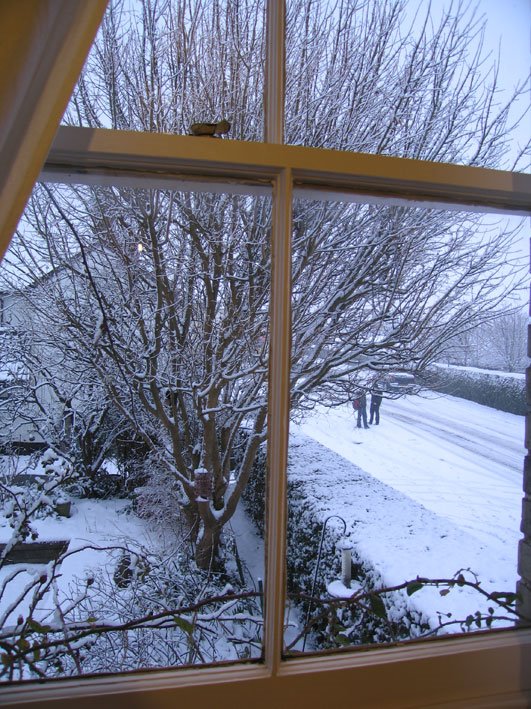
It’s snowing. Again.

That was the view from my office/spare room window yesterday, and it’s the same today. Some of that melted, but more fell this morning; in fact, it’s falling now. Normally I do the shopping on Fridays, but after 30 minutes at 20mph I’d done 1/4 of the journey. Not worth the time. It’s difficult for people with ‘proper’ winters to understand why 2–4″ of snow is disastrous here, but… we don’t have snow tires. Graders or snow ploughs are used only on the main roads (ie highways). Everywhere else they rely on a mixture of grit (to provide tractions) and salt (to lower the freezing point of the slush), and the prolonged cold plus this much snow means the gritters haven’t been out. I didn’t have a problem driving on packed slush/ice – I indulged in a practice brake/skid on a quiet stretch of road to remind myself of what it felt like and how to handle it – but I’m not happy when people who might have problems are cruising down the road 6′ behind me at 30mph. So here I am :-)

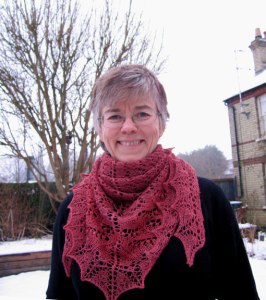
First, a finished object. The Swallowtail I now think of as Beads ‘r’ Us.
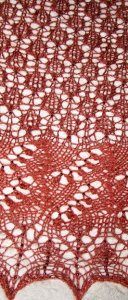
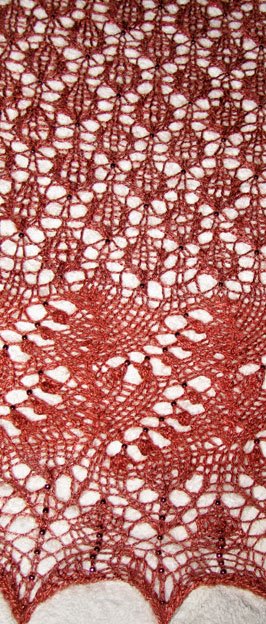
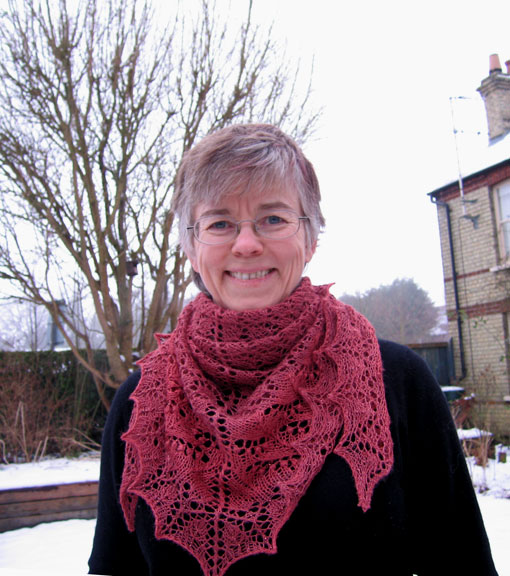
Knitted as part of the Tuesday Spinners and Cake-eaters 2009 Optional Challenge, this is my handspun, hand-dyed tussah. As it’s my second Swallowtail I wanted to learn something new, so I decided to try beading (8/0) with a crochet hook (0.6mm). I went a bit mad. There are beads on every k3tog, at the base of every nupp, and running down every vertical in the border (on half of these there’s a bead on *every* stitch, as I beaded the purl stitch before knitting it, then beading the knitted stitch). That’s nearly two 13g tubes of ruby beads. I was increasingly unsure that I liked it until blocking, when I started to think it might be alright because the beads became much less… concentrated as the fabric stretched. And then I put it on and decided it’s alright after all. I’ve got to keep it for a while because if I am asked to do a workshop on shawls/lace, I need it as an example of beading. But after that I might just auction it for Natalie (The Yarnyard’s) ‘pay it forward’ p/hop for MSF.
I promised some fibre…
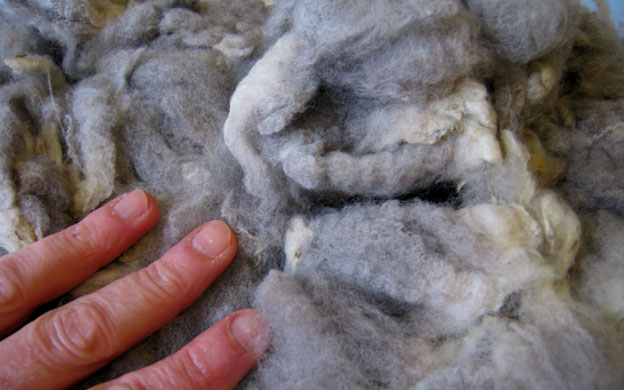
Last year, when I knew very little more than that I wanted to spin, I ordered a fleece. A REALLY good fleece. One of Treenway’s handpicked New Zealand fleeces. This is Polwarth. It’s beautiful. SO beautiful that I have been too scared to do more than wash a few handfuls of individual locks, one by one, which I combed and spun laceweight. It’s lovely, and it’s incredibly slow. So on Monday I just… snapped… and decided I was going to get to grips with this. No point in leaving it to fossilise: I just have to try. This mass is a laundry bag-full of individual locks washed and dried en masse. It may or may not look like a disaster to anyone who processes fleece regularly – I have next-to-no clue about this – but I can easily pick out individual locks, which I’m flicking to spin from the lock. Here’s a lock pulled free from its friends.
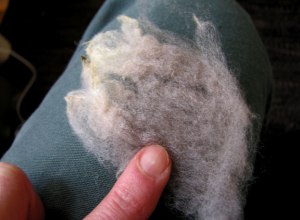
Here I’ve flicked open the butt end with my very finest handcard-equivalent, a dog-grooming thing with teeth finer and more delicate than my finecloth handcards. The polwarth is almost as soft as butter and I want to be gentle with it.
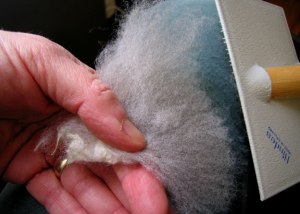
And here’s the same lock, flicked open at both ends. I’ve just started spinning these from the ends (comparing butt to tip) as I’m a bit of a worsted freak and this does it so well. I like what I’ve got so far, but I think there may still be some grease in the wool: it’s not moving as freely as I think it could. Or it just might be that merino-style crimp. I will wash some more in Fairy liquid to check; it will certainly strip the grease, but I don’t want to use it to wash the entire fleece. I wouldn’t use it on my hair, so why would I use it on my wool?
For Christmas I gave myself (colour me embarrassed) membership of the Socktopus Fibre Academy. We’ve been set the meme ‘My Top Ten…’

1. Fibres: I’ve spun tussah silk, BFL, merino, jacob (in the grease), silk cap, romney, polwarth, camel top, silk hankies, alpaca, alpaca, a wool/angora/silk top, filament silk, pygora. Not all that much experience, but I suspect you can pick my favourite to date from looking at that list. Silk. I love it. Shiny, smooth, and for me so far it all spins like a dream. Second place would be a tie between fine merino on a light spindle, and the pygora cloud from Terry at Rainbowyarnsnw.com.

2. Spinning technique: I haven’t tried enough of them and lack of practice means I’m not very good at some of those I’ve tried, so it’s too early to tell. I loved the longdraw-gasm, I like the way that top spun longdraw-ish from one end just flows into singles and onto the wheel.

3. Plying technique: hmmmm. I recently discovered the joys of true 3-ply, feeding the singles from the Schacht tensioned lazy kate across the back of my hand and through my fingers. I have to try Margaret Stove’s method of weaving the singles through the fingers, too.

4. Dyers: my tastes change from day to day at the moment. Which is why I’m learning to dye for myself :-)

5. Colours: for the last 20 years I’ve worn more and more ‘sludge’ colours. Olive drab, dusty purple, murky browns and maroons, black and dark grey. I love them still, but recently I have gone red: I actually bought a red sweater, and I’ve knitted red silk (of course) shawls. I love purple, too. But when I dye, I dye things scarlet and gold and emerald dragonfly green and turquoise and gunmetal purple.

6. Book: too many to list. There’s a link to my Librarything profile on this page somewhere; I’ve got just over half the holding up to date.

7. TV show/movie: I think… for jaw-dropping wonder and complete absorption, it has to be Mirrormask. But I wouldn’t choose to part with the Princess Bride, or Stardust, or our Miyazaki collection, or The Crow, or M*A*S*H (or the tv series, for that matter), and I watch Step into Liquid regularly.

8. Spinning mag: got to be Spindlicity.

9. Time of day: early, early morning. When the sun isn’t up, but the sky is lightening and the world is freshly made for me.

10. Indulgence: confession time… wine. Really good wine, ideally Spanish or Italian reds. Brunello di Montalcino for a start :-)

Speaking of which, if I don’t get some work done today I can’t justify wine with dinner. Even if it is Friday.
Was that creative? I hope so, because I have to justify my Kreative Blogger award from Goldentracks. Thank you!

I’b god id.

If you’ve ever wondered where that cold went, the one you had when you were a child, the one that moved from your throat to your lungs to your head and gave you nights that lasted an aeon because you couldn’t breathe and your throat hurt, and then you had to cough and you realised that your throat really hadn’t been hurting at all, because the cough made it hurt so much more… I’ve got it. I’m winning the battle, but the end is some distance yet.

So, instead of working – I just can’t think clearly when my brain is starved of oxygen – and going to the gym, I have been spinning. It’s almost exercise, right? My feet are moving. The ounce of pygora cloud from Terry at Rainbow Yarns Northwest I posted about some time back has become this:
That’s 120m of soft, shiny thickish laceweight. Four ounces of the premium dark grey roving (70% pygora, 30% merino) became 411m of slightly thicker laceweight:
Spinning these two yarns was another of those learning experiences. Spun a sort of backward supported longdraw (fibre in my left hand drawing back as the twist enters it while my right hand pinches to stop twist now and then to allow the developing singles to thin as my left hand moves back), the cloud almost spun itself; the smooth glossy fibres just slipped neatly together to become the singles.

The grey was different. Very different. There’s been some discussion of the difference between roving and top on the Ravelry groups, made more complex by the difference between UK and US terminology. This was roving in the US sense: basically a carded prep in which the fibres are only roughly parallel to one another, and may be of different lengths. (If combed, this roving becomes top in which all the fibres are truly parallel and are generally of more uniform length.) The Merino in the roving adds elasticity and bounce, and flows differently into the singles. I tried to match the WPI of the stuff I got from the cloud, but found it difficult as this really did want to be a thicker yarn, plus it bloomed beautifully after washing and whacking. The end result is a little thicker, but not badly so and I think the two together will be a top-down triangular shawl, dark grey with a white strip of finer lace (I’m thinking something Estonian with nupps) about 2/3 of the way down.

I’ve just started the last of the stuff from Terry, a beautiful blue 80% pygora/20% silk batt. To prolong the pleasure (I really do like this pygora stuff) I’ve decided to spin it as thin as I can.
It’s perhaps a little thinner than it looks there, although I do have small fingers :-) It’s 60-65wpi. I wonder how much yarn I’ll get out of 2.4oz?
What you can’t see (well, you can, but it’s not obvious) is that I’m spinning that on the high-speed bobbin and the high-speed whorl that I bought last week for the Schacht. Not the highest high-speed bobbin, but it’s faster than the fastest shipped with the wheel. I’m getting better at this.

There’s also been knitting. The Tuesday Spinners and Cake-eaters are running an optional group project this year: knit a Swallowtail Shawl (pattern available free here). Some members have never knitted lace before, so even in purchased yarn this is a challenge. Others are spinning the yarn as well. In one of my dyeing experiments I painted a 1oz braid of tussah a beautiful dark plum colour, thinking it would do nicely for the shawl. I rinsed it thoroughly, dried it and spun it to roughly the same wpi as the marisilk/seasilk I’d used for my first Swallowtail. When I washed the yarn in Dreft (a detergent)… it bled. It bled to the point that it became a pale grey-blue skein of silk: it lost ALL the red. I was horrified. Worse, I’d not got quite enough length from the braid, so I needed more. I spun another 30g and spent several hours researching silk dyeing online. Recommendations included soaking even longer than overnight; treating all silk to remove sericin before dyeing; using higher concentrations of dye and pure vinegar, not water, to dilute it; heating for longer and allowing the silk to cool in the dye overnight. I took the new skein and the old skein and did all of it. This time I used a dyebath instead of handpainting, and it was thrilling to watch the colour density of the liquid decrease as the silk took the colour. The end result is two skeins of red silk, one very slightly darker than the other. I’d hoped for scarlet (that’s what the test paper showed), but it’s a blood red, the red of beef cooked ‘blue’. I decided to use the variation in colour as a design feature, changing colour at the start of the lily of the valley pattern, which is where I am now:
The difference is more subtle than I’d expected, so I’m glad the change in pattern highlights it. I wanted to learn something else new from this, so I’ve taken the opportunity to try beading using a crochet hook (8/0 beads and a 0.6mm hook). It’s easier than I’d imagined and quite effective although I’m not sure I’ll wear it. Next decision comes at the end of the second LoV repeat: I want to go back to the darker red. I could just finish the shawl in it, or perhaps not – I’m not sure there’s enough. I am tempted to add a single repeat of another Estonian lace pattern, then revert to the brighter red for the edging. Decisions, decisions.

I love 3-ply.


Truly, I do.
As a knitter I honestly never thought about the number of plies/strands in whatever I was knitting, except perhaps as a measure of thickness. Laceweight had two plies because two plies are thinner than three plies of a given thickness. Obvious, innit? Other yarns? I am slightly embarrassed to realise I never thought about it. Colour, fibre, softness, weight, gauge, price? Of course. Structure? Why? Does it matter?

Thanks to Ravelry and spinning, I know it can matter a lot, enough to make a major difference to a project. Laceweight is 2-ply not just because it’s thin, but because 2-ply is oval in cross-section. Add more plies, and the yarn gets rounder in cross-section, which means it fills in the holes in lace somewhat. Make it superwash and bouncy as well as round and I now realise why the shawl I started in Dream in Color Smooshy (a four-ply) was so… not right somehow that I frogged it. Three plies are stronger than two, too: for a given fibre/spinning technique, three plies will wear better. My first sock yarn was a 2-ply, and I knew the first time I put those socks on that it wasn’t right. Now I know 3-ply would have been rounder, bouncier, more elastic underfoot… and slower to develop holes.

I think most spinners start with 2-ply because it’s obvious, easy and FAST. Two bobbins/spindles/whathaveyou and you can make Real Yarn! Quite a lot of my handspun to date was 2-ply for just those reasons. Then I was shown the wonder that is chain-plying aka Navajo-plying (it’s best to call it chain plying because it’s really not widely used by the Navajo weavers: they make small quantities for very specific purposes). I diligently chained myself to the wheel (ha!), frantically trying to breathe as well as coordinate the hand movements. (I’ve since learned that many people chain a bobbin-full to add twist later). I didn’t like what I got. I knew the uneven twist and the indecently variable loop lengths would improve with practice, but the way that it emphasised unevennesses in the singles (it concentrates thickness as well as colour) was integral to the technique. And the little lumps at the start/end of each loop were unsightly. In discussions on Ravelry people have also pointed out that a chained 3-ply is just ONE singles looped back on itself. Any damage to that one singles means the yarn will lose its structural integrity. It can (apparently) unwork itself. Whereas a true 3-ply is THREE singles. Damage one of them and the other two can take the strain. More importantly for me, at any rate, true 3-ply nicely averages varying singles thicknesses instead of emphasising them, and breaks/blends colours more subtly than even a 2-ply. So I tried real 3-ply and fell in love. I can live with weighing my fibre into three lots, and the need to use three bobbins (in fact I bought extra bobbins just in case).
This was my first 3-ply:
That’s about 500m (my longest spinning project to date!!), a wool/silk/alpaca blend that I think I bought from Fyberspates at Alexandra Palace 2? 3? years ago. It’s a bit wonky because I waited too long to spin it (I’ve learned the hard way that prepared fibres will settle/mat/gently adhere to each other as time passes), and I split it by fibre as well as weight: the alpaca did not draft as easily as the wool/silk, and it’s less elastic so it remains the same length where the wool/silk has bounced back to its original fibre lengths. Let me know if that makes no sense and I’ll try to explain it more clearly.

My favourites, though, are those in the first photo. Top is superwash BFL from The Natural Dye Studio, spun within a month of purchase. Schacht, Scotch Tension. Below is a wool/silk/angora blend in Red Maple from The Woolen Rabbit that has been sitting in a box with other stuff ‘to be spun when I’m good enough’ since I bought it over 2 years ago. It too had compacted; the difficulty I had drafting it plus the fact that it’s my first double drive project means the singles were slightly overspun. I should, I really should have thought to run them back through the wheel to lose some twist but for some reason I didn’t think of it even as I muttered about the twist in the singles. So the final yarn is not quite as lofty and soft as I’d hoped. I’m telling myself that means it will wear well as a pair of fingerless mitts.

Here’s the next spinning project for the Schacht:
That, my friends, is an ounce of Pygora from Terry of Rainbow Yarns Northwest. It’s as soft as a very soft thing (I’ve only spotted about 5 guard hairs in a handful of soft) and it has this amazing sheen. Think mohair x cashmere. I hope I can do it justice.

And the 2009 Rampton Project means I’m going to do some more dyeing. I need silk noil to card into my blends… there’s another post. I can boast, er, talk about colour blending on hand cards.

I was talking with friends last week about the sorrows and pleasures of growing old, and the speed with which days, weeks, even months just fly past in a flurry of notes about stuff you should have done. One commented that she thought time moved more quickly in part because often we’re repeating experiences or applying knowledge from previous experience: we don’t have to spend time concentrating as we learn new stuff. I raised an eyebrow, grinned, and pointed out that I have at least one lifetime’s-worth of new stuff to learn about spinning before I die. And there’s the dyeing, and weaving, and the history of all these crafts. My teeth are bared in a grin of ferocious pleasure as I contemplate the vast amount of stuff I have yet to learn.

On the long, long list: how to get really deep intense colours on silk. These are my best results so far.


Hullo again!

It’s very nearly 12 months since I last posted. A year in which I’ve done a lot, learned a lot, and (best of all) learned something of how much more there is for me to learn. I feel as though I’ve been gathering pretty pebbles as I walk along the edge of the sea. Now I have a double handful of beautiful stones and it’s time to start setting them into patterns to see what they mean to me, and might mean to others. Over the last month or two I’ve found I really miss the chance to write, or rather, I now desire the discipline of setting my thoughts in order to consider and communicate ideas.

I started this blog to document a journey into weaving, which rapidly became a rediscovery of knitting, and then an exploration of spinning. I blame Ravelry, where as sarahw I’ve met an incredible number of inspiring and helpful people and I think I’ve done my share of enabling and aspinnerating, too. I’ve accomplished quite a lot of spinning (I confess I want to show off some of the results!), which, together with discussions with Abby Franquemont and many others led me to think about the origins of this craft. It’s more ancient than you might think; after all, how long have we been wearing clothes? And now I wonder how the lives of my female ancestors changed as society changed, as technology changed. I have done some reading, I will be doing more, and I will try to record my discoveries and thoughts here.

I’m not just travelling through time and fibre. There are real-life journeys, too. In May 2008 he and I walked the West Highland Way, 95 miles from Milngavie on the outskirts of Glasgow to Fort William. Our first true backpacking experience, carrying everything we needed for 8 days on our backs. We finished in 5 1/2 days – not bad for two ageing flatlanders – and it was quite literally a life-changing experience. We’re going on more long walks for as long as our knees will allow. I’ll share some of that first walk with the world soon. For the moment, some spinning:

This is tussah silk 2-ply, spun on my new friend: last month I traded in the Louet Victoria for a Majacraft Suzie Pro. I still have the Schacht Matchless DT (shameful, I know). Both are lifetime wheels, but so different! If the Schacht was a car it would be a Mercedes-Benz. A big one. Beautifully sprung, no road or engine noise, effortlessly eating the motorway miles. The Suzie Pro is a roadster. It goes fast; if it had wheels it would corner like a demon. I love them both. In April I may have a problem, but I’ll reveal that when the time comes. Anyway, back to the silk…

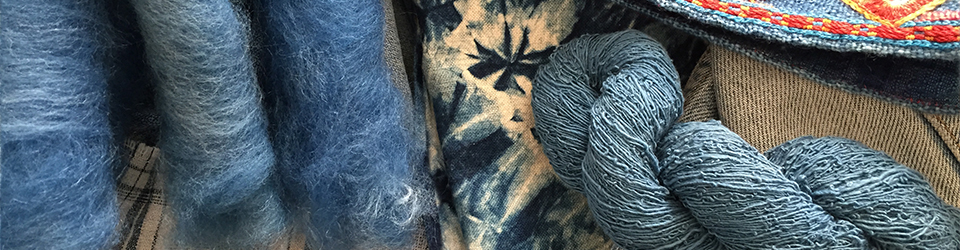
not only handspun, but hand-dyed. Yes, my name is Sarah and I already have a problem. Despite wearing only sludge colours, I cannot resist playing with REAL colour. This entire spinning lark started because I wanted to spin barberpole sock yarn, and look where that’s got me. A box full of Russell Dyes (I love the colours), a bag of Jacquard dyes arrived last week. I have indigo, weld, madder. Over the summer I collected urine and managed to persuade a traditional sig vat to dye some merino blue; I’ll tell you about that too, sometime. Or if we have a proper summer this year I’ll do another one!

That’s roughly 450m, which is destined to become a Swallowtail Shawl for the local spinning group challenge. Which is my fault: my lace-knitting proved contagious!

Would you like to see more?

This is a curiosity, a Christmas gift spun for a friend It’s 50% undercoat from her semi-longhair cat, 30% merino and 20% silk. A cabled 4-ply, my first serious exercise in yarn engineering. Cat is soft but completely lacks elasticity (hence the merino) and is completely dull (hence the silk). Cabled 4-ply to reduce shedding of shorter hairs.

This always takes longer than I expect. I’ve got to go and light the fire in the front room and prepare for an evening of knitting late Christmas presents! I’ll be back…