Category Archives: Tapestry

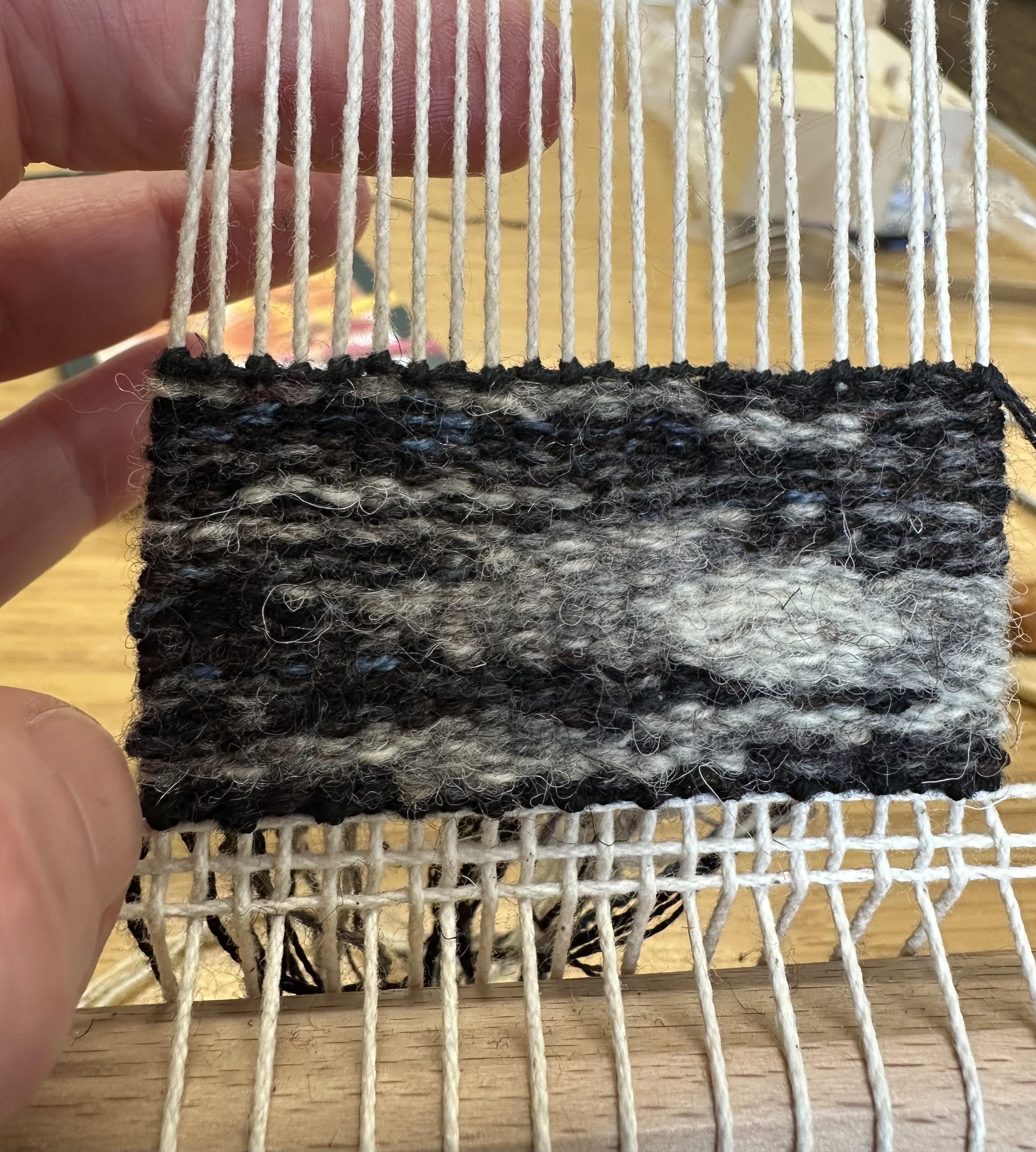
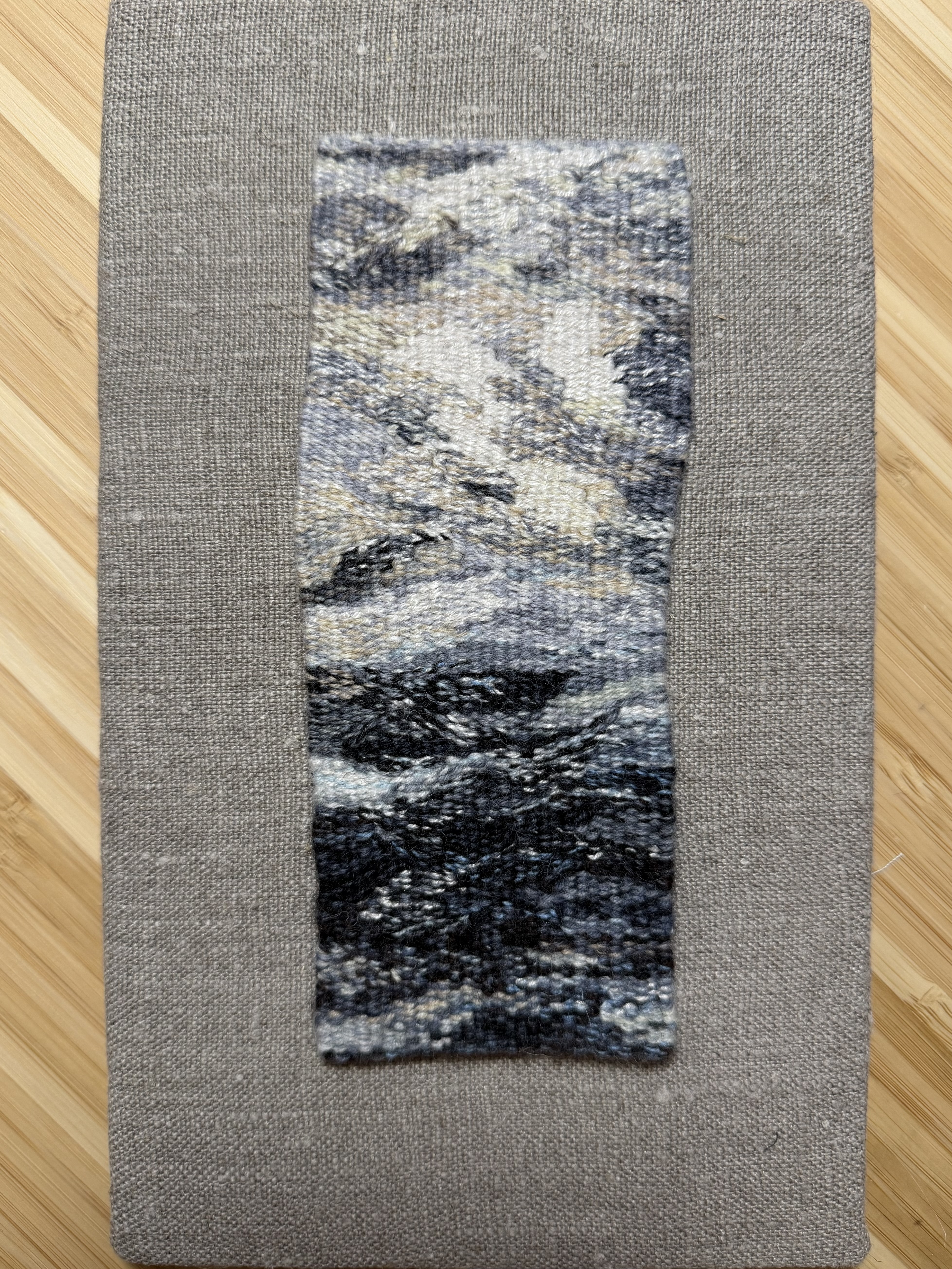
Another tapestry. Water again.

Finishing this is what spurred me to post the other tapestries yesterday. (Well, finishing this plus the Facebook suspension. Easier to share there than here, but we are where we are, and you wouldn’t have a story time there. Are you sitting comfortably?)

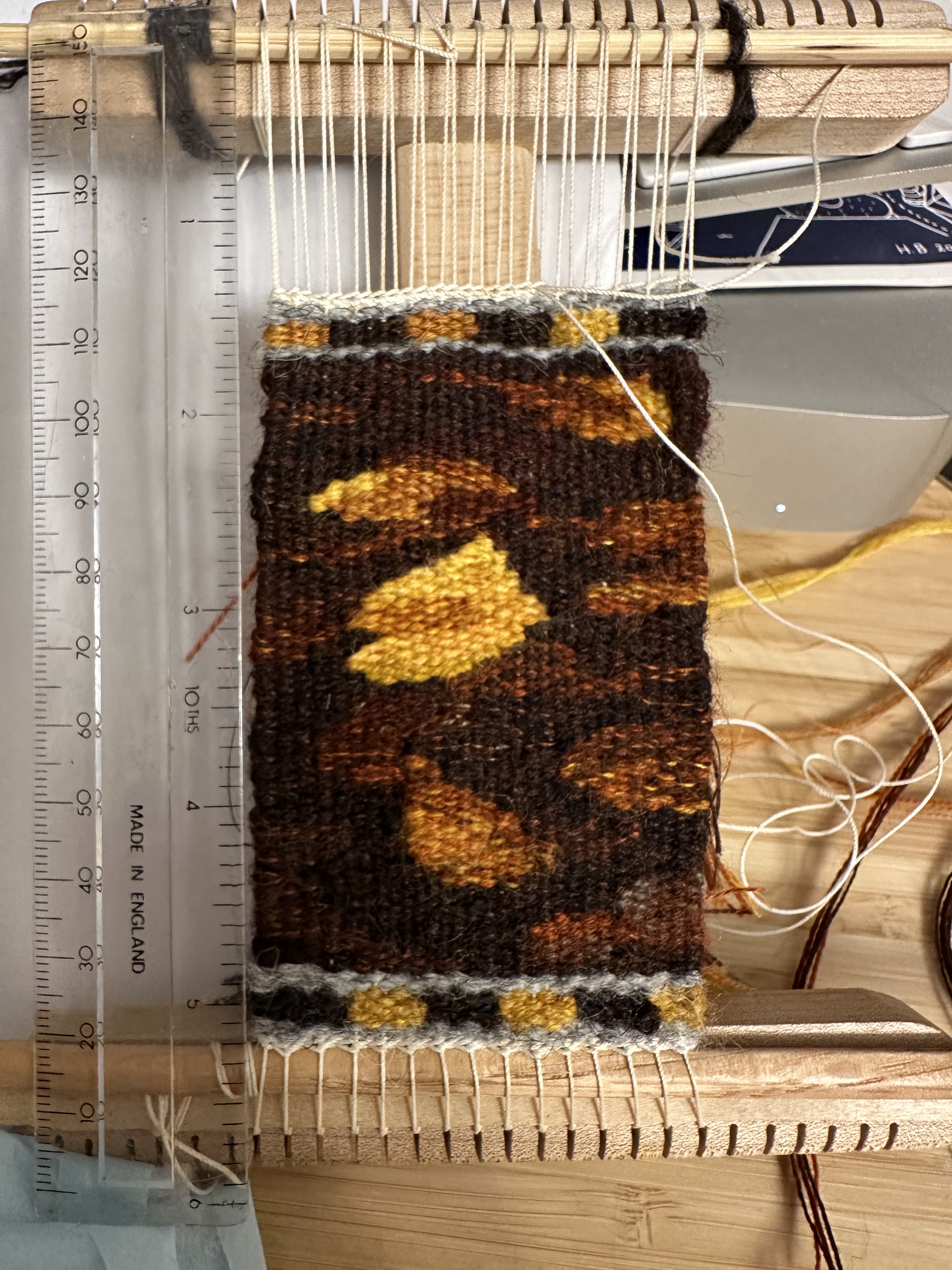
I’ve been taking pictures of water and shorelines for about many years, first as memories, then as inspiration for colour palettes and colour blending: how would I combine a variety of coloured yarns to create a blend that brings a wave or ripple to life.
In 2023 I enjoyed a one-day tapestry workshop weaving water with Anna Wetherell at Farfield Mill, mostly because I needed a push to start tapestry weaving again. We took pictures of the river from the mill bridge as inspiration for tiny tapestries woven with Anna’s scrap yarns, advice, and encouragement. I can’t remember which bit of which photo I used for this, but I can still see the water.
After that I tried to weave the gold birch leaves drifting in the peat-brown water at the Falls of Falloch, many years ago. It sort of worked, I liked the result even if the leaves are wonky. I took more photos of water. I don’t remember where we were in September this year but I have a photo of the water there.
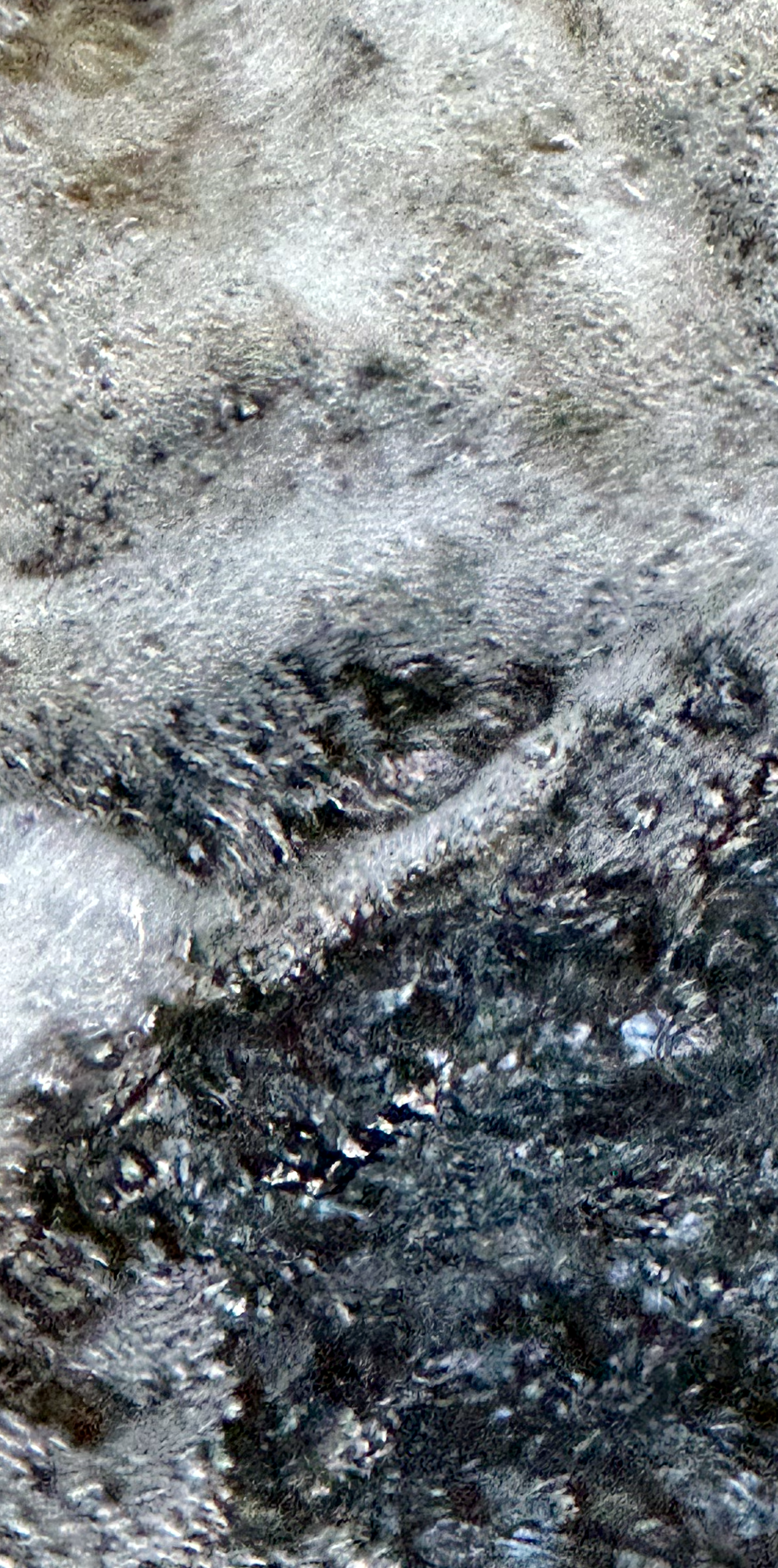
I warped the little loom, this time using ‘proper’ warp (Liina 12) and started pulling yarns from the tapestry stash. An inch or so up my niggling doubts brought weaving to a halt. Look at the water, look at the tapestry. In the picture the water is alive, it’s moving. The the tapestry is flat. Pretty water colours, but it’s flat. Boring. MOST unsatisfactory. I want it to speak of movement.
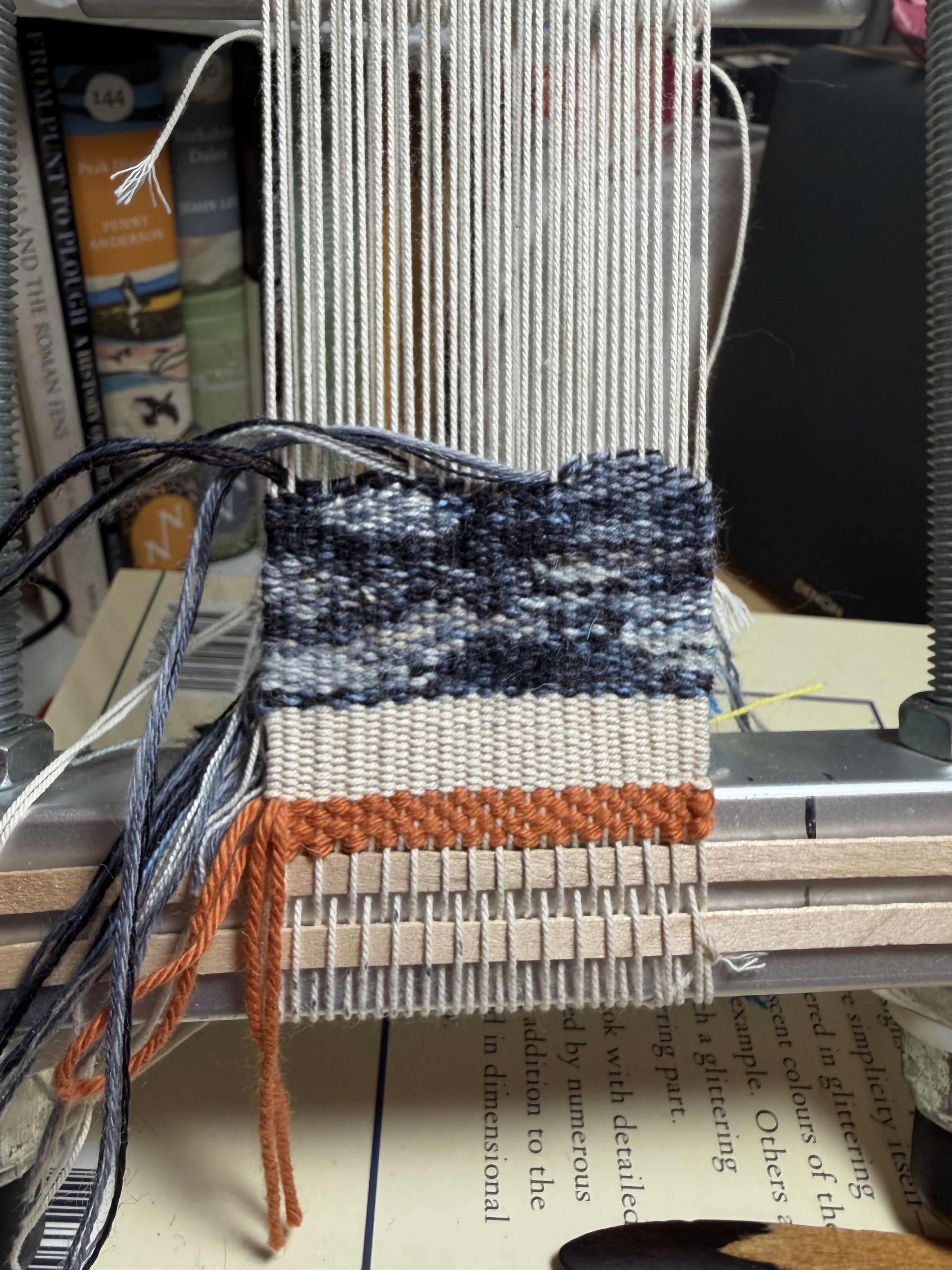
I read some books, I did some googling. Mostly I remembered Linda Wallace (probably slightly exasperated by the way I kept asking how things should be done) telling me that I should do whatever I need to do, there are no rules provided the woven structure holds. So… I can build angles into the weave like the angles of the wavelets. I can add nubbly handspun silk to catch the light and make the wavelets dance.
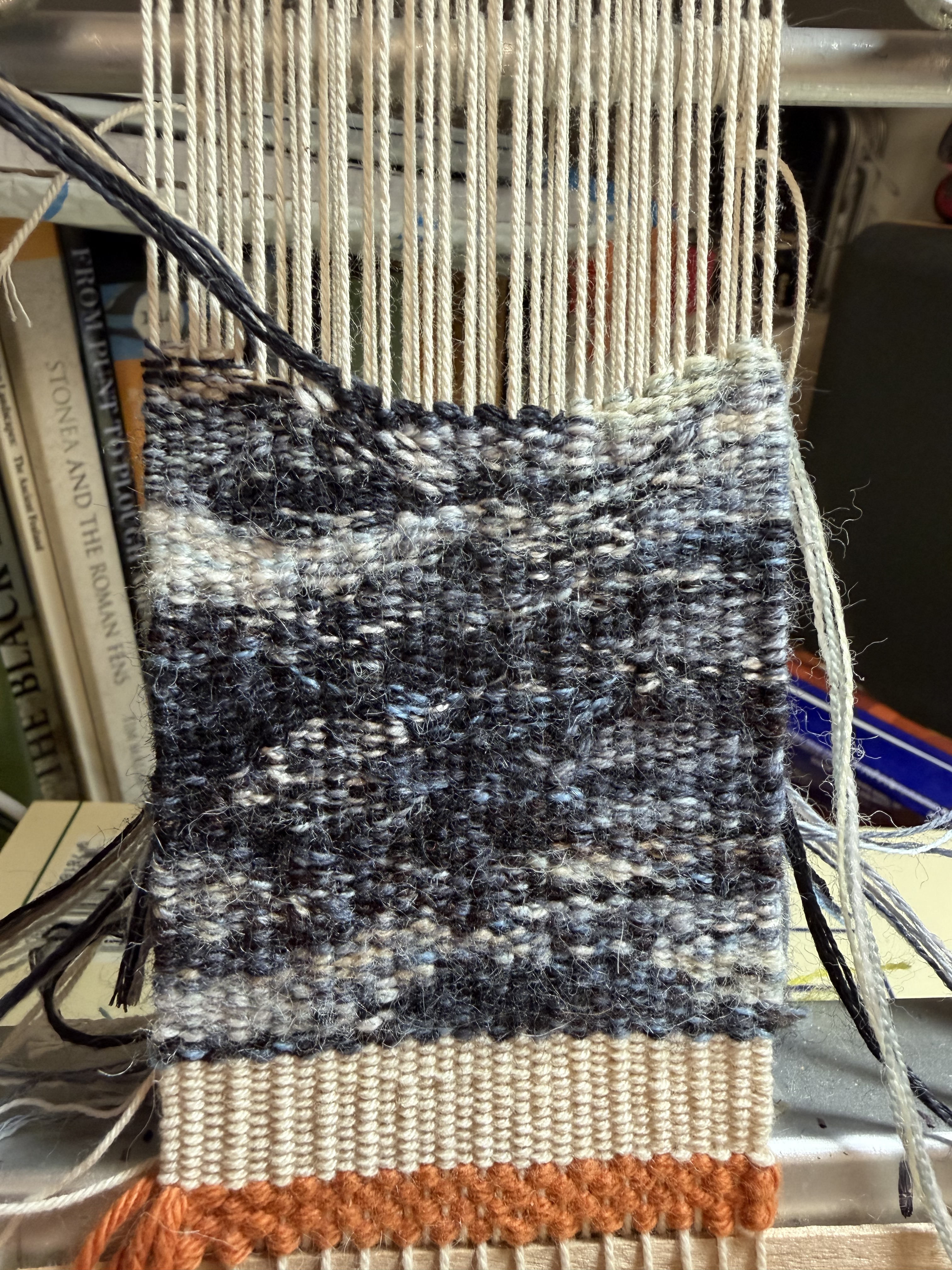
WHOA. Now it’s moving. This is exciting.
But OMG the back. Every one of those patches of colour is a group of four yarns with the start and finish of the bundle hanging out the back. There are many ways to deal with the ends. I tried several, but all of them left the front of the tapestry slightly uneven, with differences in light and shadow that interfered with perception of the movement. I wanted it as near dead flat as possible.
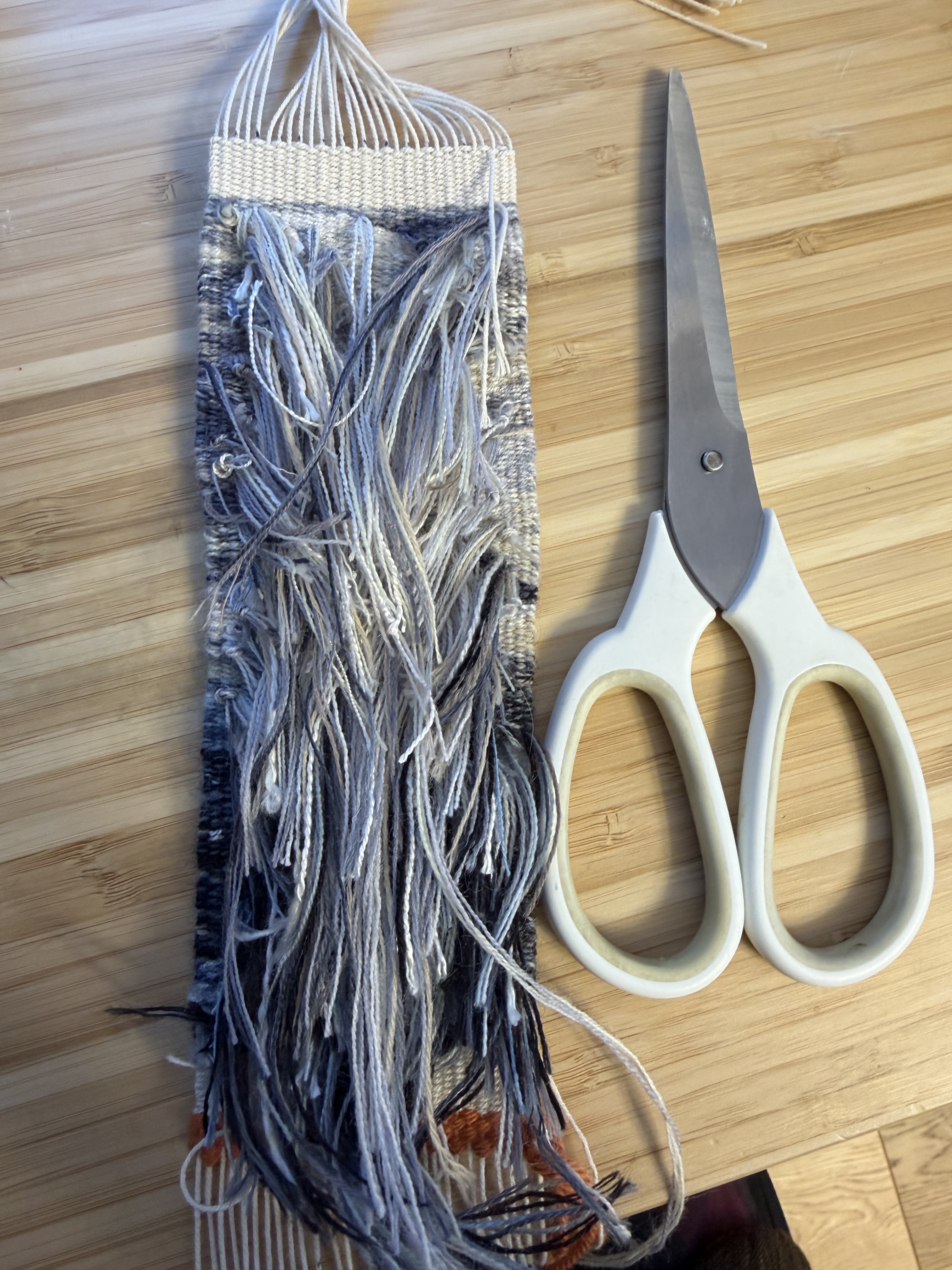
I had an idea. This is a tiny piece to be mounted, the woven structure will not have to cope with the stress and strain of hanging free. I stitched the individual weft bundles down to the surface of the back.
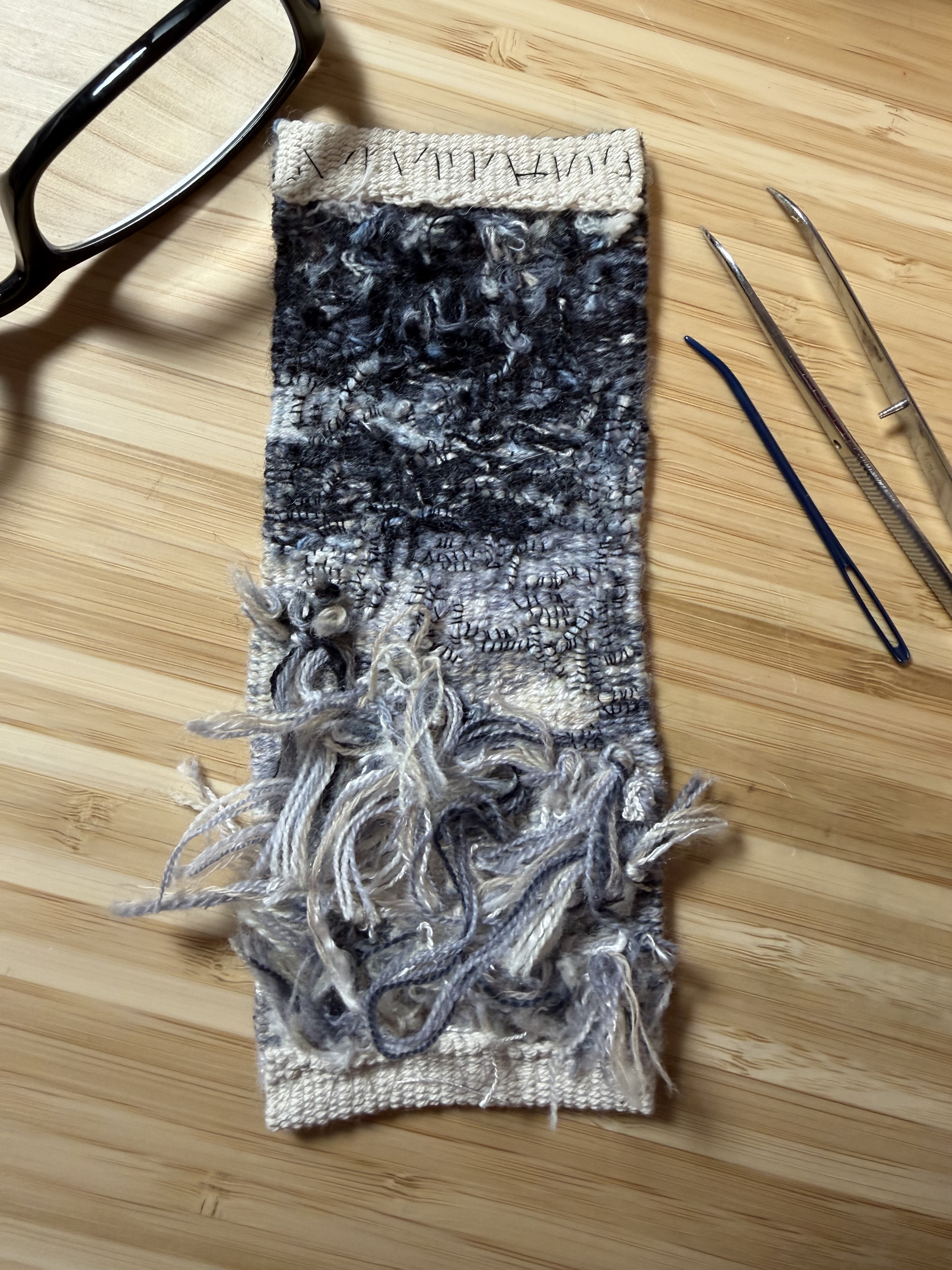
I love the not-quite-random pattern of stitches and bundles. It’s a serendipitous exercise in mark-making. It looks almost like cuneiform, a language, and in a way it is. The text says “What if…”

I assume this is a known technique (it is often said there is nothing new under the sun in textile crafts). It takes forever, or feels like it: 14 bundles stitched in 37 minutes one afternoon. But it works. After blocking, steaming and mounting, the tapestry lies flat.
Looking at it now I think the initial flat bit is a useful contrast to the areas of madness (it felt like madness) later on.
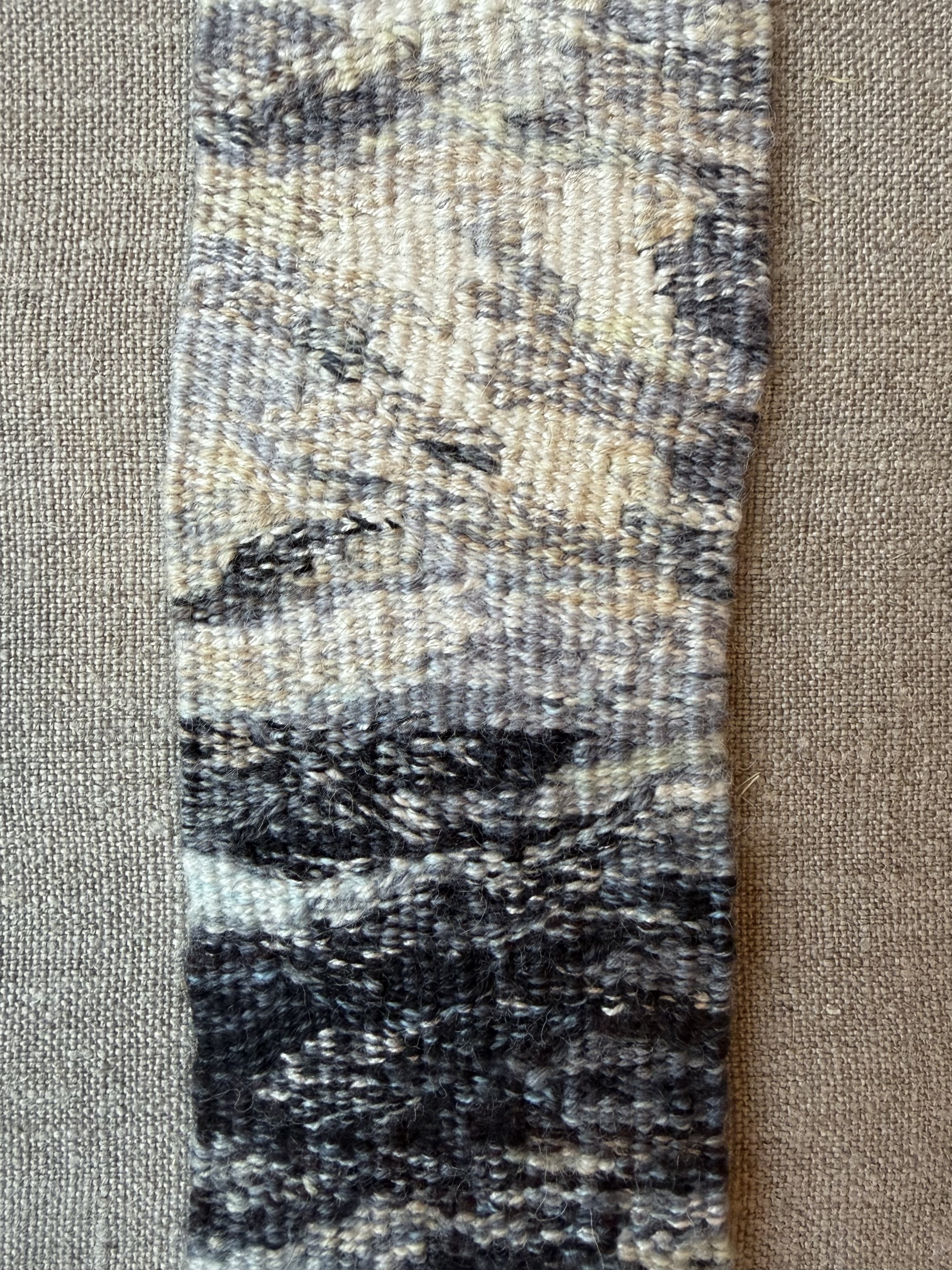
A recognised it as water before the halfway mark.
I love it. It’s another “I can’t believe I made this” moment.
I wish it was larger. Well, I know what to do about that. Use a bigger loom to wind a bigger warp. But first I’ll admire this again. I’m so much more fortunate than you, I can see it for real, not a bad photo in the bad light as Storm Chandra batters the house.
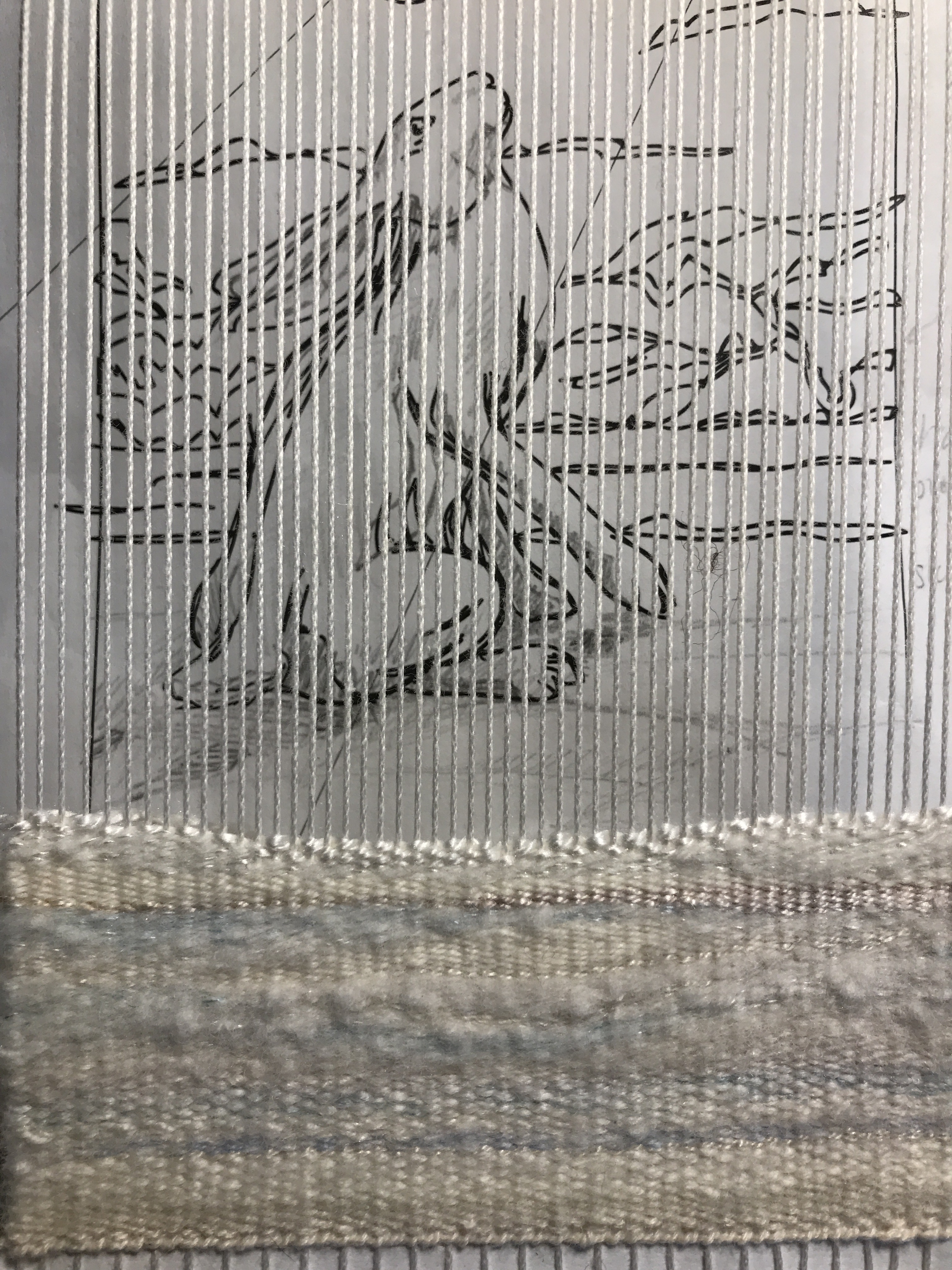
Tapestry first steps: the Winter Hare and after

I have no memory of looking at a tapestry or a picture of a tapestry and thinking ‘I could do that’. Maybe Sara Lamb’s book Woven Treasures planted a seed. In 2015 I remember asking A to cut the centre out of a small piece of plywood to make a tiny (insanely tiny, really) portable loom, which I warped with scrap tatting cotton to needleweave a tiny 1″ square using scrap lengths of handspun silk on a flight somewhere. I don’t have a picture of it, but I remember finding throwing away that fragment and host of other small memories when packing to return to the UK.

In Canada in 2019 I was fortunate enough to be invited to join a group of tapestry weavers and fibre artists who met every Wednesday. The further I am from that time and place, the more clearly I see how much I learned about the sheer hard work of creating and the value of collaborative learning. I listened and learned as Linda Wallace and others drew cartoons, took photos, wove, unwove, offered up, blended, exchanged ideas and yarn, laughed, stopped for thought and coffee, and drew me in.
Those Wednesdays were wonder-full.
I miss those friends, their curiosity and drive to create, more than I can say.

In 2020 I put my sashiko to one side, bought a small Mirrix loom, found an image in my head and began.
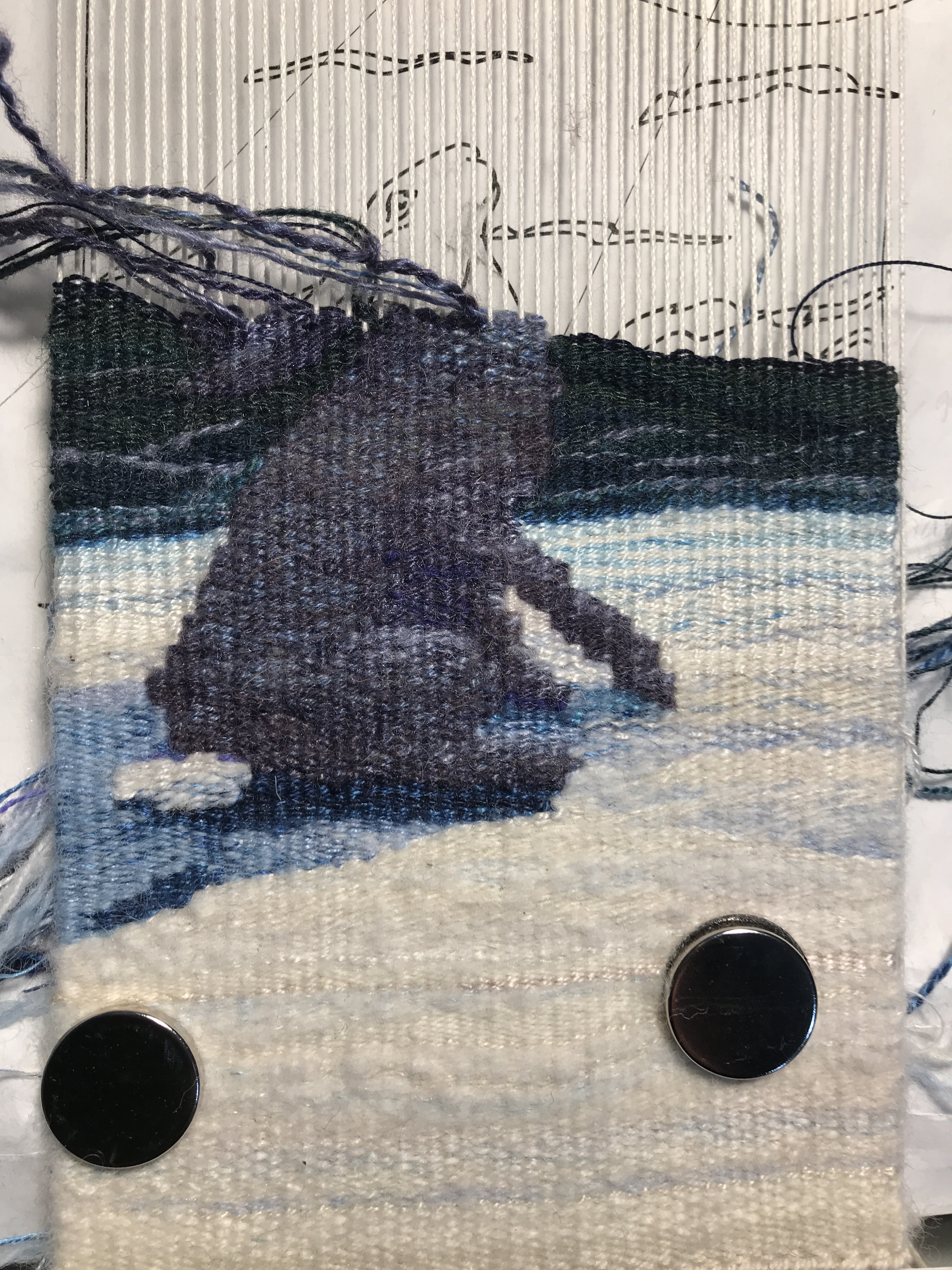
This is the only image that shows most of the cartoon (the drawing held behind the warp). It also show something of the scrap handspun yarn I used.

I look at these photos and remember the sheer frustration, every day. The cartoon was IN THE WAY when I manipulated the warp and every time the paper moves even a couple of millimetres I have to notice and move it back or the weaving will be the wrong shape. I tried drawing on the warps: the felt pen bled and blurred. I tried paired magnets to hold the cartoon (instead of tape, then stitching): if they were tight enough not to slip freely I couldn’t get them apart.
Working with crochet cotton and handspun I had no established guidelines for the number of weft yarns in the bundle for the sett and size of warp yarn. I was winging it with no experience, but I had the greatest good luck in the world: I could ask someone for advice. Sometimes it was as simple as ‘keep going’.

I learned that I had to trick the eye into seeing curves. I *hated* the steps created by the structure but found they were masked by the magic of the final image if it worked.
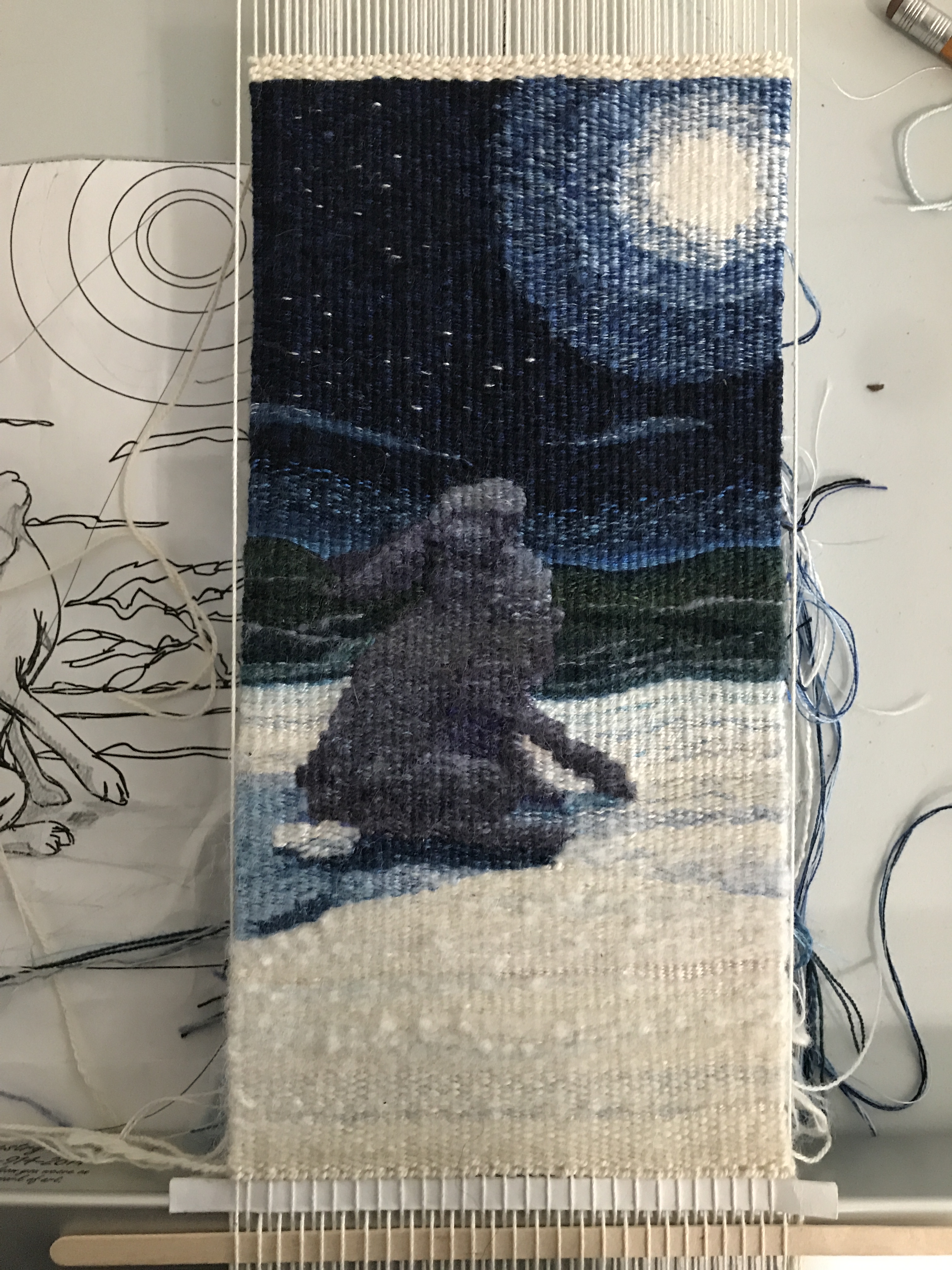
I learned that the weft I placed and beat into place will be further compressed by the beating of weft above it. If I wove exactly the shape I wanted it was squashed, stretched sideways by the additional compression by the time I’d woven another couple of centimetres. Slippery crochet cotton allows the weft to slide down even more than traditional seine twine. I lost track of the times I ripped back and rewove the head of the hare.
I ran out of colours but as I had no plan for colours that was easily dealt with.

This is the only photo I have of the finished piece. The compression is annoying. The nose is still too short. The tail is still too flat. But when I look at the photo I still feel the sense of disbelief that I, *I* could make something that good. I still love it and, while I miss it, I was honoured to swap it for Linda Wallace’s postcard garden.

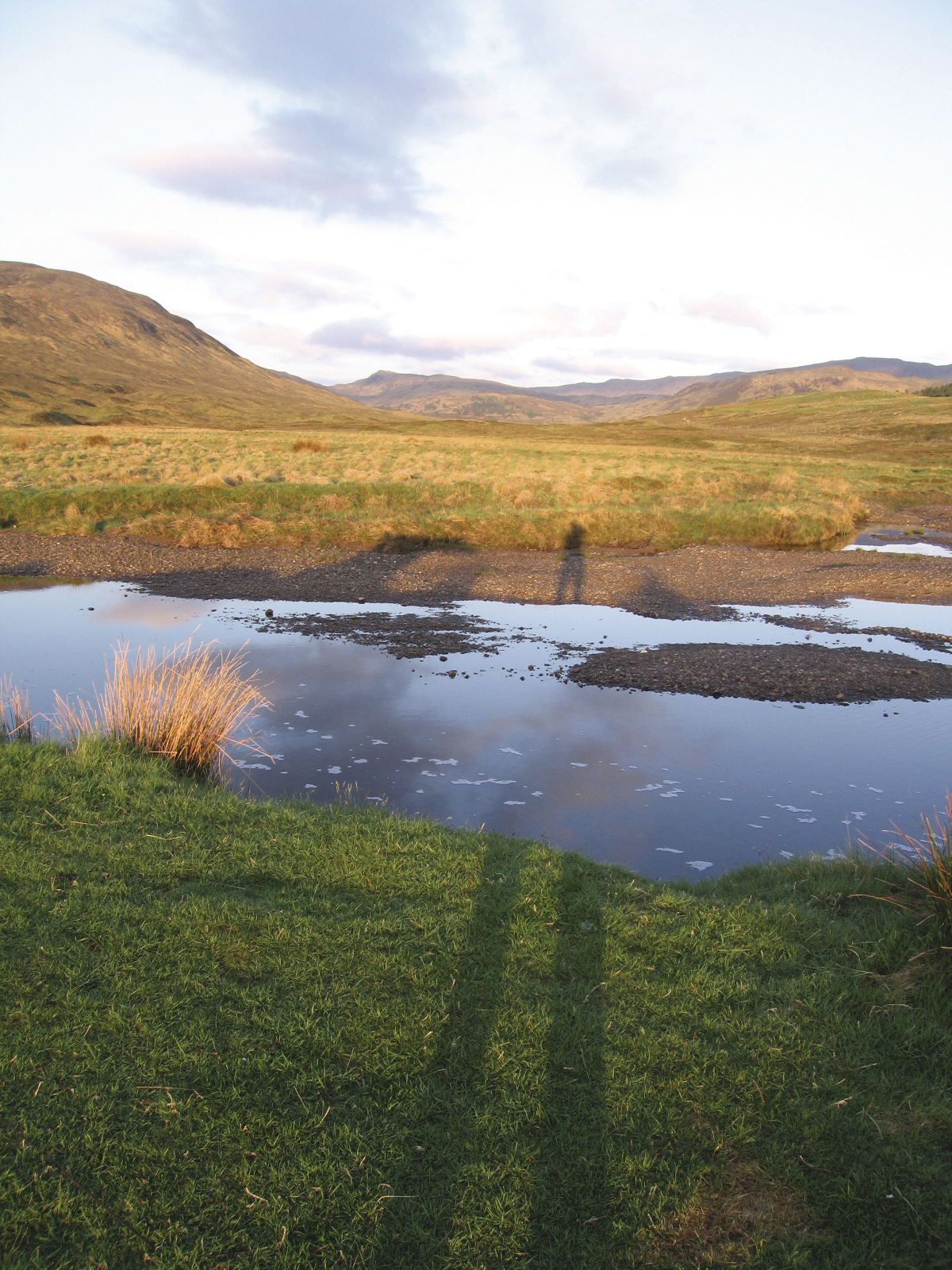
In 2021 I began to acknowledge the reality, that Canada was no longer where I wanted to be. Images strike more strongly than words.

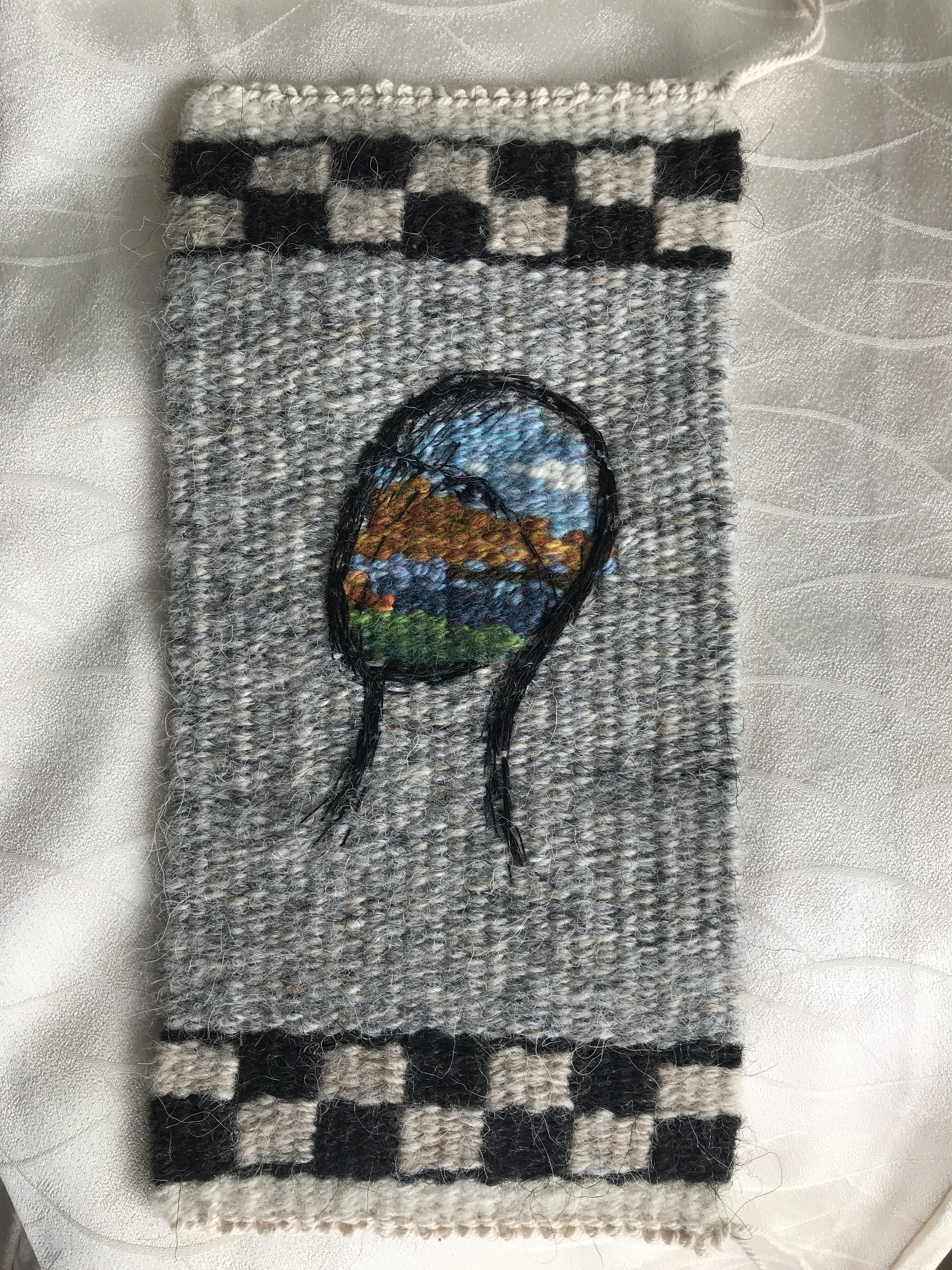
My head was full of Scotland.

Now my head is full of light on moving water, leaves drifting in peat-brown water.

The next one will have a post of its own sometime in the next week or so. I could show you the new empty warp on the big Mirrix but where’s the fun in that? Wait until I find the courage to start something.


ETA: solved. One of Safari’s content blocker settings stopped the form working. WordPress won’t let me add categories or tags at the moment so I can’t create a new ‘Tapestry’ category or tag. I’ve restarted, even tried a different keyboard, but no. Technology hates me.